Introduction
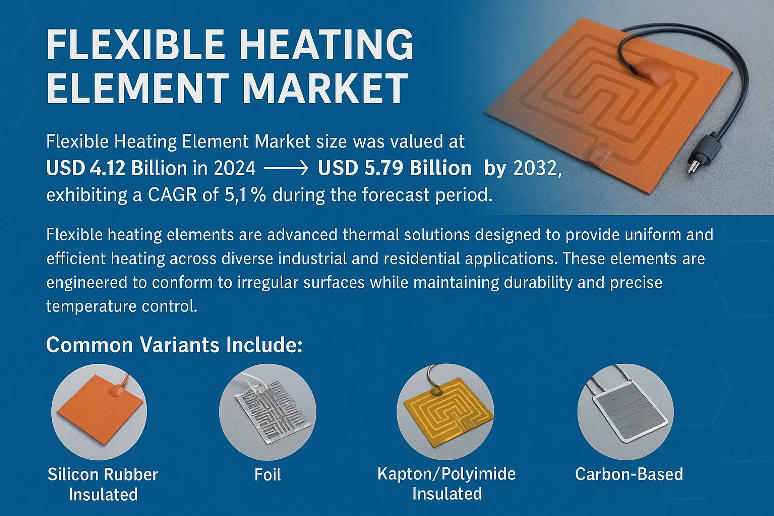
According to semiconductorinsight , the Flexible Heating Element Market is on a steady upward trajectory, with a valuation of USD 4.12 billion in 2024 expected to reach USD 5.79 billion by 2032, reflecting a CAGR of 5.1%. The semiconductor industry continues to redefine global innovation, with this market showing robust expansion and technological disruption. Flexible heating elements are increasingly critical across automotive, medical, industrial, and consumer applications, bridging advanced material design and energy efficiency.
Download Sample Report PDF https://semiconductorinsight.com/download-sample-report/?product_id=122744
Emerging Trends Shaping the Market
AI-Enhanced Temperature Control
Smart heating solutions are integrating AI-driven controls to optimize performance and energy consumption. This trend is driving demand for flexible heating elements that can adapt in real-time to operational conditions, enhancing both reliability and efficiency.
Miniaturization and Thin-Film Technology
Advances in thin-film and printed heating technologies allow elements to be lighter, more compact, and versatile. These innovations are enabling integration into semiconductor devices, wearables, and precision instrumentation.
Sustainable and Energy-Efficient Designs
Environmental concerns are shaping development priorities, with manufacturers focusing on low-power, recyclable, and high-durability elements. Sustainable heating solutions align with broader semiconductor industry goals of reducing carbon footprints.
Integration with IoT and Smart Systems
Flexible heating elements are increasingly embedded into IoT devices for intelligent thermal management. This convergence with connected technologies accelerates adoption across smart home, automotive, and industrial automation sectors
Key Market Drivers and Growth Factors
- Automotive Electrification: Growing EV adoption increases demand for efficient cabin and battery heating solutions.
- Industrial Automation Expansion: Automation lines require precise temperature regulation, driving flexible heating element deployment.
- Medical Device Innovation: Warming systems for diagnostic tools, incubators, and wearable health devices boost market growth.
- Energy Efficiency Standards: Stricter regulations incentivize adoption of advanced, low-energy heating components.
Strategic Developments by Key Players
Industry leaders are actively expanding capabilities and enhancing product portfolios:
- NIBE Element continues to invest in R&D for energy-efficient heating solutions.
- Minco Products Inc. is focusing on customized flexible heaters for industrial and aerospace applications.
- Watlow Electric Manufacturing Company has announced new thin-film heating technologies to reduce thermal response time.
- Chromalox Inc. is expanding global production facilities to meet rising demand.
- Winkler GmbH emphasizes smart heating integration with IoT devices.
- Hotset GmbH targets automotive and semiconductor wafer heating applications.
- OMEGA Engineering Inc. is developing precision heating systems for laboratory and industrial use.
Our comprehensive report is ready with the latest trends, growth opportunities, and strategic analysis https://semiconductorinsight.com/report/flexible-heating-element-market/
Segment Analysis: Who Leads the Market?
The market is segmented by type, application, and geography.
- Type: Polyimide and silicone rubber flexible heaters dominate due to high performance and durability.
- Application: Automotive and industrial sectors account for the largest share, driven by EV heating systems and precision industrial processes.
- Region: Asia-Pacific leads the market thanks to established semiconductor ecosystems in Taiwan, South Korea, and Japan. North America follows closely, propelled by R&D investments and industrial automation adoption.
Technological Advancements Impacting Growth
Can AI-Driven Thermal Management Redefine Efficiency?
Emerging technologies such as AI-based temperature control, micro-heating elements, and advanced sensor integration are improving performance while minimizing energy consumption. Innovations in nanofabrication and flexible substrates enhance product scalability for semiconductor applications.
Integration with Smart Systems
Flexible heating elements embedded in IoT platforms are enabling predictive maintenance and dynamic thermal regulation, particularly in medical and industrial devices.
Why This Report Matters
The Flexible Heating Element Market report provides actionable insights for industry stakeholders by offering:
- Market estimations from 2024 to 2032
- Competitive intelligence on leading manufacturers
- Detailed growth forecasts across applications and regions
- Identification of opportunities in emerging technologies
This intelligence is critical for semiconductor professionals seeking to align R&D, product development, and investment strategies with market trends.
Download Sample Report PDF https://semiconductorinsight.com/download-sample-report/?product_id=122744
Forward-Looking Insight
As the flexible heating element sector evolves alongside semiconductor innovation, stakeholders must balance technological advancement with energy efficiency and strategic foresight to maintain competitiveness in a rapidly growing global market.
Call-to-Action:
Explore the full report for in-depth forecasts, company profiles, and technology insights at Semiconductor Insights.