Introduction
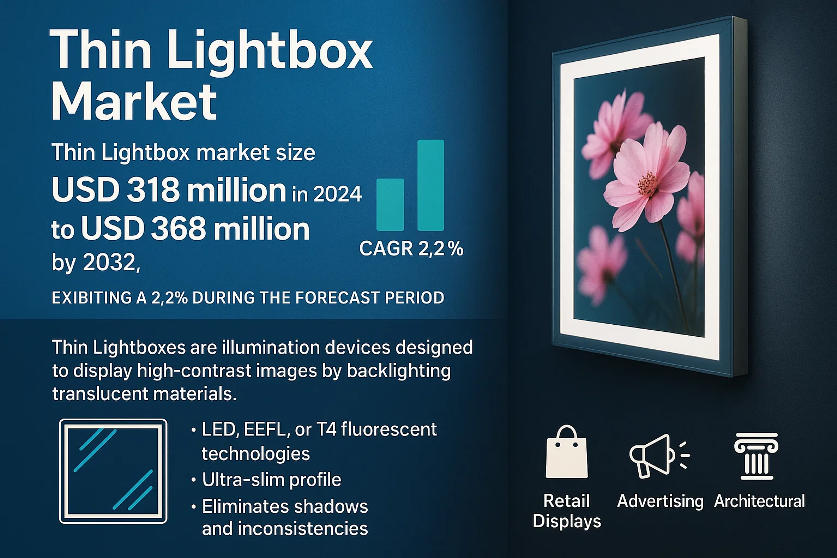
According to semiconductorinsight , the Thin Lightbox Market is set to experience steady growth, with its market size projected to rise from USD 318 million in 2024 to USD 368 million by 2032, reflecting a CAGR of 2.2%. This segment of the display technology industry is gaining attention for its role in modern advertising, retail, and commercial displays. The semiconductor industry continues to redefine global innovation, with this market showing robust expansion and technological disruption.
Download Sample Report PDF https://semiconductorinsight.com/download-sample-report/?product_id=122733
Emerging Trends Shaping the Market
- Ultra-Slim Display Integration
As consumer demand shifts toward sleeker retail and commercial spaces, ultra-thin lightboxes are being integrated with advanced display modules. These compact units combine semiconductor-driven illumination with energy-efficient LED technology, offering high visibility with minimal footprint. - Smart Connectivity and Automation
The convergence of IoT and display solutions enables lightboxes to adapt dynamically to environmental lighting and content schedules. Smart semiconductors embedded in these units allow remote control, energy optimization, and predictive maintenance, enhancing operational efficiency for retailers and advertisers. - Sustainable and Energy-Efficient Designs
Sustainability is a critical trend in display technology. Semiconductor advancements now allow thin lightboxes to achieve brighter illumination while consuming less power. Companies are increasingly using recyclable materials in housing and LED components to meet growing environmental standards. - Customization and Modular Design
Flexibility in design and modular construction is emerging as a competitive differentiator. Manufacturers are leveraging semiconductors to support variable sizes, shapes, and brightness levels, enabling tailored solutions for diverse applications from airport signage to high-end retail displays.
Key Market Drivers and Growth Factors
- Rising Retail Modernization: The push toward visually impactful advertising spaces is boosting lightbox adoption.
- Energy Efficiency Regulations: Stricter lighting standards are driving semiconductor-based LED innovations.
- Technological Advancements in LED Chips: Higher brightness and durability increase market appeal.
- Expansion in Commercial Infrastructure: Growth in airports, malls, and entertainment venues creates consistent demand.
Strategic Developments by Key Players
Leading companies in the Thin Lightbox Market are making strategic moves to enhance their market presence:
- DSA is investing in R&D to integrate smart LED modules into ultra-thin displays.
- Displays4sale has launched customizable lightbox solutions for premium retail chains.
- Uniko focuses on energy-efficient lightboxes with semiconductor-driven brightness control.
- Duggal continues to expand its product portfolio with modular and interactive lightbox designs.
- 40 Visual has collaborated with tech partners to introduce automated content management features.
- Prime LED emphasizes sustainable LED components for reduced power consumption.
- Slimbox and Snapper Display are expanding regional production to cater to Asia-Pacific demand.
- W&Co explores smart connectivity solutions to integrate IoT-enabled features in commercial displays.
Our comprehensive report is ready with the latest trends, growth opportunities, and strategic analysis https://semiconductorinsight.com/report/thin-lightbox-market/
Segment Analysis: Who Leads the Market?
By application, retail and advertising sectors dominate the market, given the high visibility and frequent display updates required. By region, Asia-Pacific leads due to robust manufacturing ecosystems in China, South Korea, and Japan, coupled with growing commercial infrastructure. Europe follows closely, driven by high-end retail and strict energy compliance regulations.
Technological Advancements Impacting Growth
Can Smart Semiconductor Modules Redefine Display Efficiency?
Advanced semiconductor chips now allow thin lightboxes to provide uniform brightness while reducing heat generation. Innovations in nanofabrication and LED driver technology enhance durability and reduce maintenance costs, making these displays more viable for long-term commercial installations.
IoT-Enabled Dynamic Content
Semiconductor integration allows seamless connectivity for automated content switching, reducing manual intervention and optimizing energy consumption across large display networks.
Why This Report Matters
This market analysis offers actionable insights for industry stakeholders:
- Accurate Market Estimations: Forecasting growth from 2024 to 2032.
- Competitive Intelligence: Understanding moves by top players like DSA, Uniko, and Duggal.
- Opportunity Mapping: Identifying growth segments, regions, and applications.
- Strategic Guidance: Advising on emerging trends and technological adoption for decision-making.
Download Sample Report PDF https://semiconductorinsight.com/download-sample-report/?product_id=122733
Forward-Looking Insight
As the Thin Lightbox Market evolves, stakeholders must embrace innovation, sustainability, and technological integration to maintain a competitive edge. Semiconductor-driven improvements in LED efficiency and smart connectivity will define the next generation of commercial and retail display solutions.
Call-to-Action
Explore the full Thin Lightbox Market report for detailed forecasts, technology insights, and strategic profiles at Semiconductor Insights.