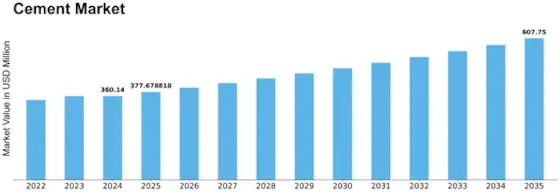
The global cement market is entering a new era of growth as urbanization accelerates, infrastructure investments rise, and sustainable construction practices become increasingly prioritized. Cement, one of the most widely used construction materials in the world, plays a fundamental role in shaping residential, commercial, and industrial infrastructure. With economic development advancing in emerging nations and modernization continuing in developed economies, the demand for cement remains robust across all regions.
Cement is indispensable for buildings, transportation networks, industrial plants, dams, bridges, and energy infrastructure. As countries upgrade public facilities, expand smart cities, and enhance rural connectivity, the need for high-quality cement continues to escalate. Additionally, technological advancements and eco-friendly formulations are helping the market evolve in response to environmental and regulatory pressures.
Market Drivers and Growth Factors
One of the strongest drivers of the cement market is the increasing pace of global urbanization. With millions of people moving to cities each year, governments must invest heavily in housing, roads, water management systems, transportation facilities, and public utilities. Cement is a key component in all these applications, ensuring structural integrity and long-term durability.
Infrastructure development remains another major growth factor. Many countries are investing in large-scale national projects such as highways, railways, ports, airports, and renewable energy installations. The rise of megaprojects in regions such as Asia Pacific, the Middle East, and Africa is contributing significantly to cement consumption.
Rapid industrialization, particularly in emerging economies, further boosts the demand for cement. Manufacturing plants, warehouses, power stations, and industrial complexes all require massive quantities of cement-based materials for construction. The steady expansion of the commercial sector—including office buildings, shopping malls, hotels, and hospitals—also contributes to rising cement usage.
Sustainability concerns are creating new opportunities for innovation. Traditional cement production is energy-intensive and results in significant CO₂ emissions. As environmental regulations tighten, manufacturers are investing in low-carbon cement, alternative fuels, clinker substitution methods, and energy-efficient processes. These advancements are gradually reshaping the industry and positioning sustainable cement as a major future growth driver.
Download Report Sample Copy with TOC: https://www.marketresearchfuture.com/sample_request/2047
Market Segmentation
The global cement market can be segmented based on product type, application, and end-use sector.
By Product Type
Portland Cement
Blended Cement
White Cement
Sulfate-Resistant Cement
Others
Portland cement remains the most widely consumed type due to its versatility, strength, and suitability for a broad range of construction applications. Blended cement, which incorporates supplementary materials to reduce carbon impact, is rapidly gaining adoption as industries shift toward greener alternatives.
By Application
Residential Construction
Commercial Construction
Industrial Construction
Infrastructure
Others
Infrastructure holds the largest share, driven by government-funded projects and national development plans. Residential construction is experiencing strong demand due to population growth and urban housing needs. Commercial construction—including retail and corporate facilities—continues to grow with improving economic conditions.
By End-Use Sector
Real Estate
Transportation
Energy & Power
Industrial Manufacturing
Public Infrastructure
Real estate and public infrastructure are the leading end-use sectors, while the energy & power sector increasingly demands specialized cement for wind and solar installations.
Regional Insights
The cement market demonstrates varying growth trends across regions.
Asia Pacific dominates global cement consumption due to rapid urbanization, large populations, and massive infrastructure developments. China remains the largest global producer and consumer, while India is experiencing rapid expansion in its construction sector, supported by government schemes such as Smart Cities, PMAY, and Bharatmala.
North America continues to show stable demand driven by infrastructure renewal, commercial development, and residential construction. The United States is investing heavily in modernizing transportation and energy systems, which supports consistent cement demand.
Europe emphasizes sustainable construction and low-carbon cement production. Strict environmental regulations are accelerating the adoption of eco-friendly building materials and alternative fuels. Countries such as Germany, France, and the UK contribute significantly to regional market activity.
Middle East & Africa exhibit strong growth potential as countries invest in new cities, transport networks, and industrial zones. Large-scale construction initiatives in Saudi Arabia, the UAE, Egypt, and South Africa are driving cement consumption.
Latin America shows steady growth despite economic fluctuations. Brazil, Mexico, and Chile remain key markets driven by urban housing needs and ongoing infrastructure upgrades.
Opportunities and Challenges
The cement market presents several promising opportunities. The rise of green building certifications, demand for eco-friendly construction materials, and adoption of digital technologies in manufacturing are transforming the landscape. The growing popularity of smart buildings and modular construction also complements the demand for high-performance cement products.
However, the industry faces challenges such as high energy costs, environmental concerns, and fluctuating raw material prices. Cement production contributes significantly to global CO₂ emissions, prompting regulatory pressure and the need for innovation. Supply chain disruptions and logistical constraints can also affect market efficiency.
Related Report
