The global power transmission landscape is undergoing a significant transformation, driven by increasing electricity consumption, renewable energy integration, and aging grid infrastructure. One of the most critical technological advancements enabling this transition is the Flexible AC Transmission System (FACTS). FACTS technologies enhance the controllability, stability, and power transfer capability of electrical grids without the need for extensive new transmission lines.
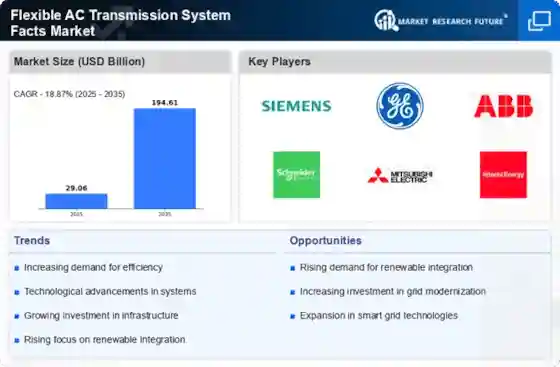
According to MRFR analysis, the Flexible AC Transmission System Market was valued at USD 29.06 Billion in 2024 and is projected to grow from USD 34.54 Billion in 2025 to USD 194.61 Billion by 2035, registering an impressive CAGR of 18.87% during 2025–2035. This growth highlights the increasing importance of FACTS solutions in modern power systems.
Market Drivers
Several key factors are driving the growth of the Flexible AC Transmission System Market:
- Rising Electricity Demand
Rapid urbanization, industrialization, and digitalization are significantly increasing global electricity consumption. FACTS devices help optimize existing transmission networks to meet this rising demand efficiently. - Integration of Renewable Energy
Renewable energy sources such as wind and solar are intermittent and variable. FACTS technologies improve voltage control, power flow management, and system stability, making them essential for renewable integration. - Grid Modernization Initiatives
Governments and utilities worldwide are investing heavily in smart grids and advanced transmission infrastructure. FACTS solutions are a core component of these modernization efforts. - Reduction of Transmission Losses
FACTS devices minimize power losses and congestion, enabling utilities to improve operational efficiency and reduce energy wastage.
Get a Sample PDF Brochure of the Report https://www.marketresearchfuture.com/sample_request/24450
Regulation and Policy Landscape
Regulatory frameworks play a crucial role in shaping the FACTS market. Many countries have introduced policies encouraging grid reliability, renewable energy adoption, and emission reduction. Supportive regulations, financial incentives, and long-term energy transition plans are accelerating the deployment of FACTS technologies.
In regions such as North America, Europe, and parts of Asia-Pacific, transmission operators are mandated to enhance grid stability and reliability, further driving FACTS adoption.
Market Objectives
The primary objectives of the Flexible AC Transmission System Market include:
- Enhancing power transmission efficiency
- Improving grid reliability and voltage stability
- Enabling large-scale renewable energy integration
- Reducing the need for new transmission lines
- Supporting smart grid and digital grid initiatives
These objectives align closely with global energy transition goals and sustainability targets.
Market Segmentation
The Flexible AC Transmission System Market can be segmented based on type, application, and region.
By Type:
- Static VAR Compensator (SVC)
- Static Synchronous Compensator (STATCOM)
- Thyristor Controlled Series Capacitor (TCSC)
- Unified Power Flow Controller (UPFC)
- Others
By Application:
- Utilities
- Railways
- Renewable Energy Integration
- Industrial Power Systems
By Region:
- North America
- Europe
- Asia-Pacific
- Latin America
- Middle East & Africa
Among these, utilities and renewable integration segments hold the largest market share due to increasing grid expansion projects.
Buy Now @ https://www.marketresearchfuture.com/checkout?currency=one_user-USD&report_id=24450
Key Players
The Flexible AC Transmission System Market is moderately consolidated, with major players focusing on innovation, partnerships, and global expansion. Key players include:
- ABB Ltd.
- Siemens Energy
- General Electric (GE)
- Mitsubishi Electric
- Hitachi Energy
- Toshiba Corporation
These companies invest heavily in R&D to develop advanced FACTS solutions that improve efficiency and reduce operational costs.
Market Challenges
Despite strong growth prospects, the market faces several challenges:
- High Initial Investment
FACTS systems require substantial upfront capital, which can be a barrier for smaller utilities. - Technical Complexity
Installation and integration of FACTS devices require skilled professionals and advanced technical expertise. - Regulatory Delays
Lengthy approval processes for grid projects can slow down FACTS deployment in certain regions. - Maintenance and Operational Costs
Ongoing maintenance costs may affect long-term adoption, particularly in developing economies.
Future Outlook
The future of the Flexible AC Transmission System Market looks highly promising. With the global shift toward renewable energy, electric vehicles, and decentralized power generation, the demand for advanced transmission solutions will continue to rise.
Technological advancements such as AI-driven grid management, digital substations, and smart FACTS devices are expected to further enhance market growth. Asia-Pacific is anticipated to emerge as a high-growth region due to rapid infrastructure development and expanding renewable capacity.
By 2035, FACTS technologies will play a vital role in building resilient, efficient, and sustainable power transmission networks worldwide.
Browse More Reports:
