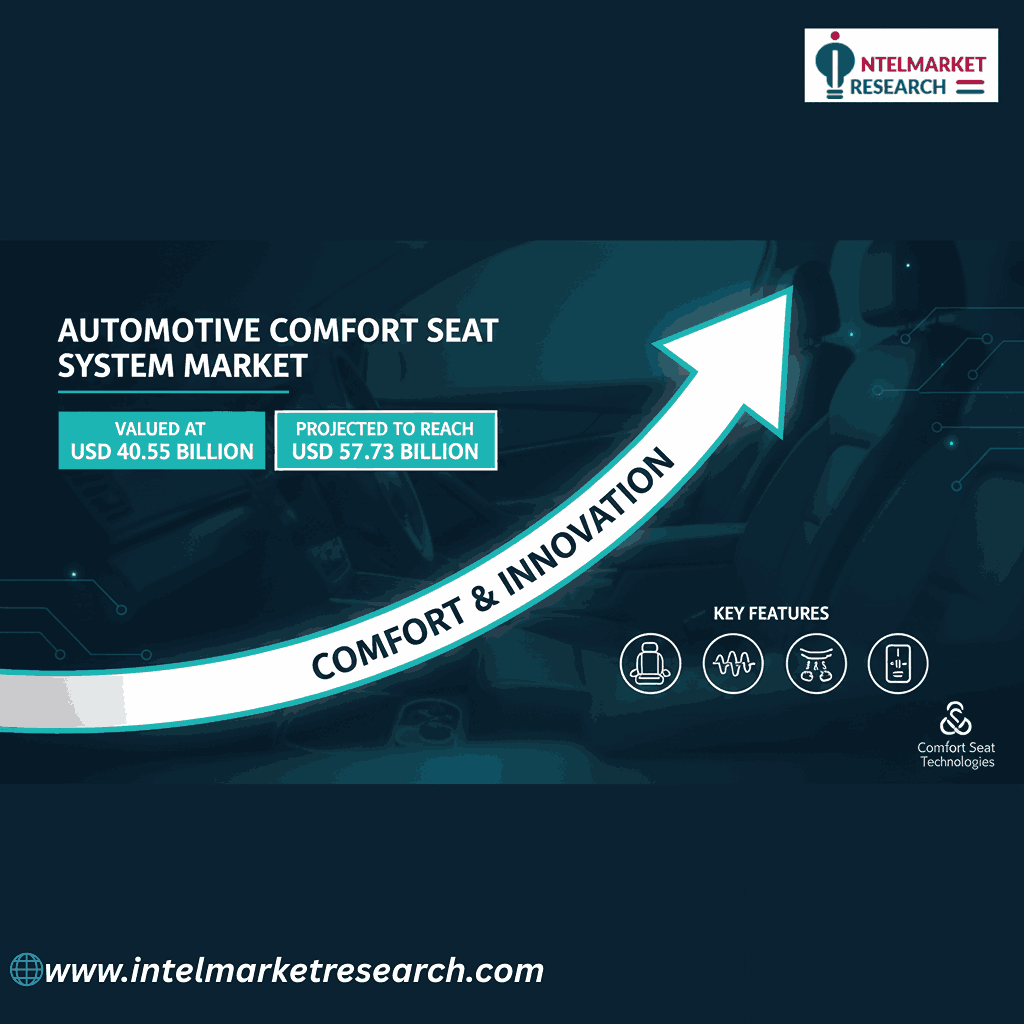
The global automotive comfort seat system market is entering a decisive growth phase as vehicle interiors evolve from functional spaces into personalized comfort zones. Valued at USD 40.55 billion in 2024, the market is projected to reach USD 57.73 billion by 2032, expanding at a CAGR of 5.3% between 2025 and 2032. Driven by changing consumer expectations, longer commute times, and rapid innovation in vehicle design, comfort-focused seating systems are becoming central to how automakers differentiate their models across price segments and regions.
At its core, an automotive comfort seat system combines mechanical, electronic, and material technologies to improve seating ergonomics and in-cabin experience. Features such as powered seat adjustment, heating and ventilation, pneumatic lumbar support, memory settings, and massage functions are increasingly found not only in luxury cars but also in mid-range passenger vehicles. As driving conditions and mobility patterns shift, these systems play a growing role in reducing fatigue, enhancing safety, and improving overall vehicle appeal.
Get FREE Sample Report:www.intelmarketresearch.com/download-free-sample/11465/automotive-comfort-seat-system-2025-2032-879
Emerging Market Trends Shaping Seat System Design
One of the most visible trends in the automotive comfort seat system market is the move toward premiumization across mass-market vehicles. Automakers are integrating comfort features earlier in the product lifecycle to meet rising expectations from consumers who view seating comfort as a core value rather than an optional upgrade. This trend is particularly evident in North America and Europe, where comfort features influence purchase decisions as much as infotainment or performance.
Another key trend is the growing influence of electric and autonomous vehicles on seat architecture. Electric vehicles prioritize energy efficiency and thermal management, pushing demand for seat-based heating and cooling systems that consume less power than traditional HVAC. Autonomous vehicle development further accelerates innovation, as seats are being reimagined to support relaxation, recline, and flexible postures during non-driving scenarios.
Sustainability is also shaping material choices and system design. Manufacturers are investing in lightweight frames, recycled foams, and eco-friendly upholstery materials to reduce vehicle weight and environmental impact without compromising comfort. These design shifts align with broader ESG goals across the automotive value chain.
Key Market Drivers Accelerating Adoption
Rising demand for enhanced in-car comfort remains the strongest driver for the automotive comfort seat system market. Longer daily commutes, increased traffic congestion, and greater awareness of posture-related health issues are encouraging buyers to prioritize ergonomic seating solutions. Comfort features are increasingly linked to driver alertness and safety, reinforcing their value beyond convenience.
The steady growth of disposable income in emerging economies such as China and India is another important catalyst. As consumers in these markets upgrade from entry-level vehicles to higher trims, demand for advanced seating systems rises in parallel. Regulatory focus on driver fatigue and safety standards in several regions further supports the adoption of ergonomically advanced seats.
Competitive Landscape: Leading Players and Strategies
The market features a moderately consolidated competitive landscape, with established suppliers competing on technology depth, integration capability, and global reach. Companies such as Adient plc, Lear Corporation, Faurecia, Toyota Boshoku Corporation, Magna International Inc., TACHI-S, Continental AG, Gentherm, and Bosch are actively investing in product innovation and OEM partnerships. Strategic priorities include lightweight seat structures, advanced thermal systems, and modular designs that can be adapted across vehicle platforms and regions.
Get the Complete Report & TOC:www.intelmarketresearch.com/automotive-and-transportation/11465/automotive-comfort-seat-system-2025-2032-879
Segment Analysis and Regional Outlook
By type, seat adjustment systems account for the largest share of the automotive comfort seat system market, reflecting their near-universal adoption across vehicle categories. Seat climatization systems are gaining momentum, particularly in regions with extreme weather conditions, while pneumatic and massage-based systems are expanding rapidly within premium and electric vehicle segments.
Passenger vehicles dominate overall demand due to high production volumes, while commercial vehicles represent a growing niche where driver comfort directly impacts productivity and safety. Regionally, North America and Europe lead in early adoption of advanced comfort technologies, supported by higher purchasing power and regulatory emphasis on ergonomics. Asia-Pacific stands out as the fastest-growing region, driven by rising vehicle production, urbanization, and evolving consumer preferences in China, Japan, South Korea, and India.
Technological Advancements and Strategic Insights
Can smart seating redefine the future of in-cabin experience? Emerging technologies suggest the answer is yes. Seat-integrated sensors capable of monitoring posture, fatigue, and vital signs are moving from concept to early deployment. When combined with vehicle software systems, these innovations could enable real-time comfort adjustments and safety alerts, reshaping how occupants interact with vehicle interiors over the next decade.
Why This Market Matters to Decision-Makers
For manufacturers, suppliers, and investors, the automotive comfort seat system market offers clear visibility into evolving consumer priorities and technology roadmaps. Detailed segmentation insights, regional performance analysis, and competitive benchmarking help stakeholders align product development and investment strategies with long-term demand trends.
Industry Perspective
As vehicles transition toward electrification, autonomy, and sustainability, seating systems are emerging as a strategic focal point rather than a secondary component. The next generation of automotive comfort seat systems will reflect a balance between technology, ergonomics, and responsible material use, shaping how drivers and passengers experience mobility in the years ahead.
To explore deeper insights, data tables, and forward-looking analysis on this evolving market, readers can access the full coverage on our website and follow broader automotive trends through trusted sources such as Bloomberg.
Image alt text: Automotive comfort seat system market growth and trends in passenger vehicles.
Get the Complete Report & TOC:www.intelmarketresearch.com/automotive-and-transportation/11465/automotive-comfort-seat-system-2025-2032-879
Call to Action
Explore detailed data tables, regional insights, and strategic analysis by accessing the full Dimethylcyclosiloxane (DMC) market report on the Intel Market Research website:
👉 https://www.intelmarketresearch.com
About Intel Market Research
Intel Market Research is a leading provider of strategic intelligence, offering actionable insights in biotechnology, pharmaceuticals, and healthcare infrastructure. Our research capabilities include:
- Real-time competitive benchmarking
- Global clinical trial pipeline monitoring
- Country-specific regulatory and pricing analysis
- Over 500+ healthcare reports annually
Trusted by Fortune 500 companies, our insights empower decision-makers to drive innovation with confidence.
🌐 Website: https://www.intelmarketresearch.com
📞 International: +1 (332) 2424 294
📞 Asia-Pacific: +91 9169164321
🔗 LinkedIn: Follow Us
