The construction chemicals industry plays a vital role in modern infrastructure development by enhancing the strength, durability, sustainability, and performance of construction materials. These specialty chemicals are widely used in concrete admixtures, waterproofing systems, adhesives, sealants, protective coatings, and repair materials. As construction standards evolve and projects become more complex, the need for advanced chemical solutions continues to rise.
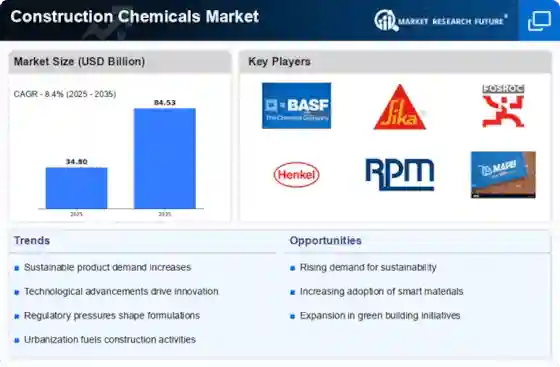
As per Market Research Future analysis, the Construction Chemicals Market was estimated at USD 34.8 Billion in 2024. The industry is projected to grow from USD 37.72 Billion in 2025 to USD 84.53 Billion by 2035, exhibiting a compound annual growth rate (CAGR) of 8% during the forecast period 2025–2035. This strong growth outlook reflects increasing global construction activity and the shift toward high-performance and eco-friendly building materials.
Industry Drivers
Several key factors are driving the expansion of the construction chemicals industry. These drivers are closely linked to global economic development, technological advancements, and regulatory changes.
Major growth drivers include:
- Rapid urbanization and infrastructure development in emerging economies
- Rising demand for durable and high-strength construction materials
- Growth of residential and commercial construction projects
- Increased focus on sustainable and green building practices
- Technological advancements in chemical formulations
Large-scale infrastructure projects such as highways, bridges, tunnels, airports, and smart cities are fueling the use of construction chemicals to improve performance and extend the lifespan of structures. Additionally, renovation and repair activities in developed regions are creating steady demand for protective coatings, repair mortars, and waterproofing solutions.
Regulation and Policy Environment
Government regulations and building standards significantly influence the construction chemicals industry. Regulatory bodies across regions are emphasizing safety, environmental sustainability, and energy efficiency in construction activities.
Key regulatory trends include:
- Strict building codes and quality standards for structural safety
- Environmental regulations promoting low-VOC and eco-friendly products
- Policies supporting green construction and sustainable materials
- Incentives for infrastructure development and affordable housing
These regulations encourage manufacturers to develop innovative, compliant products while maintaining performance and cost efficiency. Compliance with regional and international standards has become a competitive advantage for industry participants.
Get a Sample PDF Brochure of the Report @ https://www.marketresearchfuture.com/sample_request/1960
Industry Objectives
The primary objectives of the construction chemicals industry focus on improving construction efficiency, sustainability, and long-term performance of structures.
Core industry objectives include:
- Enhancing strength, durability, and lifespan of buildings
- Reducing construction time and maintenance costs
- Supporting sustainable and eco-friendly construction practices
- Improving workability and performance of construction materials
- Meeting evolving regulatory and safety requirements
By achieving these objectives, construction chemicals help address modern construction challenges while supporting large-scale infrastructure growth.
Key Players
The construction chemicals industry is characterized by the presence of global and regional players focusing on innovation, product diversification, and strategic partnerships. Leading companies invest heavily in research and development to introduce advanced solutions tailored to specific construction needs.
Key strategies adopted by major players include:
- Product innovation and formulation upgrades
- Expansion into emerging markets
- Mergers, acquisitions, and collaborations
- Focus on sustainable and green product lines
Competitive intensity remains high as companies aim to strengthen their market presence and meet growing customer expectations.
Challenges
Despite strong growth prospects, the construction chemicals industry faces several challenges that can impact profitability and adoption.
Major challenges include:
- Volatility in raw material prices
- Environmental concerns related to chemical usage
- High cost of advanced chemical formulations
- Lack of awareness in developing regions
- Skilled labor shortages affecting application quality
Addressing these challenges requires innovation, cost optimization, and increased education among end users regarding the benefits of construction chemicals.
Buy Now @ https://www.marketresearchfuture.com/checkout?currency=one_user-USD&report_id=1960
Market Segmentation
The construction chemicals industry can be segmented based on product type, application, end-use sector, and region.
By Product Type
- Concrete admixtures
- Waterproofing chemicals
- Adhesives and sealants
- Protective coatings
- Repair and rehabilitation products
By Application
- Residential construction
- Commercial construction
- Industrial construction
- Infrastructure projects
By End-Use Sector
- New construction
- Repair and maintenance
Each segment plays a critical role in driving overall industry growth, with concrete admixtures and waterproofing chemicals accounting for a significant share due to their widespread usage.
Future Outlook
The future outlook for the construction chemicals industry remains highly positive. Continued investments in infrastructure, rising urban populations, and increasing awareness of sustainable construction practices will support long-term growth.
Key future trends include:
- Increased adoption of green and low-emission products
- Growth in smart and resilient infrastructure projects
- Advancements in nanotechnology and high-performance chemicals
- Expansion in emerging markets across Asia-Pacific, Africa, and Latin America
From 2025 to 2035, the industry is expected to witness accelerated innovation and geographic expansion. Companies that prioritize sustainability, performance, and regulatory compliance are likely to gain a competitive edge.
Browse More Reports:
Froth Flotation Chemicals Market
Cement Grinding Aid And Performance Enhancers Market
Lithium And Lithium Ion Battery Electrolyte Market
