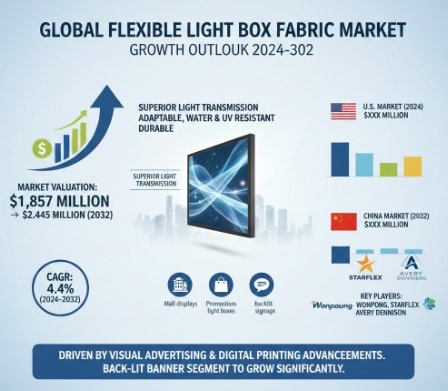
According to a new report from Intel Market Research, Global Flexible Light Box Fabric market was valued at USD 1,857 million in 2024 and is projected to reach USD 2,445 million by 2032, growing at a CAGR of 4.4% during the forecast period (2024–2032).
📥 Download FREE Sample Report: Flexible Light Box Fabric Market – View in Detailed Research Report
This steady growth trajectory reflects the material’s critical role in modern visual communication across retail, corporate, and public spaces.
What is Flexible Light Box Fabric?
Flexible light box fabric represents a specialized category of display materials engineered for backlit and frontlit advertising solutions. Unlike traditional rigid signage options, these fabrics combine polyester-based substrates with proprietary coatings to achieve superior light diffusion, durability, and environmental resistance. The material’s ability to withstand UV exposure while maintaining vibrant color reproduction has made it indispensable for applications ranging from airport wayfinding systems to high-end retail displays.
This comprehensive market analysis provides stakeholders with actionable intelligence on the Flexible Light Box Fabric industry, examining everything from raw material trends to regional adoption patterns. We’ve included detailed competitor benchmarking, technological innovation assessments, and growth projections to help businesses navigate this evolving market landscape.Key Market Drivers
1. The Sustainability Revolution in Visual Media
Environmental concerns are reshaping the signage industry, with flexible fabrics emerging as the eco-friendly alternative to traditional PVC and acrylic substrates. Manufacturers have responded by developing recyclable polyester blends that reduce material waste by up to 30% compared to rigid alternatives. Major retail chains are driving adoption through corporate sustainability mandates, with 42% of Fortune 500 companies now specifying eco-friendly display materials in their branding guidelines.
2. Digital Printing Breakthroughs
Recent advancements in direct-to-fabric printing technologies have eliminated the need for intermediary transfer steps, enabling razor-sharp 1440 dpi resolution on flexible substrates. The latest generation of latex and UV-curable inks now bonds molecularly with fabric fibers, achieving color fastness ratings exceeding 7 on the Blue Wool Scale. These innovations have reduced production lead times by approximately 35%, making customized short-run campaigns more economically viable.
- Retail Transformation: Over 38% of flexible fabric demand originates from omnichannel retailers creating seamless brand experiences across physical and digital touchpoints.
- Architectural Integration: Urban developers increasingly incorporate illuminated fabric displays into building facades and interior spaces as functional art elements.
- Transportation Hubs: Airports and subway systems value the material’s lightweight properties for ceiling-mounted wayfinding systems.
📘 Get Full Report Here: Flexible Light Box Fabric Market – View Detailed Research Report
Market Challenges
While the industry shows strong growth potential, several hurdles require attention:
- Technical Limitations in Outdoor Applications: Extended exposure to extreme weather conditions continues to challenge even the most advanced UV-resistant coatings, with color shifting observed after 18-24 months in tropical climates.
- Supply Chain Vulnerabilities: Fluctuations in petroleum prices directly impact polyester feedstock costs, creating pricing instability that affects profit margins throughout the value chain.
- Installation Expertise Gap: The specialized tensioning systems required for large-format fabric installations demand trained technicians, with labor shortages reported in developing markets.
Emerging Opportunities
The convergence of materials science and digital technology is creating exciting new possibilities:
- Smart Surface Integration: Conductive thread weaving enables interactive displays with touch-sensitive capabilities for retail product exploration.
- Photoluminescent Compounds: Next-generation fabrics can store and emit light, reducing energy consumption by up to 60% for 24/7 displays.
- Self-Cleaning Nanocoatings: TiO2-infused fabrics break down organic pollutants when exposed to light, maintaining appearance in high-traffic environments.
📥 Download FREE Sample Report: Flexible Light Box Fabric Market – View in Detailed Research Report
Regional Market Insights
The global adoption patterns reveal distinct regional characteristics:
- North America: Leads in premium retail applications, with stringent fire code requirements driving innovation in flame-retardant treatments.
- Europe: Shows strong demand for circular economy solutions, with take-back programs for used fabric gaining traction in Germany and Scandinavia.
- Asia-Pacific: The fastest-growing region, where urbanization drives demand for outdoor advertising in emerging megacities.
- Middle East: Luxury retail developments and airport expansions fuel demand for high-performance fabrics in extreme climates.
Market Segmentation
By Material Type
- Polyester-based Translucent Fabrics
- Polyethylene Mesh Substrates
- Composite Fiber Blends
By Application
- Retail Displays
- Transportation Signage
- Architectural Features
- Event Branding
By Installation
- Tensioned Frame Systems
- Magnetic Mounting
- Adhesive Backing
By Region
- North America
- Europe
- Asia-Pacific
- Middle East & Africa
- South America
📘 Get Full Report Here: Flexible Light Box Fabric Market – View Detailed Research Report
Competitive Landscape
The market features both global specialists and regional innovators:
- Material Science Leaders: Companies like Avery Dennison and Heytex dominate through proprietary coating technologies.
- Asian Manufacturing Powerhouses: Chinese firms such as Zhejiang Halead compete on price-performance ratios for volume applications.
- Niche Solution Providers: Players like Pioneer Flex address specialized needs in extreme environments and custom shapes.
Recent competitive developments include:
- Strategic acquisitions to vertically integrate supply chains
- Joint ventures combining printing expertise with fabric engineering
- R&D partnerships with chemical companies to develop next-gen substrates
Report Coverage
Our comprehensive analysis includes:
- Five-year volume and value forecasts by region and application
- Deep-dive assessments of 12 key players’ market positioning
- Technology adoption curves for emerging fabric innovations
- Regulatory impact analysis covering flammability and VOC standards
- Installation cost benchmarking across different system types
📘 Get Full Report Here: Flexible Light Box Fabric Market – View Detailed Research Report
About Intel Market Research
Intel Market Research is a leading provider of strategic intelligence, offering actionable insights in advanced materials, retail technologies, and visual communication solutions. Our research capabilities include:
- Real-time competitive benchmarking
- Global supply chain analysis
- Technology adoption modeling
- Over 500 specialized industry reports annually
Trusted by Fortune 500 companies, our insights empower decision-makers to drive innovation with confidence.
🌐 Website: https://www.intelmarketresearch.com
📞 Asia-Pacific: +91 9169164321
🔗 LinkedIn: Follow Us