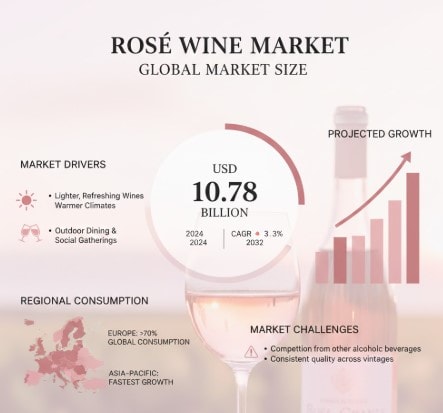
According to a new report from Intel Market Research, Global rosé wine market was valued at USD 10.78 billion in 2024 and is projected to reach USD 13.6 billion by 2032, growing at a steady CAGR of 3.3% during the forecast period (2024–2032). This growth trajectory reflects evolving consumer preferences and the increasing popularity of rosé as a versatile, approachable wine choice across diverse demographics.
📥 Download FREE Sample Report: Rose Wine Market – View in Detailed Research Report
What is Rosé Wine?
Rosé wine occupies a distinctive niche between red and white wines, created through limited skin contact with red grape varieties during production. This process, typically lasting just 1-2 days, produces the signature pale pink hue while allowing winemakers to craft a spectrum of styles from bone-dry Provençal rosés to fruit-forward New World expressions. The category’s broad appeal stems from its refreshing acidity, versatile food-pairing capabilities, and perceived approachability compared to more tannic red wines.
This comprehensive analysis provides stakeholders with critical insights into the global rosé wine landscape, examining market size, competitive dynamics, consumer trends, and emerging opportunities. From production techniques to distribution channel analysis, the report equips industry participants with actionable intelligence to navigate this evolving market segment.
Why This Report Matters
For wineries, distributors, and retailers, understanding rosé wine’s shifting consumption patterns is vital for strategic planning. The report analyzes:
- Premiumization trends reshaping the competitive landscape
- Regional consumption patterns and growth hotspots
- Emerging packaging and production innovations
- Impact of e-commerce and direct-to-consumer channels
Investors and analysts will gain valuable perspectives on market segmentation, profit margins, and the long-term viability of rosé as a category beyond its seasonal popularity peaks.
📘 Get Full Report Here: Rose Wine Market – View Detailed Research Report
MARKET DRIVERS
Changing Global Palates and Social Dynamics
The rosé renaissance continues gaining momentum as younger consumers increasingly favor its sessionable alcohol content and food-friendly profile. Millennials and Gen Z drinkers have embraced rosé as part of a broader shift toward lighter, more refreshing beverages that align with active, social lifestyles. This demographic prefers wines that offer complexity without pretense, making well-crafted rosés particularly appealing for casual gatherings and outdoor occasions.
Premiumization Wave Redefining Expectations
Wineries are strategically elevating rosé’s standing through premium offerings that command higher price points. While traditional markets like Provence continue setting quality benchmarks, emerging regions are gaining recognition for distinctive terroir-driven rosés. Producers differentiate through:
- Single-vineyard and small-lot productions
- Organic and biodynamic certifications
- Extended lees aging for texture complexity
- Innovative packaging like heavyweight glass and premium labeling
➤ The luxury rosé segment demonstrates remarkable resilience, with super-premium offerings ($20+ retail) growing at nearly 3x the rate of standard-priced rosés in key markets.
Marketing campaigns successfully position premium rosés as versatile companions for both casual picnics and sophisticated dining, helping erode lingering perceptions of rosé as merely a summer sipper.
MARKET CHALLENGES
Climate Pressures on Grape Quality
Rosé production faces mounting climate-related risks as temperature fluctuations and extreme weather events become more frequent. The delicate balance of sugar and acidity crucial for quality rosé makes vineyards particularly vulnerable to:
- Early bud break increasing frost risk
- Heat spikes accelerating sugar development at the expense of acidity
- Erratic rainfall patterns affecting berry size and concentration
Producers must adapt through canopy management adjustments, harvest timing modifications, and potential variety shifts—all while maintaining stylistic consistency consumers expect.
Quality Consistency Across Vintages
Unlike red wines that can blend across vintages, rosé’s fresh, fruity profile demands annual consistency—a significant challenge given nature’s variability. Winemakers increasingly employ:
- Advanced analytics for harvest decision-making
- Precision fermentation monitoring
- Blending reservoirs to balance vintage characteristics
These techniques help maintain brand equity but require substantial technical investments that strain smaller producers.
MARKET SEGMENTATION
| Segment | Key Characteristics | Market Influence |
| By Type |
| Sparkling rosé drives premiumization with its celebratory positioning, while still rosés dominate volume sales through accessible price points. |
| By Price Tier |
| Premium tiers show fastest growth as consumers trade up for quality, though value offerings maintain strong appeal for casual consumption. |
| By Production Method |
| Skin contact remains the gold standard for quality-focused producers, though blending allows larger brands to achieve consistency. |
COMPETITIVE LANDSCAPE
The rosé wine market features a diverse mix of:
- Large commercial wineries leveraging economies of scale
- Premium-focused estates emphasizing terroir and craftsmanship
- Innovative startups exploring niche styles and packaging
Strategic Approaches Among Leaders:
- E & J Gallo Winery dominates the value segment with broad distribution, while expanding premium offerings
- Château d’Esclans maintains luxury positioning through limited production and high-end pricing
- Maison Mirabeau capitalizes on Provence authenticity with environmentally conscious branding
Mid-sized players compete through regional specialization or unique grape varieties, while smaller producers focus on direct-to-consumer sales and wine club models that build loyal followings.
REGIONAL INSIGHTS
North America: The U.S. represents the largest import market for premium rosés, with domestic producers rapidly improving quality to compete. Major growth comes from:
- California’s Central Coast region
- Oregon’s Pinot Noir-based rosés
- Washington State blends
Asia-Pacific: While still a relatively small market, rosé shows strong potential in:
- China’s luxury hospitality sector
- Australian domestic market embracing local productions
- Japanese consumers exploring food-friendly options
📘 Get Full Report Here: Rose Wine Market – View Detailed Research Report
About Intel Market Research
Intel Market Research is a leading provider of strategic intelligence, offering actionable insights in agriculture, beverage industries, and consumer trends. Our research capabilities include:
- Global supply chain analysis
- Consumer behavior tracking
- Pricing and category management insights
- Over 500+ specialized market reports annually
Trusted by Fortune 500 companies and emerging brands alike, our research empowers businesses to make data-driven decisions in competitive markets.
🌐 Website: https://www.intelmarketresearch.com
📞 Asia-Pacific: +91 9169164321
🔗 LinkedIn: Follow Us