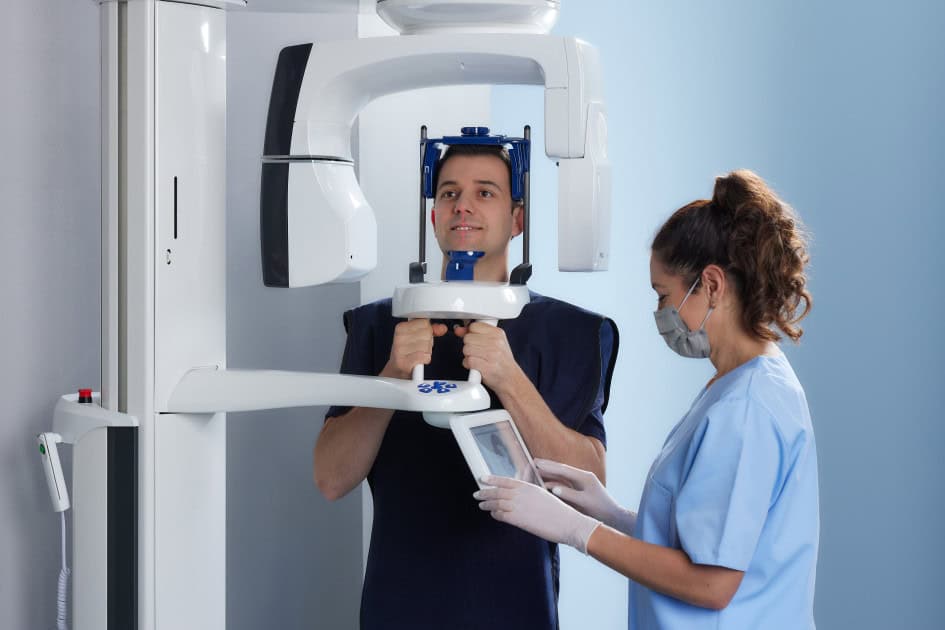
According to Next Move Strategy Consulting, the Middle East Cone-Beam Computed Tomography (CBCT) Systems Market is anticipated to achieve a valuation of USD 74 million by 2030, growing at a compound annual growth rate (CAGR) of 13% Cone-Beam Computed Tomography (CBCT), also known by names like C-arm CT, cone beam volume CT, flat panel CT, or Digital Volume Tomography (DVT), represents a breakthrough in medical imaging. Employing a cone-shaped X-ray beam, CBCT captures a series of two-dimensional images from multiple angles, which are then reconstructed into detailed three-dimensional images using advanced algorithms.
Unlock a FREE Sample – Try Before You Buy!
CBCT technology has become indispensable in dentistry, oral and maxillofacial surgery, and orthodontics, offering unparalleled spatial resolution and minimal distortion. Its ability to produce high-quality 3D images with lower radiation exposure and shorter scan times compared to conventional imaging techniques has revolutionized diagnosis, treatment planning, and the evaluation of treatment outcomes.
Key Market Drivers
- Healthcare Infrastructure Investments
The rapid growth of the healthcare sector in the Middle East, underpinned by substantial investments in medical infrastructure, serves as a primary driver for the CBCT systems market. Governments across the region are heavily investing in state-of-the-art hospitals, medical centers, and specialized healthcare facilities. For instance, Saudi Arabia’s Vision 2030 initiative has allocated over USD 65 billion toward healthcare development, aiming to enhance the accessibility and quality of medical services. This surge in infrastructure investment creates a conducive environment for the adoption of advanced diagnostic technologies like CBCT systems, fostering market growth.
- Government Support and Policies
Governments in the Middle East have been pivotal in advancing healthcare technologies, including CBCT systems. Strategic policies and financial incentives encourage healthcare providers to adopt cutting-edge medical imaging tools. These measures not only improve accessibility but also drive early disease detection, precise treatment planning, and better healthcare outcomes. The government backing accelerates the adoption of CBCT technology, benefiting both healthcare practitioners and patients.
- Technological Advancements
The integration of artificial intelligence (AI) in CBCT software represents a transformative opportunity for the market. AI-powered algorithms enhance diagnostic accuracy by automatically identifying anatomical structures, lesions, and abnormalities. These innovations streamline workflows, save time, and enable advanced functionalities such as virtual implant placement, orthodontic simulations, and surgical planning. The fusion of AI with CBCT systems aligns with the broader trend of personalized and efficient patient care, marking a significant milestone for the industry.
Market Challenges
- High Costs of CBCT Systems
One of the primary challenges hindering the growth of the CBCT market in the Middle East is the high cost associated with these systems. The initial investment required to acquire, install, and maintain CBCT machines poses a significant financial burden, especially for smaller clinics with limited budgets. This economic barrier can restrict the adoption of CBCT technology, particularly in resource-constrained regions.
- Limited Access in Underdeveloped Areas
Despite advancements, the availability of CBCT systems remains limited in remote or underdeveloped areas due to infrastructure and financial constraints. Addressing this disparity requires targeted efforts to improve access and affordability, ensuring that the benefits of CBCT technology are equitably distributed across the region.
Opportunities for Growth
- AI-Driven Innovation
The integration of AI in CBCT systems presents immense growth potential. AI-enhanced imaging solutions enable automatic detection and diagnosis, reducing manual intervention and improving accuracy. These advancements hold promise for diverse applications, from dental and maxillofacial imaging to orthopedic and neural diagnostics.
- Expansion into Emerging Markets
Emerging markets in the Middle East offer untapped opportunities for CBCT system providers. By focusing on affordability and customized solutions, companies can penetrate these markets and expand their footprint. Government initiatives aimed at bridging healthcare gaps further amplify this growth potential.
Segmentation Analysis
By Patient Position
- Seated
- Supine
- Standing
By Detector Type
- Image Intensifier
- Flat-Panel Detector
By Field of View (FOV)
- Small FOV Systems
- Medium FOV Systems
- Large FOV Systems
By Application
- Dental
- ENT Applications
- Orthopedic Conditions
- Neural & Spine
- Lung Cancer
- Veterinary
By End User
- Dental Clinics
- Hospitals
- Others
Competitive Landscape
The competitive landscape of the Middle East CBCT systems market features several prominent players, including:
- Dentsply Sirona
- Koninklijke Philips N.V.
- Vatech Co., Ltd
- Envista Holdings
- Planmeca OY
- J. Morita Mfg. Corp.
- Cefla S.C.
- Hefei Meyer Optoelectronic Technology INC
- Xoran Technologies LLC
- Acteon Group
- Hitachi Ltd.
- Genoray Co Ltd
- OSSTEM IMPLANT CO., LTD.
- Carestream Dental LLC
- Curvebeam AI
- HDXWILL
These companies are actively investing in research and development to introduce innovative products and maintain their competitive edge.
Market Outlook
The Middle East CBCT systems market is poised for significant growth, driven by advancements in technology, government support, and increasing investments in healthcare infrastructure. Overcoming challenges related to cost and accessibility will be crucial for unlocking the full potential of this market. The integration of AI and other innovative technologies offers promising opportunities for enhancing diagnostic accuracy and optimizing patient care.
Conclusion
The Middle East Cone-Beam Computed Tomography (CBCT) Systems Market is on a robust growth trajectory, reflecting the region’s commitment to advancing healthcare standards. By addressing cost barriers and leveraging technological innovations, stakeholders can unlock new avenues for growth and contribute to improved healthcare outcomes across the region.
