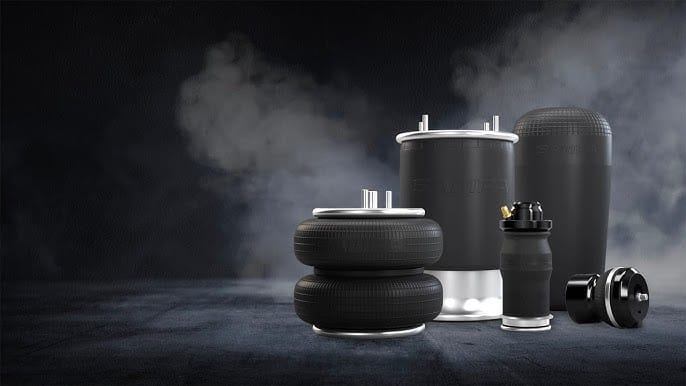
According to Next Move Strategy Consulting, the Asia-Pacific Air Spring Market is poised for substantial growth, driven by a combination of expanding manufacturing facilities, cutting-edge product innovations, and increased investments in advanced production technologies. The Asia-Pacific air spring market is projected to reach USD 5 billion by 2030, growing at a robust compound annual growth rate (CAGR) of 17% by 2030.
Grab Your FREE Sample – Limited Time Offer!
Expansion of Manufacturing Facilities Drives Market Growth
The rapid growth of the air spring market in the Asia-Pacific region is largely attributed to the increase in manufacturing facilities and the significant advancements in production technologies. As manufacturers in this region continue to invest in state-of-the-art facilities, the capacity to produce high-quality, high-performance air springs has been greatly enhanced. This expansion has not only led to greater production volumes but has also driven innovation in air spring design, contributing to the overall growth of the market.
Manufacturers in the Asia-Pacific region are increasingly focused on producing air springs that meet the growing demands for reliable suspension systems used in a variety of industries, including automotive, railway, and industrial applications. With the market becoming more competitive, companies are under constant pressure to deliver better performance and efficiency, which has led to a surge in product innovation.
Challenges in Air Spring Installation Present Obstacles to Market Expansion
While the growth prospects for the air spring market are promising, the complex installation process remains a significant challenge that could hinder its broader adoption. Air springs require specialized knowledge and tools for proper installation, making the process time-consuming and expensive. For manufacturers and end-users, the intricate installation procedures contribute to higher labor and operational costs.
Furthermore, the potential for errors or inefficiencies during installation poses a risk to the overall performance and reliability of air springs. As a result, these challenges may deter potential customers from opting for air spring systems, particularly in industries where cost and ease of maintenance are critical factors. This issue could serve as a barrier to market growth, slowing the widespread adoption of air spring technology across the Asia-Pacific region.
Sensor Technology: A Game Changer for the Air Spring Market
One of the most promising developments in the air spring market is the integration of sensor technology. By embedding sensors into air springs, manufacturers are unlocking new opportunities for improving performance, safety, and efficiency. Sensors enable real-time monitoring of critical parameters such as air pressure and temperature, which facilitates proactive maintenance and reduces the risk of system failure.
The incorporation of sensor technology also allows manufacturers to leverage predictive analytics, optimizing air spring performance based on real-time data. Furthermore, sensor-enabled air springs can play a pivotal role in the development of intelligent, adaptive suspension systems that automatically adjust to varying road conditions and driving dynamics. This capability is particularly beneficial in sectors such as the automotive and transportation industries, where driving comfort, vehicle stability, and safety are paramount.
As industries continue to prioritize automation and efficiency, the demand for sensor-equipped air springs is expected to skyrocket. These advancements offer significant opportunities for manufacturers to provide more reliable, performance-optimized solutions for customers, creating a favorable market environment for continued growth.
Leading industry players, including Continental AG and Vibracoustic, are already at the forefront of this innovation. Continental, for example, has incorporated ultrasonic sensors into their air springs, a move that underscores the industry’s commitment to advancing technology and enhancing air spring capabilities. As sensor technology continues to evolve, more manufacturers are expected to adopt this technology, further driving the growth of the Asia-Pacific air spring market.
Competitive Landscape of the Asia-Pacific Air Spring Market
The Asia-Pacific air spring market is highly competitive, with several key players dominating the landscape. Notable companies contributing to the market’s growth include:
- Continental AG
- Bridgestone Industrial
- Vibracoustic SE
- Sumitomo Electric Industries, Ltd.
- Trelleborg AB
- VDL Group
- Airtech (Akta Holding)
- Hendrickson USA, L.L.C.
- BWI Group
- Stemco
These companies are continually investing in research and development to create innovative products that meet the evolving needs of customers. Many of them are also focused on improving manufacturing capabilities to ensure the efficient production of high-quality air springs.
The competitive analysis in the report highlights the market share and strategic moves made by these companies, offering insights into how they are positioning themselves for success in the Asia-Pacific air spring market. With technological innovation and expanded production capacity, the competition is expected to intensify as companies strive to capture a larger share of the rapidly growing market.
Key Market Drivers and Opportunities
Several key drivers are expected to propel the growth of the air spring market in the Asia-Pacific region:
- Manufacturing Expansion: The continued investment in manufacturing facilities and the adoption of advanced production technologies will enable manufacturers to meet the increasing demand for high-performance air springs, contributing to market growth.
- Product Innovation: The development of new air spring designs and technologies, including sensor-equipped systems, is expected to drive demand for air springs in a variety of industries, including automotive, railways, and industrial applications.
- Rising Focus on Performance and Safety: As industries become more focused on improving vehicle performance and safety, air springs that provide enhanced suspension and comfort will experience increased demand.
- Integration of Smart Technologies: The integration of sensors and real-time monitoring capabilities into air springs is opening up opportunities for predictive maintenance and the development of intelligent suspension systems. These advancements are expected to significantly boost market growth.
However, the market also faces certain restraints, particularly related to the challenges of air spring installation. The complex and labor-intensive installation process, combined with the risk of errors, may deter some potential customers from adopting air springs.
Market Outlook and Forecast
In particular, the integration of sensor technology into air springs is set to unlock new growth opportunities. As industries continue to prioritize automation, efficiency, and performance optimization, the demand for sensor-enabled air springs is expected to rise, further accelerating market expansion.
Conclusion
The Asia-Pacific air spring market is undergoing a transformation, driven by significant advancements in manufacturing technology and product innovation. While challenges related to installation complexities remain, the integration of sensor technology and the development of intelligent suspension systems offer promising opportunities for the market’s future. With leading companies investing in cutting-edge technologies, the region is well-positioned to lead the global air spring market in the coming years.
