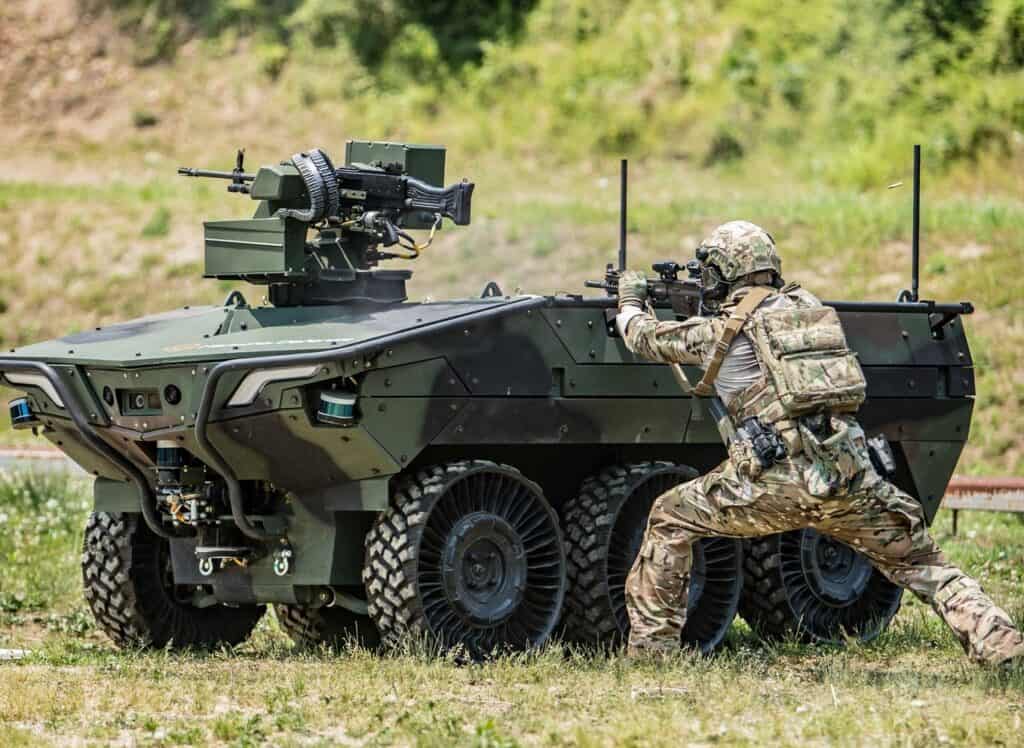
According to Next Move Strategy Consulting, the North America Unmanned Ground Vehicle (UGV) Market is experiencing significant growth and is forecasted to reach USD 1.68 billion by 2030. This growth is attributed to a robust compound annual growth rate (CAGR) of 4.8% by 2030.
What Are Unmanned Ground Vehicles (UGVs)?
Unmanned Ground Vehicles (UGVs) are robotic systems designed to operate autonomously or remotely in various environments without human intervention. These versatile vehicles vary in size, from compact models used for light tasks to larger, rugged versions designed to navigate challenging terrains. Equipped with sensors, cameras, and specialized tools, UGVs are deployed in a wide range of applications, including surveillance, inspection, reconnaissance, search and rescue, hazardous material management, and agriculture.
The capabilities of UGVs to operate in hazardous, repetitive, or contaminated environments have made them invaluable in industries where human safety could be compromised. These vehicles are particularly effective in military operations, agriculture, mining, law enforcement, and other sectors requiring precise, remote-controlled operations.
Key Drivers Fueling Market Growth
The North America UGV Market is driven primarily by increased military spending in countries such as the United States and Canada. Military forces are investing in advanced technologies to enhance their operational capabilities and improve national security. UGVs are increasingly utilized for military surveillance, reconnaissance, explosive ordnance disposal, and logistics support, where they reduce risks to human personnel. This trend reflects the growing importance of UGVs in modern military strategies.
See What You’re Missing – Download a FREE Sample Now!
Furthermore, the increasing use of UGVs across diverse industries beyond defense is helping drive market growth. In agriculture, UGVs support activities such as crop monitoring, irrigation management, and harvesting, significantly improving productivity and sustainability. In mining, these vehicles contribute to safer operations by navigating hazardous environments, assisting with exploration, excavation, and transportation tasks. The widespread adoption of UGVs across various sectors underscores their versatility and growing role in industrial automation and efficiency.
Barriers to Growth: High Costs and Lack of Standardization
Despite the promising growth prospects, the UGV market faces challenges. The high development and deployment costs of UGVs are a significant barrier. These vehicles are equipped with advanced technology and specialized components, which can make them expensive to produce and maintain. Additionally, the integration of UGVs into existing operational systems and infrastructure can be complex and costly.
Another challenge is the lack of standardization across the UGV market. UGVs are available in various types and sizes, with designs tailored for specific tasks or environments. This lack of uniformity makes it difficult for organizations to select the most appropriate UGV for their needs and presents challenges for manufacturers aiming to create products compatible with diverse systems.
Don’t Miss This Important Update
Opportunities in AI-Driven UGVs
A key development in the UGV market is the integration of artificial intelligence (AI) technologies. The emergence of AI-powered UGVs presents significant opportunities to enhance vehicle autonomy, decision-making, and overall performance. Through advanced capabilities such as machine learning and natural language processing, intelligent UGVs can perform complex tasks more efficiently and with greater accuracy. This has the potential to revolutionize a range of industries, from military reconnaissance to precision farming.
In the defense sector, AI-driven UGVs can enhance surveillance and reconnaissance operations, providing vital intelligence while minimizing risks to human personnel. In agriculture, intelligent UGVs can automate tasks like crop monitoring and precision farming, helping optimize resource usage and improve yields. The continued development of intelligent UGVs is expected to stimulate market innovation and open new avenues for growth.
Regional Market Dynamics: The U.S. Leads, Canada Shows Steady Growth
The United States holds a dominant position in the North American UGV market, driven by its robust defense sector and substantial budget allocations for military research and development. The U.S. military’s significant demand for UGVs in applications such as reconnaissance, surveillance, and logistics support has been a key factor propelling market growth. Additionally, the country is home to several leading UGV manufacturers, which drive innovation and technological advancements within the market.
Meanwhile, Canada is anticipated to experience steady growth in the UGV market. The Canadian government’s ongoing investments in defense modernization, as well as the country’s large industrial sector, including mining, forestry, and agriculture, present a wealth of opportunities for UGV deployment. Canada’s vast geography, which includes remote and challenging environments, also makes UGVs a valuable tool for applications such as border surveillance, natural resource exploration, and disaster response.
Competitive Landscape
The North American UGV market is highly competitive, with several key players leading the way in both technological advancements and market share. Notable companies in the industry include:
- QinetiQ Group
- Elbit Systems
- Rheinmetall AG
- General Dynamics Corporation
- Teledyne FLIR LLC
- L3Harris Technologies, Inc.
- Textron Systems (Howe & Howe Technologies)
- Boston Dynamics
- Milrem Robotics
- Clearpath Robotics
These companies are adopting various strategies to maintain their market positions, including expanding product offerings, investing in research and development, and forming strategic partnerships. As the UGV market continues to evolve, competition is expected to intensify, with companies increasingly focused on integrating cutting-edge technologies like AI to meet the growing demand for intelligent and autonomous vehicles.
Market Segmentation
The North America UGV market is segmented by various factors, including:
- Mode of Operation: Teleoperated and Autonomous
- Mode of Locomotion: Tracked, Wheeled, Legged, and Hybrid
- Size: Small, Medium, and Heavy
- End-User Industry: Military and Defense, Agriculture, Mining, Law Enforcement, and Others
- Geography: United States, Canada, and Mexico
Market Outlook
The North American Unmanned Ground Vehicle market is on a trajectory of sustained growth, driven by technological advancements, increased military investments, and the expanding industrial applications of UGVs. The convergence of AI technologies with UGVs represents a transformative opportunity to increase efficiency, enhance safety, and reduce human labor across multiple sectors. As UGVs become integral to military operations and industrial automation, the market is set to witness remarkable innovation and growth over the next several years.
