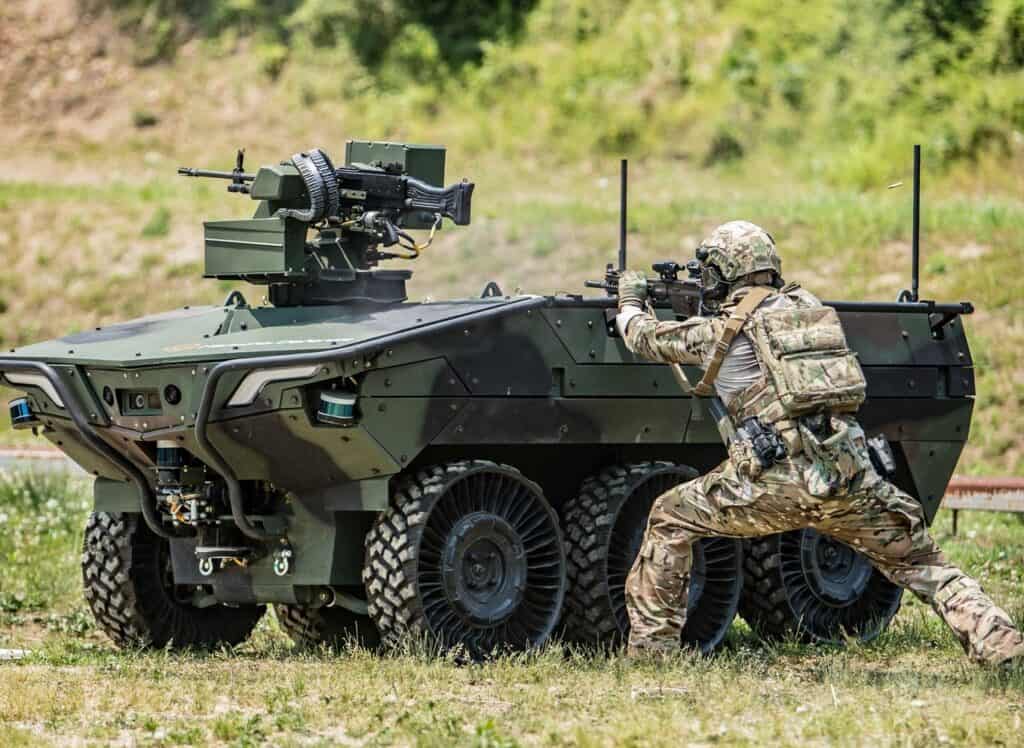
According to Next Move Strategy Consulting, the France Unmanned Ground Vehicle (UGV) market is experiencing a remarkable trajectory, projected to grow to USD 94.9 million by 2030, reflecting a compound annual growth rate (CAGR) of 4.2% by 2030. This growth is set against the backdrop of accelerating adoption across multiple sectors including defense, agriculture, and law enforcement.
Unmanned Ground Vehicles, which are autonomous systems designed to operate on land without human intervention, are equipped with cutting-edge technologies such as sensors, cameras, and specialized equipment. These vehicles are capable of performing a wide range of tasks, from inspecting hazardous materials to search and rescue operations, and have found a place across military, agricultural, transportation, and security sectors.
A Growing Demand for UGVs in Military and Defense
One of the primary drivers of the France UGV Market is the increased investment in defense technology, particularly in unmanned systems. With the French government’s commitment to enhancing its military capabilities, evidenced by a significant military budget of USD 45 billion in 2023 (including a USD 3 billion increase from the previous year), the demand for UGVs is poised to escalate.
See What You’re Missing – Download a FREE Sample Now!
The French military has recognized the advantages of UGVs, which play pivotal roles in reconnaissance, surveillance, logistics, and bomb disposal while minimizing the risk to human soldiers. The substantial defense budget allocation dedicated to unmanned vehicle development is fostering innovation and expanding the French defense sector’s reliance on UGVs to modernize operational capabilities. As the nation continues to focus on leveraging unmanned technology, the UGV market will see a sustained and promising growth trajectory.
Revolutionizing French Agriculture
Another major force propelling UGV adoption is the increasing utilization of these vehicles in the agricultural industry. In alignment with France’s ambition to modernize its agricultural practices, UGVs are becoming indispensable tools in enhancing productivity, reducing labor costs, and promoting sustainability. The country’s government has been promoting the integration of advanced technologies within agriculture, recognizing the value of UGVs in tasks such as crop monitoring, irrigation inspection, and precision farming.
As UGVs allow farmers to gather real-time data and perform repetitive tasks autonomously, their implementation offers significant cost savings and boosts overall productivity. This is vital in the context of France’s agricultural goals, which include reducing environmental impact and improving food security. The rapid growth of UGV adoption in agriculture is expected to further drive the market expansion in the coming years.
Challenges: High Costs and Lack of Standardization
Despite the promising growth prospects, the UGV market in France faces certain barriers. The high development and production costs of UGVs present a significant hurdle. From advanced sensor integration to specialized components, the production and maintenance of UGVs require substantial investment. Additionally, the integration of UGVs into existing systems and workflows can be time-consuming and costly.
Another challenge hindering the market’s growth is the lack of standardization. The wide variety of UGV types, ranging from small, lightweight models to large, heavy-duty systems, makes it difficult for companies to select the most appropriate vehicle for their needs. This lack of uniformity also complicates efforts to develop products that are universally compatible with different systems, driving up costs for both manufacturers and consumers.
Intelligent UGVs: The Future of Unmanned Ground Vehicles
The convergence of artificial intelligence (AI) with UGV technology represents one of the most promising developments for the market. AI integration enables UGVs to undertake complex tasks autonomously, enhancing their precision and reliability. With machine learning, natural language processing, and other AI technologies, intelligent UGVs are now able to make advanced decisions, further extending their utility in a variety of sectors.
In the military, intelligent UGVs can serve as highly capable reconnaissance and surveillance units, improving situational awareness while reducing risk to personnel. In agriculture, intelligent UGVs can optimize tasks such as planting, harvesting, and monitoring crop health, leading to improved yields and reduced resource consumption. As AI continues to evolve, the potential for intelligent UGVs to drive efficiency and innovation across industries is vast, unlocking new opportunities for growth within the market.
Competitive Landscape
The France Unmanned Ground Vehicle Market is home to several key players who are at the forefront of technological advancements and market strategies. These include global leaders such as QinetiQ Group, Elbit Systems, Rheinmetall AG, General Dynamics Corporation, Teledyne FLIR LLC, L3Harris Technologies, Inc., Textron Systems (Howe & Howe Technologies), Boston Dynamics, Milrem Robotics, and Clearpath Robotics.
These companies are actively engaging in strategic initiatives to expand their market share and capitalize on the growth potential within the sector. From focusing on R&D to forging key partnerships and expanding product portfolios, these players are pushing the boundaries of unmanned technology to meet the evolving demands of the French market.
Segmentation of the France UGV Market
The France UGV market can be segmented based on various parameters, providing a deeper understanding of the demand and growth across different areas:
- By Mode of Operation:
- Teleoperated
- Autonomous
- By Mode of Locomotion:
- Tracked
- Wheeled
- Legged
- Hybrid
- By Size:
- Small
- Medium
- Heavy
- By End-User Industry:
- Military and Defense
- Agriculture
- Mining
- Law Enforcement
- Others
Market Outlook and Future Growth
Looking ahead, the France UGV market is expected to grow steadily due to the combined influence of increasing defense spending, agricultural modernization, and advancements in AI technology. The growing reliance on UGVs across diverse industries will continue to drive demand, while the gradual reduction in costs associated with production and integration will likely open up the market to a broader range of consumers.
With an annual market volume projected to double by 2030, from 561 units in 2023 to 1,122 units, the UGV sector is set to experience robust growth. As technological advancements make UGVs more accessible and affordable, their adoption is expected to rise, contributing to the market’s long-term expansion.
Conclusion
The France Unmanned Ground Vehicle Market is entering a phase of rapid growth, fueled by advancements in technology, increased defense spending, and the expanding adoption of UGVs in agriculture and other industries. Despite challenges related to cost and standardization, the integration of AI and intelligent systems presents vast opportunities for innovation and market expansion. As more sectors embrace autonomous technologies, the France UGV market is poised to become a central player in the global unmanned systems industry.
