According to Next Move Strategy Consulting, Finland unmanned ground vehicle (UGV) market is set for significant expansion, fueled by the increasing adoption of UGVs in military, defense, and industrial applications. With projections showing a CAGR of 11.8% by 2030, the market is expected to see a notable surge in both value and volume.
Projections indicate that the market will reach USD 14.9 million by 2030, driven by increasing deployment across a variety of sectors, including military, agriculture, and logistics.
Unmanned Ground Vehicles: A New Era of Automation
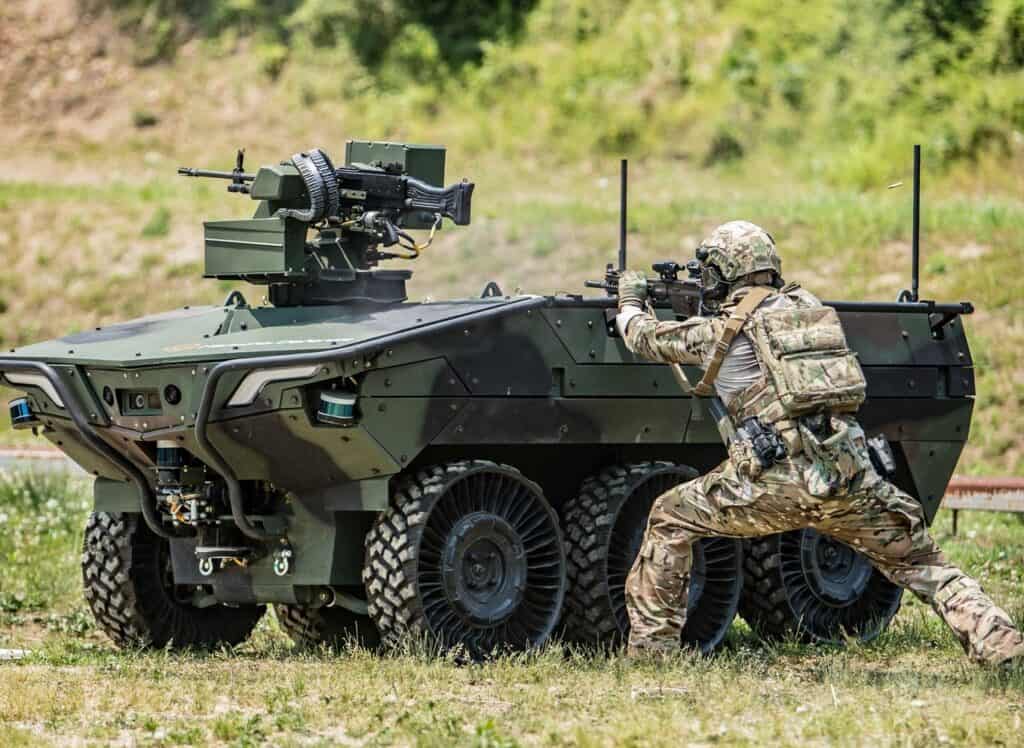
Unmanned ground vehicles are robotic platforms engineered to operate independently on land without direct human intervention. These vehicles are equipped with advanced sensors, cameras, and specialized equipment, enabling them to perform tasks such as surveillance, mapping, inspection, and search and rescue operations. UGVs come in a wide variety of sizes and configurations, ranging from compact models suitable for easily transportable tasks to rugged, larger versions capable of navigating challenging terrains.
Whether used in hazardous environments such as bomb disposal or search and rescue, or for less perilous but repetitive tasks like agricultural monitoring, UGVs provide valuable solutions in settings where human presence would otherwise be risky or impractical. Their ability to operate autonomously or be remotely controlled makes them highly versatile, suitable for use across multiple industries including military, defense, agriculture, and more.
Military and Defense Adoption Driving Market Expansion
A key driver of the growing demand for Finland UGV Market is their increasing use in military and defense applications. Globally, armed forces are increasingly incorporating UGVs into their operations to reduce the risks to human personnel and enhance operational efficiency. These vehicles are deployed for a wide range of military functions, including logistics, bomb disposal, and surveillance. UGVs are particularly valuable in hazardous and dynamic environments where human intervention may not be feasible or safe.
Explore the Benefits with a FREE Sample!
By substituting human involvement in dangerous tasks, UGVs mitigate the risk to soldiers while also improving mission outcomes. Moreover, the continuous operation of these vehicles – without the need for rest – increases productivity and mission effectiveness. The military sector’s increasing reliance on unmanned technologies is expected to continue fuelling the market’s growth.
Expansion in Commercial and Industrial Sectors
In addition to the military sector, UGVs are finding increasing use in a variety of commercial and industrial applications. Finland’s agricultural industry, for example, benefits from UGVs that help with crop monitoring, pest management, and soil analysis, all of which contribute to enhanced productivity and resource management. In transportation and logistics, UGVs are being used for autonomous delivery, improving the efficiency of supply chains by reducing human labor costs and increasing the speed of operations.
Across sectors such as mining and law enforcement, UGVs perform tasks ranging from surveillance to hazardous material handling. The ability of UGVs to function continuously without human fatigue, combined with their capacity to operate in dangerous or hard-to-reach locations, positions them as indispensable tools for enhancing operational efficiency and safety in these industries.
Challenges: High Costs and Lack of Standardization
Despite the promising growth, the Finland UGV market faces challenges, primarily related to the high costs involved in their development, manufacturing, and maintenance. UGVs require substantial investment in advanced technologies, sensors, and materials, which results in high upfront costs. Additionally, the integration of UGVs into existing systems can be complex and time-consuming, leading to further financial barriers for companies and organizations.
Another challenge is the lack of standardization in the UGV market. Different types and sizes of vehicles are tailored for specific tasks, which can complicate the selection process for users. This lack of uniformity makes it more difficult for manufacturers to create products compatible with various systems and applications, potentially slowing down the widespread adoption of UGVs.
Opportunities: AI Integration and the Evolution of Intelligent UGVs
One of the most exciting developments in the UGV market is the integration of artificial intelligence (AI) to create more intelligent and autonomous vehicles. The incorporation of machine learning, natural language processing, and advanced data analytics allows UGVs to operate with a higher degree of autonomy and decision-making capabilities. As UGVs become more intelligent, they can execute more complex tasks with greater precision and efficiency.
In the military sector, AI-powered UGVs can enhance reconnaissance and surveillance operations by processing vast amounts of data in real-time, providing actionable intelligence to personnel. Similarly, in agriculture, AI can help optimize farming practices by improving crop yields and resource usage through precision farming techniques. As the development of intelligent UGVs progresses, new market opportunities are emerging across a wide range of industries, offering considerable growth potential.
Competitive Landscape
The Finland Unmanned Ground Vehicle market is competitive, with several global players operating in this space. Key players in the market include:
- QinetiQ Group
- Elbit Systems
- Rheinmetall AG
- General Dynamics Corporation
- Teledyne FLIR LLC
- L3Harris Technologies, Inc.
- Textron Systems (Howe & Howe Technologies)
- Boston Dynamics
- Milrem Robotics
- Clearpath Robotics
These companies are investing in research and development, forming strategic partnerships, and leveraging advanced technologies to maintain a competitive edge in the growing UGV market. As the demand for UGVs across multiple sectors continues to rise, these players are expected to benefit from the increasing adoption of unmanned systems.
Market Segmentation
The Finland Unmanned Ground Vehicle Market is segmented based on mode of operation, locomotion, size, and end-user industry.
- By Mode of Operation
- Teleoperated
- Autonomous
- By Mode of Locomotion
- Tracked
- Wheeled
- Legged
- Hybrid
- By Size
- Small
- Medium
- Heavy
- By End-User Industry
- Military and Defense
- Agriculture
- Mining
- Law Enforcement
- Others
Conclusion: A Bright Future Ahead for Finland’s UGV Market
The Finland Unmanned Ground Vehicle market is on the cusp of significant growth. With expanding applications across military, commercial, and industrial sectors, along with advancements in artificial intelligence and autonomous technologies, UGVs are poised to play a crucial role in the future of automation. As the market continues to mature, both opportunities and challenges lie ahead, but the potential for innovation and market expansion is undeniable.
