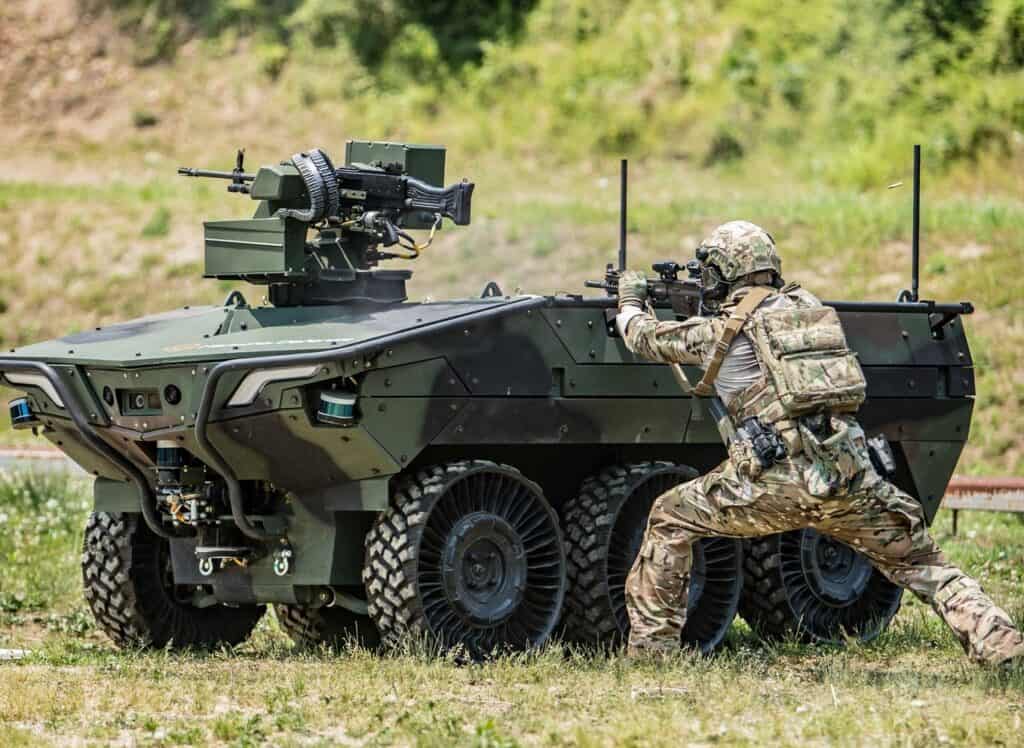
According to Next Move Strategy Consulting, the Middle East Unmanned Ground Vehicle (UGV) market is poised for substantial growth, with projections showing a remarkable expansion to USD 191.9 million by 2030, at a Compound Annual Growth Rate (CAGR) of 8.2%.
Unmanned Ground Vehicles (UGVs) represent a breakthrough in robotics, designed to operate autonomously or remotely without human intervention. These vehicles range from small, portable models to large, rugged machines capable of navigating diverse and challenging terrains. UGVs are equipped with advanced sensors, cameras, and specialized tools to perform tasks across various industries, including surveillance, search and rescue, military operations, and agriculture. Their ability to execute jobs in hazardous, remote, or otherwise inaccessible environments makes them invaluable across sectors that prioritize safety, efficiency, and automation.
Rising Demand in Military and Defense Sectors
A significant driver behind the rapid expansion of the Middle East UGV Market is the ongoing security concerns and geopolitical challenges that dominate the region. The growing demand for advanced security and surveillance systems has accelerated the adoption of unmanned technologies, including UGVs, for military and defense applications. These vehicles excel in performing tasks such as border surveillance, bomb disposal, reconnaissance, and explosive ordnance disposal, where human safety is paramount. Their adaptability to harsh environments and diverse terrains, including deserts, urban areas, and rugged regions, makes them well-suited for the Middle East’s complex security landscape.
See What You’re Missing – Download a FREE Sample Now!
The United Arab Emirates (UAE) has emerged as a key leader in the region’s robotics sector, spearheading initiatives to incorporate cutting-edge technologies like UGVs in industries such as mining, oil and gas, and natural resource management. Through programs designed to foster robotics and automation, the UAE aims to position itself as a global robotics hub, opening up new opportunities for UGV deployment. Notably, the country’s commitment to developing advanced solutions for accident prevention and natural gas detection has heightened demand for UGVs, particularly in high-risk sectors such as oil and gas exploration.
Technological Innovations Drive Market Expansion
Israel, a global leader in defense and technological innovations, is also making significant contributions to the growth of the Middle East UGV market. Leading companies such as Elbit Systems and Rafael Advanced Defense Systems have developed sophisticated UGV solutions tailored to the region’s defense needs. For instance, Elbit Systems, in collaboration with Roboteam, launched the ROOK, a multi-payload, military-grade 6X6 UGV that integrates autonomous capabilities to enhance mission effectiveness and operational flexibility. These advancements highlight Israel’s pivotal role in pushing the boundaries of UGV technology, driving not only regional but also global growth in the sector.
In addition to defense applications, technological advancements in artificial intelligence (AI) and machine learning are enabling UGVs to perform more complex tasks autonomously. These capabilities allow UGVs to make decisions on their own, improving operational efficiency, safety, and productivity in industries such as agriculture, law enforcement, and logistics.
Challenges and Barriers to Market Growth
Despite the promising outlook for the Middle East UGV market, several challenges remain that may hinder the rate of adoption. One significant barrier is the high cost associated with developing, deploying, and maintaining UGV systems. The integration of advanced technologies, such as AI, high-definition cameras, and specialized sensors, significantly increases the production cost of UGVs. Moreover, the customization of these vehicles for specific applications adds another layer of expense, making them financially out of reach for some businesses or government organizations, particularly in the early stages of adoption.
Furthermore, the lack of standardization across UGV models complicates procurement and integration for users. With different UGVs designed for various tasks, ranging from military operations to agricultural monitoring, companies often face difficulties when selecting solutions that fit within their existing systems. This diversity in designs and applications can lead to complications in ensuring compatibility and performance across different platforms.
Opportunities in the AI-UGV Integration
One of the most promising developments in the UGV market is the integration of artificial intelligence (AI) and machine learning into these vehicles. Intelligent UGVs, capable of performing tasks autonomously with advanced decision-making capabilities, are transforming industries by enhancing operational efficiencies and improving safety.
In the military and defense sectors, AI-equipped UGVs play a crucial role in reconnaissance, surveillance, and intelligence gathering, reducing the risk to human personnel in high-threat environments. In agriculture, intelligent UGVs are revolutionizing precision farming techniques, enabling farmers to monitor crops, manage irrigation systems, and optimize resource usage, thus improving crop yields and reducing waste.
The growing demand for intelligent UGVs, driven by their ability to deliver improved productivity and reduced reliance on human labor, is expected to open new opportunities for market growth. As AI technology continues to evolve, UGVs will become even more capable, making them indispensable assets in critical sectors such as defense, agriculture, mining, and law enforcement.
Competitive Landscape
The Middle East UGV market is becoming increasingly competitive, with both established and emerging players striving to capture market share. Key companies leading the market include QinetiQ Group, Elbit Systems, Rheinmetall AG, General Dynamics Corporation, Teledyne FLIR LLC, L3Harris Technologies, Inc., Textron Systems (Howe & Howe Technologies), Boston Dynamics, Milrem Robotics, and Clearpath Robotics. These companies are leveraging innovative technologies, strategic partnerships, and market expansions to solidify their positions in the growing UGV sector.
Market players are also focusing on enhancing the capabilities of their UGVs through advanced communication systems, autonomous navigation, and multi-functional payloads, in order to meet the diverse demands of military, agricultural, and industrial users.
Market Segmentation
The Middle East UGV market is diverse, encompassing various modes of operation, locomotion, and end-user industries. UGVs can be classified based on their mode of operation (teleoperated or autonomous), mode of locomotion (tracked, wheeled, legged, or hybrid), and size (small, medium, or heavy). They find applications in a range of industries, with military and defense leading the demand, followed by agriculture, law enforcement, and mining.
Market Outlook and Future Trends
Looking ahead, the Middle East Unmanned Ground Vehicle market is poised for dynamic growth driven by technological innovations, increased defense spending, and advancements in AI. The combination of autonomous vehicles and AI integration is set to redefine industries, offering new opportunities for automation and efficiency. While high costs and lack of standardization remain challenges, the future of the UGV market in the Middle East looks promising, with governments and industries increasingly investing in these advanced technologies.
