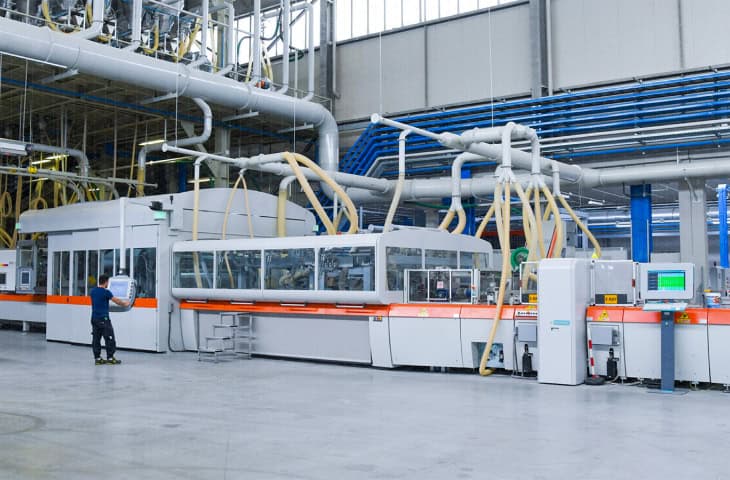
The South Korea Ceramic Machinery Market size is predicted to reach USD 54.8 million at a CAGR of 6.1% till 2030. This remarkable growth reflects increasing demand for advanced ceramic machinery driven by technological advancements and South Korea’s thriving industrial and construction sectors.
Market Drivers and Key Trends
- Rising Demand for Advanced Ceramic Applications: South Korea’s strong presence in electronics, automotive, and construction industries has fueled demand for advanced ceramics, which offer superior properties such as durability, heat resistance, and lightweight characteristics. This increasing adoption of advanced ceramics has driven the need for efficient and high-performance ceramic machinery capable of producing high-quality components.
- Adoption of Industry 4.0 Technologies: The integration of Industry 4.0 technologies, including automation, robotics, IoT (Internet of Things), and AI (Artificial Intelligence), in ceramic machinery is revolutionizing the production process. These advancements enable manufacturers to enhance precision, efficiency, and scalability, aligning with the country’s emphasis on technological innovation.
Click Here for Your FREE Sample!
- Government Support and Initiatives: The South Korean government’s focus on strengthening domestic manufacturing and promoting sustainable practices is boosting investments in ceramic machinery. Incentives for adopting eco-friendly manufacturing processes and energy-efficient machinery are encouraging manufacturers to upgrade their production capabilities.
- Growth in Construction and Infrastructure Projects: South Korea’s booming construction and infrastructure development sector has created significant demand for ceramic tiles, sanitaryware, and related products. This surge in demand is driving investments in ceramic machinery to meet the growing needs of the domestic and export markets.
- Focus on Sustainability: The global emphasis on sustainability and eco-friendly practices is influencing the ceramic machinery market in South Korea. Manufacturers are investing in energy-efficient machinery that minimizes waste, reduces emissions, and complies with stringent environmental regulations.
Challenges in the Market
Despite the positive outlook, the South Korea ceramic machinery market faces challenges such as high initial investment costs, technical complexities, and intense competition from international players. To overcome these hurdles, local manufacturers are focusing on research and development (R&D) to produce cost-effective and innovative machinery that caters to diverse market needs.
Explore the Benefits with a FREE Sample!
Opportunities in Export and Collaboration
South Korea’s strategic location and well-developed infrastructure make it an ideal hub for exporting ceramic machinery to neighboring countries in Asia and beyond. Additionally, collaborations between domestic manufacturers and global leaders in ceramic machinery technology are fostering innovation and expanding market reach.
Key Players in the Market
Prominent players operating in the South Korea ceramic machinery market include:
- System Ceramics
- Sacmi Group
- KEDA Industrial Group Co., Ltd.
- SITI B&T Group
- LB Officine Meccaniche S.p.A.
- Welko Industrial
- Modena Technology Limited
- I-Tech Srl
These companies are adopting strategies such as mergers and acquisitions, product launches, and partnerships to strengthen their foothold in the market. Innovations in machinery design and manufacturing processes are helping these players meet the evolving demands of South Korean industries.
Market Segmentation
The South Korea ceramic machinery market is segmented based on product type, application, and end-use industry:
- By Product Type:
- Tile Pressing Machines
- Glazing Machines
- Dryers
- Kilns
- Other Machinery
- By Application:
- Tile Manufacturing
- Sanitaryware Production
- Tableware Manufacturing
- Technical Ceramics
- By End-Use Industry:
- Construction
- Automotive
- Electronics
- Industrial
Future Outlook
The South Korea ceramic machinery market is expected to witness sustained growth, driven by continued advancements in technology, rising demand for high-performance ceramics, and increasing investments in construction and infrastructure projects. The emphasis on sustainability and energy efficiency will further shape the market dynamics, presenting opportunities for innovation and expansion.
Conclusion
South Korea’s ceramic machinery market is set to achieve remarkable growth, fueled by technological innovation, government support, and the rising adoption of advanced ceramics across various industries. As manufacturers embrace sustainable practices and Industry 4.0 technologies, the market is poised to become a significant contributor to the country’s industrial growth.
