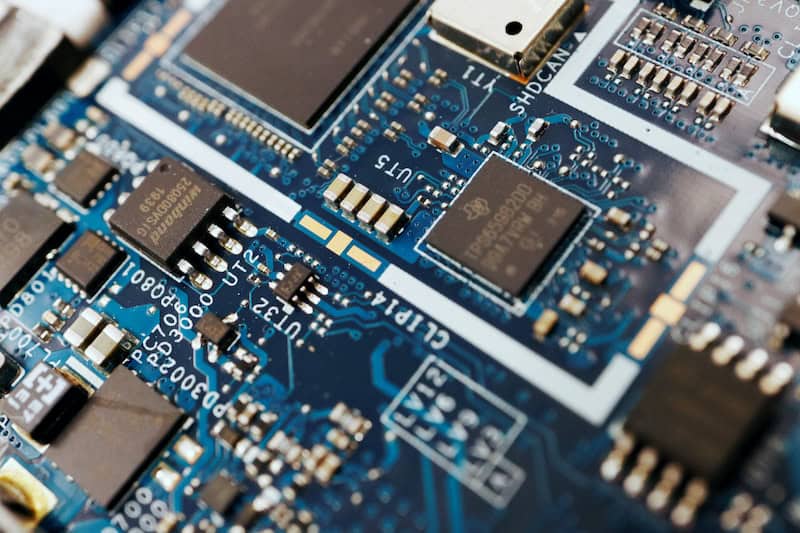
According to Next Move Strategy Consulting, the global Graphene Semiconductor Chips Market, is set to experience a transformative period of growth, projected to reach USD 2 billion by 2030. This remarkable expansion is anticipated to occur at a compound annual growth rate (CAGR) of 27% from 2024 to 2030. Graphene semiconductor chips, which utilize graphene—a groundbreaking two-dimensional carbon allotrope—as the primary material for their semiconductor components, are revolutionizing the electronics industry due to their exceptional properties.
What Are Graphene Semiconductor Chips?
Graphene semiconductor Chips Market are a new frontier in electronics, utilizing graphene in place of traditional materials like silicon for semiconductor functions. Graphene, which is made up of a single layer of carbon atoms arranged in a hexagonal lattice, has emerged as a revolutionary material in the tech world. It boasts extraordinary electrical, thermal, and mechanical properties, offering immense potential for next-generation semiconductor applications.
Click Here for Your FREE Sample!
In graphene-based transistors, the material’s ultra-high electron mobility allows for faster processing speeds and significantly reduced energy consumption compared to silicon-based counterparts. This makes graphene a key enabler for advanced electronics, offering not only higher performance but also the potential for completely new designs and form factors in semiconductor devices. As demand for smaller, faster, and more energy-efficient electronics continues to grow, graphene semiconductor chips are expected to play a pivotal role in the future of the industry.
Market Dynamics and Trends
The Graphene Semiconductor Chips market is poised for rapid expansion, driven by several key factors:
- Rising Demand Across Multiple Industries: Graphene’s versatility and remarkable properties have generated significant interest across a range of sectors, including telecommunications, automotive, aerospace, and healthcare. The ability of graphene semiconductor chips to support high-performance transistors, sensors, photodetectors, and batteries is contributing to their growing adoption in these industries. The ability of graphene to meet the ever-increasing demand for faster, more energy-efficient devices, especially in consumer electronics and communication technologies, has become a driving force in the market’s growth.
- Increasing Research and Development (R&D) Investments: As research into graphene’s applications in semiconductor technology intensifies, significant advancements are expected. In particular, new materials such as graphene nanoribbons and graphene-based optoelectronics are expected to drive innovations in the semiconductor industry. These technologies enhance the optical and electrical performance of components like photodetectors and solar cells, which are expected to see increased adoption in telecommunications, renewable energy, and healthcare.
- Rising Demand for High-Performance Electronics: The demand for high-performance electronics continues to increase as industries such as telecommunications, automotive, and aerospace develop more sophisticated products. From self-driving cars to 5G networks and quantum computing, the need for advanced, efficient semiconductors is at an all-time high. Graphene’s unique properties make it an ideal material to meet these growing demands.
Market Challenges
Despite the strong growth prospects, the graphene semiconductor chips market faces several challenges:
- High Production Costs: One of the main obstacles to the widespread adoption of graphene semiconductor chips is the high cost of producing graphene. While graphene’s potential is vast, producing it in large quantities and at a reasonable cost remains a challenge. Traditional semiconductor materials like silicon are cheaper to manufacture, which makes it difficult for graphene to compete in terms of cost efficiency at scale. However, significant progress is being made to reduce production costs, and efforts like NanoXplore Inc.’s dry graphene manufacturing method are promising to bring down these costs.
- Complexity in Manufacturing Processes: The process of integrating graphene into semiconductor chips is complex and requires advanced technology and expertise. As the manufacturing techniques continue to evolve, the industry must overcome challenges in scalability and quality control to ensure graphene chips can be produced on a large scale without sacrificing performance.
Key Growth Opportunities
- Graphene-Based Optoelectronics and Nanoribbons: The development of graphene-based optoelectronic devices, which offer superior optical and electrical properties, is expected to unlock significant growth opportunities. These devices can be used in photodetectors, solar cells, and other high-performance electronic devices. In addition, the introduction of graphene nanoribbons—graphene sheets that are engineered to be narrower than a single nanometer—has the potential to revolutionize quantum technologies, providing enhanced capabilities in electronic and photonic applications.
- Integration in Quantum Technologies: As quantum computing and communication technologies progress, graphene semiconductor chips could play a crucial role due to their excellent electronic properties and ability to operate at high speeds. The intersection of graphene technology with quantum mechanics could lead to groundbreaking innovations in the semiconductor industry.
Market Segmentation
The graphene semiconductor chips market is segmented based on application, end-user, and region:
- By Application:
- Integrated Circuits (ICs)
- Transistors
- Sensors
- Light-Emitting Diodes (LEDs)
- Batteries
- Photodetectors
- Solar Cells
- Others
- By End-User:
- Electronics
- Telecommunications
- Automotive
- Aerospace & Defense
- Healthcare
- Others
- By Region:
- North America (The U.S., Canada, Mexico)
- Europe (The UK, Germany, France, Italy, Spain, others)
- Asia Pacific (China, Japan, India, South Korea, Taiwan, others)
- Rest of World (RoW) (Latin America, Middle East, Africa)
Geographical Analysis
- Asia-Pacific: Asia-Pacific is expected to maintain a dominant share in the graphene semiconductor chips market due to the region’s leadership in semiconductor manufacturing. Countries such as China, South Korea, and Taiwan are home to some of the largest semiconductor manufacturers globally.
- North America: North America is expected to show steady growth, largely driven by investments in semiconductor industries. The U.S. government’s USD 5 billion investment in semiconductor development under the CHIPS and Science Act is expected to enhance domestic production capabilities and spur innovation in semiconductor technologies.
Competitive Landscape
Key players in the graphene semiconductor chips market are focused on strategic partnerships, collaborations, and technological innovations to maintain their competitive edge. Some of the prominent companies include:
- Haydale Graphene Industries PLC
- Directa Plus PLC
- First Graphene Limited
- Graphenea S.A.
- NanoXplore Inc.
- ACS Material LLC
- Advanced Material Development Ltd.
- Applied Materials, Inc.
- G6 Materials Corp.
- Siemens AG
Recent Developments:
- NanoXplore Inc. launched a large-scale dry process for graphene manufacturing in November 2023, aiming to reduce the cost of graphene production by up to 50%, making it more competitive with traditional semiconductor materials.
- Applied Materials, Inc. partnered with several Indian semiconductor companies in February 2024 to research graphene semiconductors and invest in the growth of the Indian semiconductor industry.
- G6 Materials Corp. announced a partnership in February 2022 with Advance Materials PTE LTD to develop fiber composites enhanced with graphene, improving the strength and durability of electronic devices.
Conclusion
The graphene semiconductor chips market is poised for a period of rapid expansion, driven by technological advancements, increasing industry demand, and governmental support for research and development. With applications spanning electronics, telecommunications, automotive, aerospace, and healthcare, graphene semiconductor chips are expected to redefine the future of electronics. As production costs decrease and new applications emerge, graphene is set to become a cornerstone material for the next generation of high-performance, energy-efficient devices.
