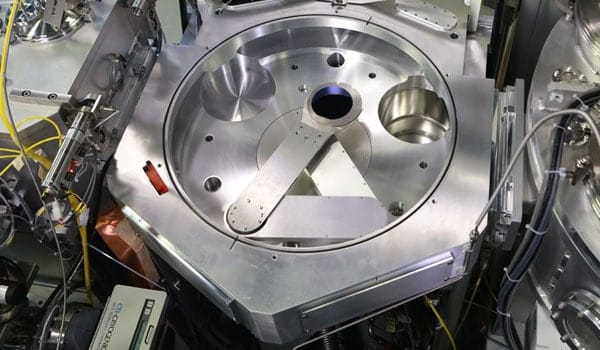
According to Next Move Strategy Consulting, the Denmark Wafer Handling Robots Market, is poised for significant growth, with forecasts indicating it will reach USD 7 million by 2030. This represents a robust compound annual growth rate (CAGR) of 14% from 2024 to 2030. The growth is primarily driven by Denmark’s rising adoption of Industry 4.0 technologies, the expansion of digital infrastructure such as 5G, and the increasing integration of artificial intelligence (AI) into semiconductor manufacturing processes.
Wafer Handling Robots: Essential Tools for Semiconductor Manufacturing
Denmark Wafer Handling Robots Market are a critical part of modern semiconductor manufacturing. These robots are specially designed to perform precise movements and positioning tasks involving fragile semiconductor wafers. Their ability to handle wafers with precision and in contamination-free environments is integral to the production of high-performance integrated circuits and microelectronic devices.
Click Here for Your FREE Sample!
These robots operate in ultra-clean environments, equipped with a variety of sensors, vision systems, and end effectors to securely handle, inspect, and manipulate wafers. The precision they offer not only reduces the risk of contamination or damage but also boosts the efficiency of production lines. As a result, wafer handling robots play a pivotal role in ensuring the smooth operation of semiconductor fabs and fostering the production of cutting-edge semiconductor technologies that power a wide range of electronic devices.
Industry 4.0 Adoption Fuels Market Expansion
Denmark’s strong push toward Industry 4.0, characterized by the integration of advanced robotics and automation solutions, is significantly driving the demand for wafer handling robots. Industry 4.0 focuses on automating manufacturing processes, enhancing precision, and reducing human error – all of which are key factors in boosting production efficiency in semiconductor manufacturing.
As part of its Industry 4.0 vision, Denmark has embraced robotics technologies to enhance its manufacturing capabilities, create high-tech jobs, and increase its global competitiveness. The country’s focus on digital transformation and automation places it at the forefront of manufacturing innovation, and the adoption of wafer handling robots is central to this shift.
By incorporating advanced robotic systems into semiconductor production, Denmark is positioning itself as a leader in adopting cutting-edge technologies, contributing to its continued economic growth and international stature.
Expansion of Digital Infrastructure and 5G Technology Drive Demand
Denmark’s investment in 5G technology and the expansion of its digital infrastructure are further catalysts for growth in the wafer handling robots market. In May 2020, Denmark launched 5G networks with the aim of positioning itself as one of the leading countries globally in terms of digital infrastructure and technological innovation.
The deployment of 5G networks is expected to revolutionize industrial manufacturing by enabling faster and more efficient communication between machines, systems, and robots. In the context of wafer handling robots, this means enhanced connectivity for real-time monitoring, data exchange, and predictive maintenance, leading to increased operational efficiency and reduced downtime.
Additionally, initiatives such as the Smart Production Lab, a research hub dedicated to testing and commercializing new manufacturing technologies, are helping Denmark maintain its position as a digital frontrunner. This lab fosters collaboration between manufacturers, technology developers, and researchers to innovate and advance automation solutions, including wafer handling robots. With the expansion of digital infrastructure and the advent of 5G, Denmark’s manufacturing sector is well-equipped to meet the growing demand for automation technologies like wafer handling robots.
High Initial Costs Pose Challenges to Market Growth
Despite the promising growth prospects, the high initial costs associated with wafer handling robots remain a barrier to market expansion. The significant upfront investment required to acquire, install, and maintain these sophisticated automation systems can be a financial burden, especially for smaller companies or those with limited budgets.
While the benefits of wafer handling robots – such as increased productivity, precision, and operational efficiency – offer a strong case for their adoption, the high cost may deter some potential adopters from entering the market or expanding their automation capabilities. However, as the market matures and technology advances, it is expected that costs will decrease over time, making these systems more accessible to a broader range of companies.
Opportunities Created by Advanced Technologies like AI and IoT
The incorporation of Artificial Intelligence (AI), computer vision, and the Internet of Things (IoT) into wafer handling robots is unlocking significant opportunities for market growth. These advanced technologies enable robots to further optimize their processes, enhance efficiency, and support predictive maintenance.
- Artificial Intelligence (AI): AI algorithms improve the precision and speed of wafer handling robots, allowing them to detect defects in real-time, optimize movement patterns, and forecast maintenance needs. This results in higher quality control, reduced error rates, and less downtime in semiconductor production.
- Computer Vision: With computer vision, robots can accurately identify and manipulate semiconductor wafers, even in complex and dynamic environments. This technology ensures precise handling and reduces the risk of contamination, improving the overall reliability and safety of the production process.
- Internet of Things (IoT): IoT-enabled wafer handling robots are capable of real-time data exchange, providing manufacturers with continuous performance feedback and enabling predictive maintenance. This connectivity allows for more efficient monitoring of operations, reducing potential breakdowns and improving system uptime.
These advanced features enhance the value of wafer handling robots, making them indispensable in the rapidly evolving semiconductor manufacturing industry.
Competitive Landscape and Key Market Players
The Denmark Wafer Handling Robots Market is home to several key players that are actively shaping the market through product innovations, strategic collaborations, and technological advancements. Some of the leading companies in the market include:
- Kawasaki Heavy Industries, Ltd.
- Nidec Instruments Corporation
- Yaskawa Electric Corporation
- RORZE Corporation
- DAIHEN Corporation
- Hirata Corporation
- Rexxam Co., Ltd.
- KUKA AG
- ULVAC, Inc.
- Stäubli International AG
These companies are at the forefront of developing and deploying advanced robotic solutions, including wafer handling robots, to meet the growing needs of the semiconductor manufacturing industry. As Denmark continues to embrace digitalization and automation, these players are expected to drive the innovation and expansion of the wafer handling robots market.
Key Segments of the Denmark Wafer Handling Robots Market
The Denmark Wafer Handling Robots Market is segmented across various parameters, allowing for a detailed understanding of the market’s diverse opportunities. Key segments include:
- By Product Type:
- Vacuum Wafer Handling Robots
- Atmospheric Wafer Handling Robots
- By Number of Arms:
- Single Arm
- Dual Arm
- By Robot Type:
- Linear Robots
- SCARA Robots
- Articulated Robots
- Cylindrical Robots
- Others
- By Operation:
- Motor Driven
- Belt Driven
- Stainless Steel Belts
- Rubber Belts
- Polymer Belts
- By Installation:
- Free Standing
- Integrated
- By Wafer Size:
- Up to 100 mm
- 150 mm
- 200 mm
- 300 mm
- Above 300 mm
- By Semiconductor Process:
- Oxidation (Deposition)
- Lithography
- Etching, Cleaning, Polishing
- Inspection & Testing
- Assembly & Packaging
- By End-Use:
- Integrated Device Manufacturers (IDM)
- Foundries
Conclusion
The Denmark Wafer Handling Robots Market is positioned for robust growth, driven by technological advancements, the expansion of 5G infrastructure, and the increasing adoption of Industry 4.0 principles. While the high initial costs of wafer handling robots pose challenges, the long-term benefits in terms of efficiency, precision, and automation will make them indispensable for semiconductor manufacturers in Denmark.
As Denmark continues to prioritize technological innovation and digital transformation, the demand for wafer handling robots is expected to surge, providing exciting opportunities for companies in the market and contributing to the country’s leadership in global manufacturing.
