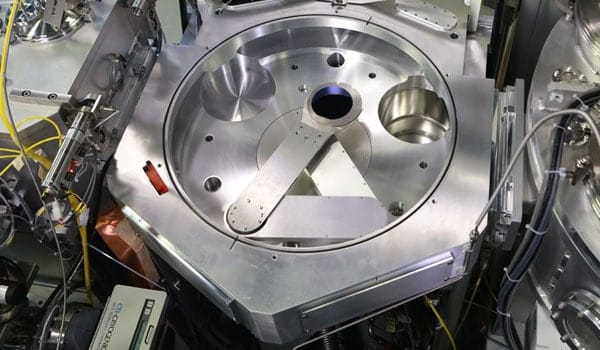
According to Next Move Strategy Consulting, the India Wafer Handling Robots Market is on a strong growth trajectory, with a market value forecast to grow to USD 30 million by 2030. This represents a significant compound annual growth rate (CAGR) of 14% from 2024 to 2030. This growth is largely driven by a combination of government-led initiatives in semiconductor manufacturing, technological innovations, and the expanding electronics manufacturing sector.
Wafer Handling Robots: A Crucial Role in Semiconductor Manufacturing
India Wafer Handling Robots Market are specialized automation solutions designed to streamline complex tasks in semiconductor manufacturing. These robots excel in the precise handling, positioning, and transferring of delicate semiconductor wafers used in the production of integrated circuits and microelectronic devices. They are essential for operations in cleanroom environments, where they reduce the risks of contamination and damage during wafer manipulation.
Click Here for Your FREE Sample!
These robots are equipped with advanced end effectors, sensors, and vision systems, allowing them to handle wafers with utmost precision. By automating wafer handling, these robots not only enhance operational efficiency and reduce human error but also ensure that semiconductor devices meet the highest industry standards for quality and performance.
Government Initiatives Stimulate Market Growth in India
One of the major factors propelling the growth of the India wafer handling robots market is the Indian government’s active initiatives in the semiconductor sector. With a funding commitment exceeding USD 10 billion, this program aims to establish semiconductor fabrication facilities (fabs) within India, further boosting the country’s electronics manufacturing capabilities.
This initiative supports the development of advanced Silicon CMOS-based semiconductor fabs, which aligns with India’s efforts to become self-reliant in semiconductor production. As part of this push, financial support and incentives are being offered to organizations and individuals involved in the establishment of semiconductor fabrication units. This surge in investments directly correlates with an increased demand for wafer handling robots, as these facilities require state-of-the-art automation systems to ensure precision and efficiency in wafer processing.
Strengthening Electronics Manufacturing Sector
The Indian government’s focus on semiconductor labs and fabs is an integral part of the nation’s broader strategy to strengthen its electronics manufacturing sector. With the growing emphasis on developing a robust semiconductor industry, India is witnessing a boost in innovation and investment in semiconductor technologies.
As these semiconductor fabrication facilities ramp up production, the demand for wafer handling robots is expected to skyrocket. These robots are vital for ensuring that wafer handling processes are efficient, safe, and error-free, which is critical for producing high-quality integrated circuits and microelectronic devices. The rise in government incentives and the increasing establishment of semiconductor manufacturing facilities will continue to fuel the demand for wafer handling robots, contributing significantly to market growth.
Challenges: High Initial Investment
Despite the promising growth outlook, the high initial cost of wafer handling robots remains a significant challenge for market expansion in India. The cost of acquiring, integrating, and maintaining these advanced automation systems presents a considerable financial burden for many manufacturers, particularly small- and medium-sized enterprises (SMEs) with limited capital.
While the long-term benefits of automation in terms of efficiency and precision are clear, the upfront investment required can discourage some companies from adopting wafer handling robots, potentially slowing the pace of market penetration. However, with continued government support and the growing trend of automation in the semiconductor industry, this challenge is expected to be mitigated over time as more manufacturers embrace advanced technologies.
Opportunities: Integration of AI and Advanced Technologies
The future of the India wafer handling robots market looks promising with the integration of advanced technologies such as Artificial Intelligence (AI), computer vision, and the Internet of Things (IoT). These technologies are poised to revolutionize the functionality of wafer handling robots, opening up new opportunities for market expansion.
- Artificial Intelligence (AI): AI can optimize robot movements by allowing the robots to learn and adjust their actions based on real-time data. AI can also enhance quality control by detecting defects in wafers during the handling process and predicting potential maintenance needs, reducing downtime and improving overall efficiency.
- Computer Vision: Computer vision enhances the precision of wafer handling by enabling robots to accurately recognize and manipulate wafers, even in complex and cluttered environments. This technology ensures that the wafers are handled with the utmost care, which is especially critical for high-precision semiconductor production.
- Internet of Things (IoT): IoT-enabled wafer handling robots offer real-time monitoring and predictive maintenance capabilities. By allowing manufacturers to track the performance of robots and perform maintenance tasks proactively, IoT integration helps reduce unplanned downtime and increase operational efficiency.
Together, these technologies will improve the precision, efficiency, and reliability of wafer handling robots, making them even more indispensable in semiconductor manufacturing. As these technologies continue to evolve, they will further drive market growth and adoption in India.
Market Segmentation
The India wafer handling robots market is diverse and can be segmented based on product type, number of arms, robot type, operation, installation, wafer size, semiconductor process, and end-use. Key segments of the market include:
- By Product Type:
- Vacuum Wafer Handling Robots
- Atmospheric Wafer Handling Robots
- By Number of Arms:
- Single Arm
- Dual Arm
- By Robot Type:
- Linear Robots
- SCARA Robots
- Articulated Robots
- Cylindrical Robots
- Others
- By Operation:
- Motor Driven
- Belt Driven
- Stainless Steel Belts
- Rubber Belts
- Polymer Belts
- By Installation:
- Free Standing
- Integrated
- By Wafer Size:
- Up to 100 mm
- 150 mm
- 200 mm
- 300 mm
- Above 300 mm
- By Semiconductor Process:
- Oxidation (Deposition)
- Lithography
- Etching, Cleaning, Polishing
- Inspection & Testing
- Assembly & Packaging
- By End-Use:
- Integrated Device Manufacturers (IDM)
- Foundries
Competitive Landscape
The India wafer handling robots market features a competitive landscape with key global players, including:
- Kawasaki Heavy Industries, Ltd.
- Nidec Instruments Corporation
- Yaskawa Electric Corp.
- RORZE Corporation
- DAIHEN Corporation
- Hirata Corporation
- Rexxam Co., Ltd.
- KUKA AG
- ULVAC, Inc.
- Stäubli International AG
These companies are at the forefront of innovation in the wafer handling robots market, continuously developing new products and solutions to meet the growing demand for semiconductor manufacturing automation.
Conclusion
The India wafer handling robots market is positioned for significant growth over the next decade, driven by government initiatives, technological advancements, and the expanding electronics manufacturing sector. While challenges related to high initial costs exist, the integration of advanced technologies such as AI, computer vision, and IoT is expected to enhance the capabilities of wafer handling robots and fuel continued market expansion. With government support and a growing focus on automation in semiconductor manufacturing, India is set to become a key player in the global wafer handling robots market.
