According to Next Move Strategy Consulting, the Italy Wafer Handling Robots Market is set to experience significant growth, with a market value projected to reach USD 33 million by 2030. This represents a compound annual growth rate (CAGR) of 15% from 2024 to 2030. This rapid market growth is fueled by key factors such as governmental support for the semiconductor industry, advancements in automation technologies, and increasing demand for precision in semiconductor manufacturing.
Wafer Handling Robots: A Game Changer in Semiconductor Manufacturing
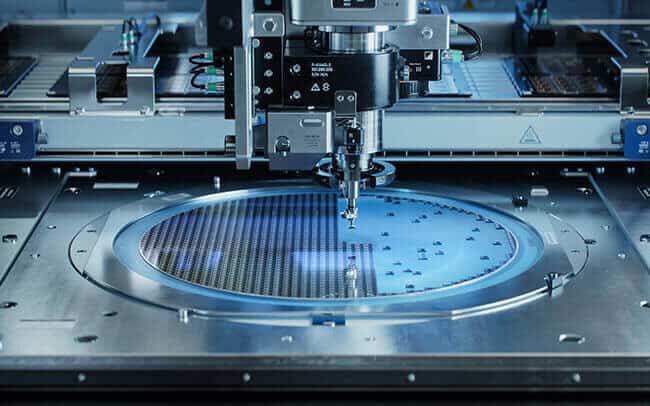
Italy Wafer Handling Robots Market are cutting-edge solutions designed to address the complex and delicate procedures involved in semiconductor production. These robots are essential in the semiconductor industry due to their ability to execute precise movements when handling delicate semiconductor wafers. By ensuring high levels of accuracy and reducing the potential for contamination or damage during the wafer handling process, wafer handling robots are crucial for the production of high-quality integrated circuits and microelectronic devices.
Click Here for Your FREE Sample!
Operating within controlled cleanroom environments, these robots are equipped with specialized end effectors, sensors, and vision systems. These tools help them secure, inspect, and manipulate wafers with the utmost care. By integrating seamlessly with other equipment used in semiconductor manufacturing, wafer handling robots boost operational efficiency, reduce human error, and ensure consistent, reliable production of cutting-edge technologies that power modern electronic devices.
Government Investment in Semiconductor Industry Boosts Market Expansion
A critical driver of the growth in the Italy wafer handling robots market is the Italian government’s strategic focus on advancing semiconductor technology and production capabilities.
This substantial investment has been pivotal in the establishment of the Italian Centre for Semiconductor Integrated Circuit Design, a key institution aimed at supporting the development of the microchip industry in Italy. The establishment of this center reflects Italy’s commitment to nurturing a vibrant semiconductor ecosystem. With the rising demand for semiconductor devices, this initiative not only encourages advancements in semiconductor production but also leads to greater adoption of automation technologies such as wafer handling robots.
These efforts underscore Italy’s drive to establish itself as a global leader in semiconductor manufacturing, and as the demand for advanced automation grows in response to government initiatives, the wafer handling robots market is positioned for robust growth.
Stimulating Economic Growth and Innovation
The government’s investment in the semiconductor industry is not only enhancing Italy’s technological standing but also driving broader economic growth and innovation. With increased support for semiconductor design and educational programs, Italy is creating new opportunities for innovation, economic development, and job creation in the high-tech sector.
The investment in the Italian semiconductor ecosystem positions the country to capitalize on the increasing demand for wafer handling robots, which are integral to the manufacturing process. As Italy develops advanced semiconductor technologies and focuses on automation solutions, such as wafer handling robots, the market is expected to continue growing, fueled by innovation and a shift towards automation in production facilities.
High Initial Cost Restrains Growth, But Long-Term Gains Offer Hope
While the market for wafer handling robots in Italy is on the rise, the high initial costs associated with these automation systems remain a significant challenge. The expenses involved in purchasing, integrating, and maintaining wafer handling robots can be prohibitively high, particularly for small- and medium-sized enterprises (SMEs) operating with tighter budgets. This financial burden may deter some potential adopters, particularly those who may not immediately see the long-term value of automating their wafer handling processes.
However, the high upfront costs are typically offset by the long-term benefits of automation, including increased production efficiency, higher precision, reduced error rates, and cost savings over time. As Italy’s semiconductor ecosystem grows, it is expected that more companies will see the value in investing in wafer handling robots, making the initial cost barrier less of a deterrent in the long run.
Opportunities for Growth with AI, Computer Vision, and IoT Integration
Looking ahead, the integration of advanced technologies such as Artificial Intelligence (AI), computer vision, and the Internet of Things (IoT) offers tremendous opportunities for the growth of the Italy wafer handling robots market. These technological advancements can significantly enhance the capabilities of wafer handling robots, making them even more efficient, precise, and valuable assets in semiconductor manufacturing.
- Artificial Intelligence (AI): AI-powered wafer handling robots can optimize their operations through self-learning algorithms, improving their movement and processing capabilities. AI can also be used for real-time quality control, detecting defects in wafers during the handling process, and predicting future maintenance needs, thus reducing downtime.
- Internet of Things (IoT): IoT connectivity allows wafer handling robots to communicate in real-time with other systems and devices in the manufacturing facility. This connectivity enables predictive maintenance, remote monitoring, and the gathering of operational data to optimize processes and reduce downtime.
These technologies will not only enhance the performance of wafer handling robots but will also drive their adoption as semiconductor manufacturers look to increase efficiency and reduce costs. The integration of AI, computer vision, and IoT will lead to greater automation, improved wafer quality, and faster production cycles, contributing to the growth of the wafer handling robots market in Italy.
Competitive Landscape
The Italy wafer handling robots market is competitive and features a mix of established international players, including:
- Kawasaki Heavy Industries, Ltd.
- Nidec Instruments Corporation
- Yaskawa Electric Corp.
- RORZE Corporation
- DAIHEN Corporation
- Hirata Corporation
- Rexxam Co., Ltd.
- KUKA AG
- ULVAC, Inc.
- Stäubli International AG
These companies are actively developing and offering innovative wafer handling robot solutions to meet the growing demands of the semiconductor industry. As market demand continues to rise, these players are expected to play an increasingly important role in shaping the evolution of wafer handling technology and automation solutions in Italy.
Market Segmentation
The Italy wafer handling robots market is segmented by several factors, including product type, number of arms, robot type, operation, installation, wafer size, semiconductor process, and end-use. The key segments of the market include:
- By Product Type:
- Vacuum Wafer Handling Robots
- Atmospheric Wafer Handling Robots
- By Number of Arms:
- Single Arm
- Dual Arm
- By Robot Type:
- Linear Robots
- SCARA Robots
- Articulated Robots
- Cylindrical Robots
- Others
- By Operation:
- Motor Driven
- Belt Driven
- Stainless Steel Belts
- Rubber Belts
- Polymer Belts
- By Installation:
- Free Standing
- Integrated
- By Wafer Size:
- Up to 100 mm
- 150 mm
- 200 mm
- 300 mm
- Above 300 mm
- By Semiconductor Process:
- Oxidation (Deposition)
- Lithography
- Etching, Cleaning, Polishing
- Inspection & Testing
- Assembly & Packaging
- By End-Use:
- Integrated Device Manufacturers (IDM)
- Foundries
Conclusion
The Italy wafer handling robots market is poised for significant growth in the coming years, driven by government initiatives to enhance the semiconductor industry, technological advancements in automation, and increasing demand for precision in semiconductor manufacturing. While challenges related to high initial costs remain, the long-term benefits of wafer handling robots are expected to outweigh these concerns, making them a critical asset in semiconductor production. With AI, computer vision, and IoT continuing to enhance their capabilities, wafer handling robots will play an even more central role in the growth of Italy’s semiconductor sector.
