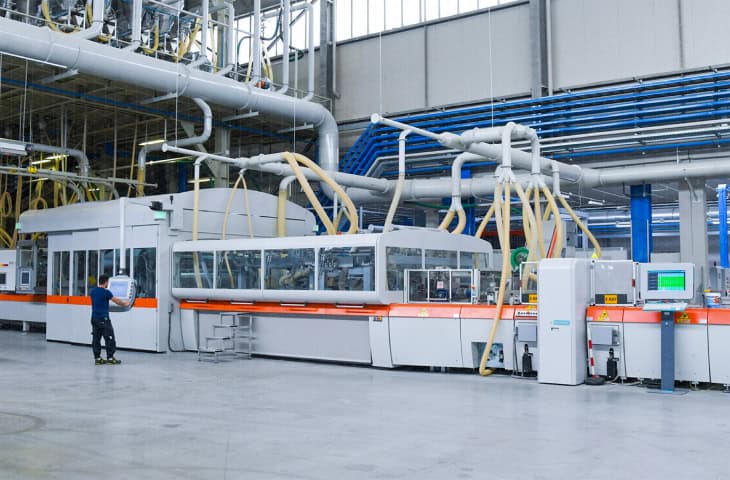
According to Next Move Strategy Consulting, the Indonesia Ceramic Machinery Market is set to experience significant growth, with the market size reaching USD 86.2 million by 2030. The industry is projected to grow at a compound annual growth rate (CAGR) of 3.8% by 2030, driven by increasing demand in the construction sector, a surge in ceramic exports, and advancements in manufacturing technology.
The ceramic machinery market encompasses a range of equipment essential for the production of various ceramic products, including tiles, sanitary ware, tableware, and advanced ceramics. These products are key components in industries such as construction, automotive, and electronics. With the increasing demand for high-quality ceramics and the adoption of automation and cutting-edge technology, ceramic machinery plays a crucial role in shaping, glazing, and mass-producing ceramic items with improved precision, speed, and efficiency.
Key Factors Driving Market Growth
- Construction Sector Boom
The rapid expansion of the construction industry in Indonesia is one of the primary factors driving the demand for ceramic machinery. The country’s construction sector generated approximately USD 551.43 trillion in 2023, up from USD 472.76 trillion in 2021, according to the World Bank. This growth reflects increased demand for high-quality building materials, particularly ceramic tiles and sanitary ware, which are essential for infrastructure development.
Don’t Miss Out! Get Your FREE Sample!
The increased reliance on advanced ceramic machinery is enabling manufacturers to meet the rising demand for consistent, high-quality products. Advanced machines streamline the production process, enhancing the precision and volume of ceramics while reducing labor costs. As such, many manufacturers are investing in these technologies to improve efficiency and meet the needs of the growing construction sector.
- Surge in Ceramic Exports
In addition to domestic demand, the growth of ceramic exports has significantly contributed to the market’s expansion. Indonesia’s ceramic product exports reached approximately USD 404 million in 2022, making the country the 24th largest global exporter, according to the Observatory of Economic Complexity (OEC). Key export destinations include the U.S., Japan, Malaysia, and India.
To meet international standards and maintain a competitive edge, Indonesian ceramic manufacturers must invest in advanced machinery that ensures consistency and efficiency. The growing export demand has thus driven the adoption of high-capacity, precision equipment for ceramic production, further fueling the growth of the ceramic machinery market.
Challenges in the Market
Despite the positive growth trajectory, the ceramic machinery market faces a significant challenge – the high initial investment required for advanced equipment. The capital-intensive nature of purchasing and installing cutting-edge machinery presents a barrier for smaller manufacturers and startups, limiting their ability to upgrade or expand production capabilities. This financial constraint hinders the widespread adoption of newer, more efficient technologies, posing a challenge to the overall market growth.
Manufacturers must find ways to balance the upfront costs of new machinery with the long-term benefits of improved productivity and cost savings. For many companies, this is a crucial decision that will determine their ability to compete in the increasingly competitive global market.
Opportunities for Future Growth: Inkjet Technology Integration
One of the most promising opportunities for the future of the Indonesia Ceramic Machinery Market is the integration of inkjet technology into the production process. This innovative technology allows for high-resolution, customizable printing on ceramic surfaces, enabling manufacturers to produce intricate designs, vibrant colors, and unique patterns on ceramic products.
As consumer demand for personalized, aesthetically appealing ceramics grows, inkjet technology is poised to play a pivotal role in meeting these demands. Additionally, inkjet technology streamlines production by reducing reliance on traditional, labor-intensive methods. This not only lowers production costs but also increases efficiency, presenting manufacturers with a valuable opportunity to gain a competitive edge in the market.
Market Segmentation and Outlook
The Indonesia ceramic machinery market is segmented based on type, product, and end user.
- By Type:
- Shaping Machines
- Decorative and Glazing Machines
- Kilns and Firing Machines
- Raw Material Processing Machines
- Storage and Handling Machines
- Others
- By Product Type:
- Tiles
- Sanitary Ware
- Tableware
- Technical Ceramics
- Refractories
- Abrasive
- By End User:
- Construction
- Automotive
- Electronics
- Others
As the construction industry remains the dominant end user, the demand for tile production equipment and machinery for sanitary ware is expected to grow steadily. The automotive and electronics sectors are also contributing to the demand for advanced ceramics, offering additional opportunities for growth in the machinery market.
Key Market Players
Several major players in the ceramic machinery sector are driving the growth of the market in Indonesia. These include:
- SACMI
- KEDA Industrial Group Co., Ltd.
- SITI B&T Group S.p.A.
- SYSTEM Ceramics
- Breton S.p.A.
These companies are focusing on expanding their presence in the Indonesian market by offering state-of-the-art machinery and exploring new opportunities in the integration of automation and digital technology.
Conclusion
The Indonesia ceramic machinery market is on a growth trajectory, fueled by the booming construction industry, increasing export demand, and technological advancements in manufacturing. While high initial investments pose challenges for some manufacturers, the integration of new technologies like inkjet printing offers promising opportunities for future growth and innovation.
