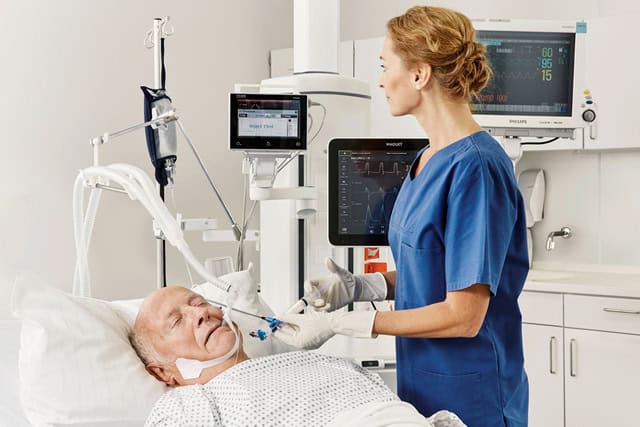
According to Next Move Strategy Consulting, the Europe patient monitoring market, is set to experience significant growth, projected to reach USD 21.21 billion by 2030, with a compound annual growth rate (CAGR) of 7.5% by 2030. This growth is driven by an increasing focus on patient care, advancements in medical technology, and government initiatives aimed at bolstering healthcare systems across the region.
The Importance of Patient Monitoring in Modern Healthcare
Patient monitoring is a critical component of modern healthcare systems, encompassing the continuous or intermittent assessment of a patient’s vital signs and overall health. This process involves the use of various medical devices to collect, record, and analyze physiological parameters such as blood pressure, heart rate, oxygen saturation, temperature, respiratory rate, and more. Patient monitoring systems are essential in a wide array of healthcare settings, from hospitals and intensive care units (ICUs) to outpatient clinics and home healthcare environments.
These systems not only ensure that patients receive appropriate and timely care tailored to their individual medical needs, but they also help healthcare providers detect health issues early and deliver better outcomes through continuous monitoring.
Government Initiatives Driving Market Growth
Government initiatives in Europe have played an integral role in the rapid growth of the patient monitoring market. Many governments have recognized the importance of resilient healthcare systems, particularly in light of recent global health challenges. As a result, significant investments are being made to modernize and upgrade healthcare infrastructure, including the adoption of advanced technologies such as patient monitoring systems.
These initiatives often include financial support and favorable regulatory environments, encouraging collaboration between public and private sectors. By incentivizing the integration of state-of-the-art medical technologies, including patient monitoring devices, governments across Europe are ensuring that their healthcare systems can meet the demands of growing and aging populations.
The Impact of Rising Chronic Diseases
Chronic diseases such as cardiovascular disorders, diabetes, respiratory diseases, and obesity are becoming increasingly prevalent in Europe. The region has seen a notable increase in the incidence of these conditions, which has consequently fueled the demand for patient monitoring systems.
Patient monitoring devices provide critical support in managing chronic diseases by offering real-time data on vital signs, medication adherence, and lifestyle changes. Continuous monitoring empowers patients and healthcare providers to make informed decisions about treatment, ensuring that patients can receive timely interventions and prevent complications. With chronic diseases now one of the most significant healthcare challenges in Europe, patient monitoring technologies have become indispensable for both acute and long-term disease management.
Challenges in Connectivity and Real-Time Data Transmission
Despite the impressive growth potential of the patient monitoring market in Europe, connectivity issues remain a key challenge that could hinder market expansion. Patient monitoring systems rely on seamless data transmission to ensure accurate, real-time information is available for healthcare providers. Connectivity challenges, such as signal interference or data transmission delays, can undermine the reliability of these systems, leading to concerns about the accuracy and timeliness of patient information.
Addressing these connectivity issues is critical for unlocking the full potential of patient monitoring technologies. Improving the integration of devices and communication networks, especially in remote or rural areas, is crucial for facilitating real-time, actionable insights that can improve patient outcomes.
AI and Machine Learning Paving the Way for the Future of Patient Monitoring
The introduction of Artificial Intelligence (AI) and Machine Learning (ML) into the patient monitoring landscape presents a transformative opportunity for the healthcare industry in Europe. These cutting-edge technologies have revolutionized the way patient data is analyzed, enabling healthcare providers to identify patterns and predict potential health issues before they become symptomatic.
AI and ML algorithms use vast datasets to spot subtle abnormalities in patients’ vital signs and medical histories, facilitating early detection of potential health risks and enabling more personalized, preventative care. Additionally, AI and ML are advancing risk stratification, allowing healthcare providers to prioritize interventions for high-risk patients, potentially improving patient outcomes while reducing costs.
Personalized medicine, which tailors treatment to the individual characteristics of patients, is another area that stands to benefit from AI and ML. By analyzing data from patient monitoring devices, AI can help design individualized care plans that align with a patient’s unique health profile, ultimately improving treatment effectiveness.
Germany: The Dominant Market Leader in Europe
Germany is expected to continue holding a dominant position in the Europe patient monitoring market. One of the key drivers of this trend is the country’s aging population, which has created a higher demand for healthcare services, especially for the management of chronic conditions such as cardiovascular diseases, diabetes, and respiratory disorders. In addition, the introduction of advanced technologies, such as wearable devices and remote monitoring systems, has enabled healthcare providers to track patients’ health in real-time, improving patient care.
As the adoption of patient monitoring devices grows, Germany remains at the forefront of healthcare innovation, with its strong focus on improving healthcare infrastructure and providing access to cutting-edge medical technologies.
U.K. Witnessing Rapid Growth in Patient Monitoring Adoption
The United Kingdom is also experiencing substantial growth in the patient monitoring market, fueled by the rising prevalence of chronic diseases. Conditions such as cardiovascular diseases, diabetes, and respiratory illnesses are becoming more common, creating a critical need for continuous patient surveillance.
Key Market Segments and Product Categories
The Europe Patient Monitoring Market is segmented into several categories based on product types, monitoring technologies, and end-user applications. Notable product categories include:
Experience It for Yourself – Download a FREE Sample!
- Cardiac Monitoring Devices: ECG devices, mobile cardiac telemetry monitors, implantable loop recorders, and wearable ECG monitors.
- Blood Glucose Monitoring Systems: Self-monitoring blood glucose systems and continuous glucose monitoring systems.
- Respiratory Monitoring Devices: Pulse oximeters, spirometers, capnographs, and peak flow meters.
- Multi-Parameter Monitoring Devices: Low-acuity, mid-acuity, and high-acuity monitoring devices.
- Wearable Continuous Monitoring Devices: Devices designed for continuous monitoring of various vital signs, including temperature, heart rate, and glucose levels.
- Neuromonitoring Devices: EEG machines, intracranial pressure (ICP) monitors, and cerebral oximeters.
Additionally, patient monitoring devices can be classified into conventional and wireless devices, with wireless technologies offering significant advantages in terms of ease of use and real-time data transmission.
Competitive Landscape: Key Market Players
Several prominent companies operate in the Europe patient monitoring market, contributing to its rapid growth and innovation. Some of the leading players include:
- Medtronic Plc
- Koninklijke Philips N.V.
- GE Healthcare
- Siemens Healthineers
- Nihon Kohden Corporation
- Abbott Laboratories
- Masimo Corporation
- Hill-Rom Holdings, Inc.
- Biotronik SE & Co. KG
- Honeywell International, Inc.
These companies are focusing on advancing their product offerings, developing new monitoring technologies, and expanding their market presence through strategic partnerships, acquisitions, and investments in research and development.
Conclusion
The Europe patient monitoring market is on a robust growth trajectory, driven by technological innovations, increasing healthcare investments, and the rising prevalence of chronic diseases. As governments across Europe invest in healthcare modernization and AI technologies revolutionize patient care, the demand for advanced patient monitoring systems will continue to surge.
