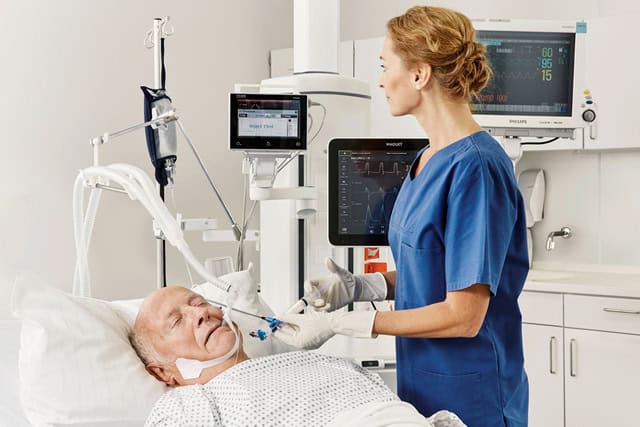
According to Next Move Strategy Consulting, the Italy Patient Monitoring Market is poised for significant growth, projected to expand to USD 2.40 billion by 2030, with a compound annual growth rate (CAGR) of 7.1% by 2030. As healthcare demands evolve, the need for advanced patient monitoring technologies has surged, driven by demographic shifts, an increasing prevalence of chronic diseases, and emerging technological innovations.
Market Overview
Patient monitoring involves the continuous or periodic observation of a patient’s vital signs and health indicators, including blood pressure, heart rate, oxygen saturation, temperature, and more. Medical devices used for monitoring enable healthcare providers to gather, record, and analyze these vital signs, ensuring optimal care across a variety of healthcare settings—whether in hospitals, outpatient clinics, or home healthcare environments.
The market includes devices used for both long-term and short-term monitoring. Key segments include cardiac monitoring devices, blood glucose monitoring systems, respiratory monitoring devices, temperature monitoring devices, and fetal and neonatal monitoring devices, among others. The Italy Patient Monitoring Market encompasses both conventional and wireless technologies, which allow healthcare professionals to monitor patients remotely and in real-time.
Driving Factors
Aging Population Drives Demand for Monitoring Systems
One of the most significant drivers of the Italy Patient Monitoring Market is the country’s aging population. As Italy’s demographic landscape evolves, with a growing number of elderly individuals, healthcare systems are facing increasing pressure to manage age-related chronic diseases and conditions. Older populations are more susceptible to chronic illnesses, including cardiovascular disorders, diabetes, and respiratory diseases, necessitating continuous health monitoring.
See What You’re Missing – Download a FREE Sample Now!
Patient monitoring systems play a crucial role in this context, providing real-time data that allows healthcare providers to track and manage the health status of elderly patients. The increasing demand for home healthcare services and telemedicine also underpins the need for efficient and user-friendly monitoring solutions that cater to patients in their homes, offering a new avenue for growth in the market.
Rising Incidence of Chronic Diseases
Chronic diseases, such as cardiovascular diseases, diabetes, and respiratory illnesses, are on the rise in Italy. As of recent years, the country has seen an increase in the prevalence of lifestyle-related diseases, placing a higher demand on healthcare facilities for ongoing patient care and disease management. With more people living with conditions like hypertension, diabetes, and chronic obstructive pulmonary disease (COPD), continuous monitoring of vital signs becomes critical for effective treatment and disease management.
The adoption of patient monitoring systems allows healthcare providers to gain real-time insights into patient conditions, ensuring that interventions can be made promptly. Moreover, these systems help patients maintain medication adherence and improve overall outcomes, particularly in chronic disease management.
Market Restraints
Connectivity Challenges
Despite the promising growth potential of the patient monitoring market, there are certain challenges that could hinder its expansion. A major issue impacting the market is the connectivity of monitoring devices. Poor or inconsistent connectivity can pose significant risks to the accurate and timely transmission of patient data, particularly in critical care situations where real-time data is essential for making informed clinical decisions.
The integration of monitoring systems with hospital information networks and other medical devices is also a complex process that requires reliable connectivity solutions. Addressing these issues is critical for ensuring the effectiveness of patient monitoring technologies and driving their adoption in healthcare settings.
Technological Innovations: AI and Machine Learning Create Opportunities
Artificial Intelligence (AI) and Machine Learning (ML) are transforming the patient monitoring market by enabling more accurate, predictive, and personalized healthcare. The integration of AI and ML algorithms into monitoring devices allows healthcare providers to analyze vast amounts of patient data, detect subtle patterns, and anticipate potential health risks before they become clinically apparent.
These technologies support early detection of medical conditions, allowing for more proactive interventions that can prevent adverse health outcomes. AI-driven tools can also optimize treatment plans based on individual patient responses, making healthcare more personalized and efficient.
As these technologies continue to advance, they offer significant growth opportunities in the market. The increasing adoption of AI and ML in patient monitoring devices promises to enhance the precision of diagnosis, streamline care delivery, and improve patient outcomes.
Competitive Landscape
The Italy Patient Monitoring Market is highly competitive, with several major players driving innovation and growth in the sector. Leading companies include:
- Medtronic Plc
- Koninklijke Philips N.V.
- GE Healthcare
- Siemens Healthineers
- Nihon Kohden Corporation
- Abbott Laboratories
- Masimo Corporation
- Hill-Rom Holdings, Inc.
- Biotronik SE & Co. KG
- Honeywell International, Inc.
These companies are involved in the development, manufacturing, and distribution of various patient monitoring devices and systems, ranging from wearable ECG monitors to advanced fetal and neonatal monitoring solutions. They are focusing on developing cutting-edge technologies such as wireless devices, integrated health platforms, and cloud-based monitoring solutions to cater to the evolving needs of healthcare providers and patients.
Market Segmentation
The Italy Patient Monitoring Market can be segmented into several categories, each with its own unique growth drivers and opportunities. These include:
- By Product:
- Cardiac Monitoring Devices: ECG devices, mobile cardiac telemetry monitors, implantable loop recorders, event monitors, and smart ECG monitors.
- Blood Glucose Monitoring Systems: Self-monitoring blood glucose systems and continuous glucose monitoring systems.
- Hemodynamic/Pressure Monitoring Devices: Blood pressure monitors, hemodynamic monitors, and disposables.
- Multi-Parameter Monitoring Devices: Used in various acuity levels including low, mid, and high-acuity monitoring.
- Respiratory Monitoring Devices: Pulse oximeters, spirometers, capnographs, and peak flow meters.
- Temperature Monitoring Devices: Handheld, tabletop, wearable, and invasive temperature monitors.
- Fetal & Neonatal Monitoring Devices: Including neonatal monitoring systems and fetal monitoring solutions.
- Neuromonitoring Devices: EEG machines, electromyography machines, and intracranial pressure monitors.
- By Type:
- Conventional Monitoring Devices
- Wireless Monitoring Devices
- By End User:
- Home Healthcare
- Hospitals & Clinics
- Others (Including outpatient care, rehabilitation centers)
Conclusion
The Italy Patient Monitoring Market is positioned for steady growth, driven by demographic shifts, increasing chronic disease burdens, and the rise of advanced technologies like AI and ML. As healthcare systems evolve to meet the demands of an aging population and a higher prevalence of chronic conditions, the need for patient monitoring systems will become even more critical. Companies that can innovate and address the challenges of connectivity, data integration, and personalization will be well-placed to capitalize on this expanding market.
