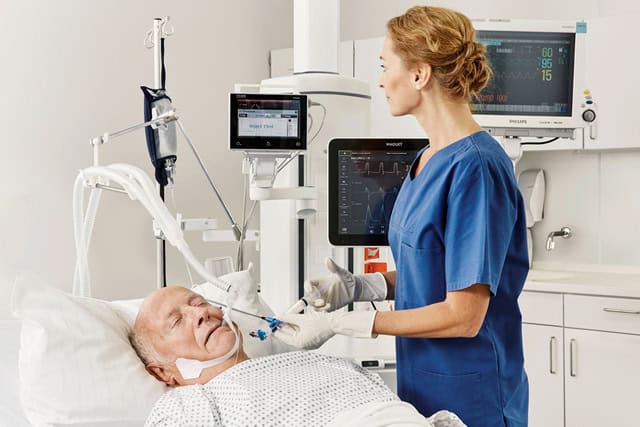
According to Next Move Strategy Consulting, the Spain patient monitoring market, is poised for significant growth, projected to reach USD 2.77 billion by 2030, representing a Compound Annual Growth Rate (CAGR) of 7.3% by 2030. This surge in market size is attributed to the increasing prevalence of chronic diseases, government initiatives to enhance healthcare infrastructure, and the adoption of cutting-edge technologies like Artificial Intelligence (AI) and Machine Learning (ML) in patient monitoring systems.
Patient monitoring is a critical aspect of healthcare, enabling healthcare professionals to assess and manage a patient’s vital signs and health status in real time. This process involves the use of medical devices to monitor parameters such as heart rate, blood pressure, oxygen saturation, temperature, respiratory rate, and other physiological indicators. The market encompasses a wide range of devices and technologies used in various healthcare settings, including hospitals, outpatient clinics, intensive care units (ICUs), and home healthcare environments. The demand for patient monitoring devices is expected to rise as these technologies continue to improve patient outcomes, minimize hospital stays, and reduce healthcare costs.
Key Drivers of Growth:
- Rising Chronic Diseases: The increasing incidence of chronic diseases such as cardiovascular disorders, diabetes, and respiratory illnesses is a major factor driving the demand for patient monitoring devices in Spain. Chronic conditions often require continuous or periodic monitoring, making patient monitoring devices indispensable for tracking vital signs, medication adherence, and early detection of complications. By enabling real-time data collection and analysis, these devices help healthcare providers intervene early, reducing the risk of complications and hospital readmissions.
- Government Initiatives and Healthcare Investments: The Spanish government plays a pivotal role in the growth of the patient monitoring market by allocating significant resources to healthcare infrastructure development. Public healthcare systems are increasingly integrating advanced monitoring technologies to improve patient care, accessibility, and efficiency. Government initiatives aimed at expanding telemedicine and mobile health units, especially in underserved areas, are further boosting the demand for patient monitoring solutions. Additionally, regulatory support and public health campaigns are raising awareness about the importance of regular health monitoring.
- Advancements in AI and Machine Learning: Emerging technologies such as Artificial Intelligence (AI) and Machine Learning (ML) are revolutionizing the patient monitoring landscape in Spain. AI and ML algorithms analyze large datasets from patient health records and monitoring devices, uncovering patterns and anomalies that may go unnoticed by healthcare professionals. This technology not only enhances early detection and diagnosis but also supports personalized treatment plans, improving patient outcomes. AI-driven risk stratification also allows healthcare providers to prioritize care for high-risk patients, ensuring timely interventions and resource optimization.
Challenges: Despite the promising growth prospects, the Spain atient monitoring market faces challenges related to the connectivity and integration of monitoring devices. Connectivity issues in transmitting real-time data from patient monitoring devices can impact the accuracy and timeliness of critical health information. Ensuring seamless communication between devices and healthcare providers is essential for maximizing the potential of these technologies and improving patient care.
Key Market Segments:
- By Product: The Spain patient monitoring market is categorized into several key product segments, including:
- Cardiac Monitoring Devices: This segment includes mobile cardiac telemetry monitors, electrocardiogram (ECG) devices, implantable loop recorders, event monitors, and smart/wearable ECG monitors.
- Blood Glucose Monitoring Systems: These devices include self-monitoring blood glucose systems and continuous glucose monitoring systems.
- Hemodynamic/Pressure Monitoring Devices: These devices encompass blood pressure monitors and hemodynamic monitors.
- Multi-Parameter Monitoring Devices: These devices track multiple health parameters simultaneously and are categorized into low-acuity, mid-acuity, and high-acuity monitoring devices.
- Respiratory Monitoring Devices: These include pulse oximeters, spirometers, capnographs, and peak flow meters.
- Temperature Monitoring Devices: Temperature monitoring devices range from handheld and tabletop devices to wearable and invasive temperature monitoring solutions.
- Neuromonitoring Devices: This category includes EEG machines, electromyography (EMG) machines, cerebral oximeters, intracranial pressure (ICP) monitors, and magnetoencephalography (MEG) machines.
- Fetal & Neonatal Monitoring Devices: This segment includes neonatal and fetal monitoring devices.
- By Type: Patient monitoring devices are available in two types: conventional and wireless devices. The adoption of wireless devices is gaining momentum due to their convenience, portability, and the increasing shift toward remote patient monitoring and telemedicine.
- By End-User: The primary end-users of patient monitoring devices in Spain are:
- Home Healthcare: An increasing number of patients are opting for home-based monitoring solutions for chronic disease management.
- Hospitals & Clinics: Hospitals and clinics continue to be the largest users of patient monitoring devices, especially in critical care units.
- Others: This includes specialized healthcare settings such as rehabilitation centers and nursing homes.
Competitive Landscape: The Spain Patient Monitoring Market is competitive, with several leading players contributing to its growth. Some of the major companies in the market include:
Don’t Miss Out! Get Your FREE Sample!
- Medtronic Plc
- Koninklijke Philips N.V.
- GE Healthcare
- Siemens Healthineers
- Nihon Kohden Corporation
- Abbott Laboratories
- Masimo Corporation
- Hill-Rom Holdings, Inc.
- Biotronik SE & Co. KG
- Honeywell International, Inc.
These companies are focusing on product innovation, strategic collaborations, and expanding their distribution networks to strengthen their market positions. With the increasing demand for advanced patient monitoring solutions, key players are investing in research and development to introduce new technologies, such as AI-powered monitoring systems, to meet the evolving needs of healthcare providers and patients.
Future Outlook: The Spain patient monitoring market is expected to continue its strong growth trajectory through 2030, driven by the expanding prevalence of chronic diseases, the government’s push to modernize healthcare infrastructure, and technological advancements. As AI, ML, and wireless connectivity evolve, the next generation of patient monitoring systems will offer enhanced accuracy, convenience, and accessibility, empowering both healthcare providers and patients to take a more proactive role in managing health.
Conclusion: The Spain patient monitoring market is entering a dynamic phase of expansion, with significant growth opportunities on the horizon. As the healthcare system becomes more focused on preventive care and chronic disease management, the demand for advanced patient monitoring devices is set to rise. By leveraging government initiatives, technological innovations, and addressing challenges like connectivity, Spain is well-positioned to become a leader in the global patient monitoring landscape.