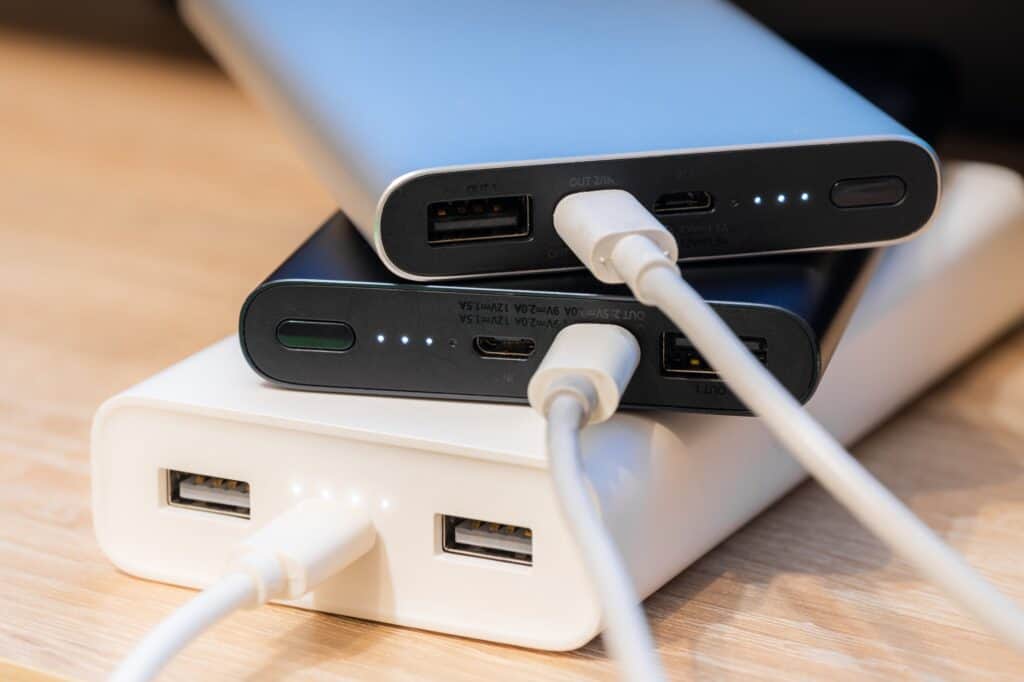
The Australia power bank market growth is driven by the increasing adoption of mobile devices, the growing need for reliable charging solutions, and the rising demand for eco-friendly power storage options in both personal and professional settings.
Australia Power Bank Market is predicted to reach USD 27.82 million, with a CAGR of 1.6% by 2030. Australia’s high smartphone penetration rate, coupled with the increasing reliance on portable electronic devices for both work and leisure, continues to drive demand for power banks. As a result, power banks have become a ubiquitous accessory for Australians seeking to ensure their devices remain charged throughout the day, particularly in today’s fast-paced and mobile-centric world.
Test It First – Download Your FREE Sample!
Key Market Drivers
The growing number of smartphone users in Australia is the key driver of the power bank market. Australians are among the highest users of smartphones globally, with a significant portion of the population relying on mobile phones for daily tasks such as communication, navigation, entertainment, and business. With heavy reliance on smartphones, the need for portable power sources has become increasingly vital, propelling the demand for power banks.
Along with smartphones, other mobile devices such as tablets, laptops, and wearables are gaining prominence in the country. As these devices become integral to daily activities, the demand for efficient and portable charging solutions has surged. Consumers, from students to business professionals, are increasingly turning to power banks to ensure they stay connected and productive, particularly when traveling or commuting.
Furthermore, the growth of mobile gaming in Australia is contributing to the rise in power bank usage. With the popularity of mobile gaming titles, Australians are spending longer hours on their devices, leading to faster battery drain. This trend is driving the demand for higher-capacity power banks that can extend device usage without the need to plug into a wall socket.
Technological Advancements and Consumer Preferences
Technological advancements are playing a significant role in shaping the Australia power bank market. Fast-charging technology, such as Qualcomm Quick Charge and USB-C Power Delivery, is gaining popularity in the country, allowing power banks to recharge devices more quickly and efficiently. As consumers increasingly prioritize quick and convenient charging solutions, power banks that support these technologies are in high demand.
Click to Uncover the Full News
In addition, the need for higher capacity power banks is driving innovation in the market. As devices become more power-hungry, consumers are seeking power banks with higher mAh (milliampere-hour) ratings that can charge smartphones, tablets, and even laptops multiple times before needing to be recharged. Manufacturers are responding by developing power banks with capacities of up to 30,000mAh, enabling users to keep their devices powered for longer periods.
Eco-consciousness is also influencing consumer preferences in the Australian market. With growing awareness of environmental issues, many Australians are opting for solar-powered and energy-efficient power banks. These eco-friendly alternatives provide a renewable source of energy, making them particularly popular among outdoor enthusiasts, travelers, and individuals looking to reduce their carbon footprint.
Moreover, the rise in remote work and digital learning, accelerated by technological advancements, is driving further demand for power banks. As Australians increasingly rely on digital devices for work and education, the need for uninterrupted charging solutions has become essential. Power banks designed for laptops, tablets, and other high-power devices are seeing increased demand, especially as more professionals and students turn to portable solutions for their daily tasks.
Challenges in the Market
Despite the strong growth prospects, the Australia power bank market faces certain challenges. The market is becoming increasingly competitive, with numerous brands offering low-cost, low-quality power banks. Consumers who purchase these low-end options may face risks such as overheating, battery malfunctions, or even fires. The presence of counterfeit products and a lack of consumer education on identifying quality products is a concern for the market.
Additionally, the price sensitivity of certain market segments can limit the growth of premium power banks. While high-end models with advanced features like fast-charging, solar power, and high-capacity batteries are in demand, budget-conscious consumers are often drawn to more affordable alternatives. This price disparity presents a challenge for manufacturers of premium power banks who must balance cost and quality to meet consumer demands.
Opportunities and Market Outlook
The Australia power bank market presents significant opportunities for growth. The increasing adoption of electric vehicles (EVs) in the country provides a potential new segment for power banks. As more Australians turn to EVs, the demand for portable charging solutions for these vehicles is expected to rise. Manufacturers who develop power banks capable of charging EV batteries could tap into this emerging market.
Furthermore, the trend toward smart homes and the Internet of Things (IoT) offers additional growth potential. As Australians adopt more connected devices, such as smart speakers, wearables, and home automation systems, the need for power banks that can charge multiple devices simultaneously will continue to grow. Power banks that offer versatile charging solutions and are compatible with a wide range of devices will continue to gain popularity in the Australian market.
Additionally, advancements in battery technology offer opportunities for manufacturers to improve the efficiency, durability, and performance of power banks. As battery technologies like lithium-ion batteries continue to improve, power banks will become more compact and efficient while maintaining or increasing their charging capacity. This will cater to the growing demand for smaller, lightweight, and higher-capacity power banks that consumers seek for portability.
Conclusion
The increasing use of smartphones, laptops, and other mobile devices, along with technological advancements in fast-charging and eco-friendly products, is driving the demand for power banks. Despite challenges such as the prevalence of counterfeit products and price sensitivity, the market outlook remains positive, with opportunities in electric vehicle charging, smart home technology, and continued innovation in battery technology.
