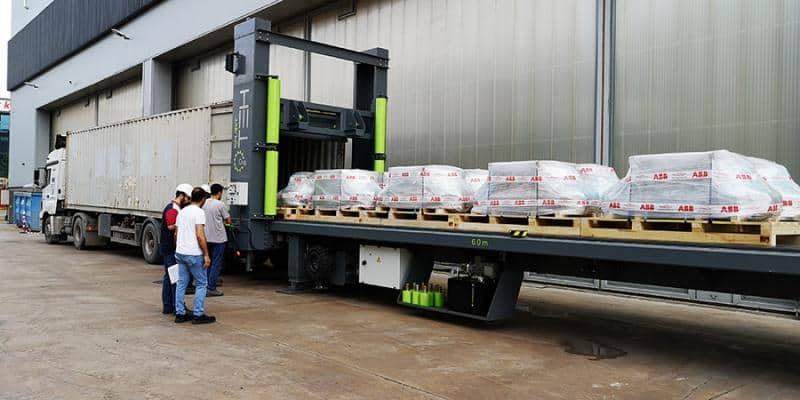
The South Korea Automated Truck/Trailer Loading System Market is on the verge of significant expansion, driven by technological advancements, growing demand for automation in logistics, and a booming e-commerce sector. With a projected compound annual growth rate (CAGR) of 15.4% from 2024 to 2030, the market is expected to reach a valuation of USD 20.8 million by 2030. The demand for automated systems, aimed at enhancing efficiency, safety, and reducing labor costs in the logistics and supply chain sectors, is rapidly accelerating across South Korea.
The Evolution of South Korea’s Automated Truck/Trailer Loading System Market
South Korea, recognized as one of the global leaders in technology and innovation, is witnessing a transformative shift in its logistics and transportation sectors. The growth of e-commerce, increased demand for faster and more efficient delivery systems, and the need to streamline loading and unloading operations are key factors propelling the demand for automated truck/trailer loading systems. These systems are designed to enhance operational efficiency, improve safety, and reduce human error during the loading and unloading of goods, making them crucial for industries ranging from e-commerce and retail to manufacturing and distribution.
In particular, South Korea Automated Truck/Trailer Loading System Market is becoming increasingly popular as businesses strive to address challenges such as labor shortages, rising operational costs, and the growing need for faster, more accurate loading and unloading processes. The South Korean government’s initiatives to promote automation and its focus on the development of smart logistics systems are further accelerating the adoption of these technologies.
Click Here for Your FREE Sample!
Key Market Drivers:
The South Korea Automated Truck/Trailer Loading System Market is driven by several factors:
1. Technological Advancements in Automation:
The adoption of robotics and automation in the logistics sector has become one of the most significant drivers for the market. Advanced automated loading systems are designed to optimize the handling, loading, and unloading of freight with minimal human intervention. These systems utilize robotic arms, conveyor belts, and AI algorithms to automate and streamline tasks that were traditionally performed by manual labor.
2. E-Commerce Growth and Rising Demand for Faster Deliveries:
The e-commerce boom in South Korea is a crucial factor driving the demand for automated truck/trailer loading systems. With the rise of online shopping, especially in the wake of the pandemic, the demand for fast and efficient logistics solutions has surged. E-commerce companies require efficient supply chains capable of quick turnaround times to meet customer expectations of same-day or next-day deliveries.
3. Labor Shortages and Cost Reduction:
South Korea, like many other developed economies, faces labor shortages in the logistics sector. The aging population and the growing reluctance of younger workers to enter manual labor-intensive roles are contributing to this shortage. As a result, businesses are seeking automation solutions to alleviate the reliance on human labor and ensure that operations can continue smoothly.
4. Government Support and Industry Initiatives:
The South Korean government has been actively promoting the adoption of automation technologies across various sectors, including logistics. The government’s vision for smart logistics and its support for Industry 4.0 initiatives have created a favorable environment for the growth of the automated truck/trailer loading system market. South Korea is also making significant investments in the development of infrastructure that supports automation, such as smart warehouses and distribution centers.
Click Here for Your FREE Sample!
Market Segmentation:
The South Korea Automated Truck/Trailer Loading System Market can be segmented based on product type, application, and end-user industry. Below is a detailed analysis of each segment:
1. By Product Type:
- Automated Truck Loading Systems: These systems automate the entire loading process in trucks, helping to move goods from a conveyor system into the truck or trailer. Automated truck loading solutions offer higher speed and accuracy compared to manual loading and unloading, significantly reducing loading time and operational costs.
- Automated Conveyor Systems: Conveyor systems are widely used in automated loading systems for the movement of goods. These systems can be integrated with robotic arms and smart sensors for seamless material handling, reducing manual intervention.
- Robotic Loading Systems: Robotic arms and other robotic systems are increasingly being used to load and unload trucks and trailers. These systems use advanced machine vision and AI to ensure that the loading process is both efficient and accurate.
2. By Application:
- Warehousing and Distribution: The warehousing and distribution sector is one of the largest adopters of automated truck/trailer loading systems. These systems are used to speed up the loading and unloading of goods in warehouses and distribution centers, which are critical for maintaining an efficient supply chain.
- Food and Beverage Industry: In the food and beverage sector, where hygiene and accuracy are crucial, automated loading systems provide the necessary speed and precision to handle large volumes of products.
3. By End-User Industry:
- Automotive Industry: The automotive industry is one of the largest consumers of automated truck/trailer loading systems, using them to move parts and components between different manufacturing stages or between suppliers and factories.
- Retail and E-Commerce: The retail and e-commerce industries are leading the charge in adopting automated systems for their loading and unloading operations, as these systems help meet the growing demand for fast deliveries.
- Pharmaceutical and Healthcare: In the pharmaceutical and healthcare sectors, the need for accuracy and security in transporting goods is driving the demand for automated systems to manage the loading of sensitive materials.
Competitive Landscape:
The South Korea Automated Truck/Trailer Loading System Market is highly competitive, with several global and regional players actively participating in the market. Key players include:
- Daifuku Co., Ltd. – A global leader in material handling systems, Daifuku provides automated truck and trailer loading systems that are widely used in the logistics and e-commerce sectors.
- Vanderlande Industries – A major player in the material handling and automated logistics market, Vanderlande offers comprehensive automated solutions for truck and trailer loading, with a strong presence in the warehousing and distribution sectors.
- Fives Group – Fives offers custom-designed automated truck loading systems with a focus on efficiency, safety, and sustainability.
- TGW Logistics Group – A leading provider of automated logistics solutions, TGW offers robotic and conveyor-based systems for truck and trailer loading.
Conclusion:
The South Korea Automated Truck/Trailer Loading System Market is witnessing rapid growth driven by the country’s advanced technological capabilities, the expansion of e-commerce, and the increasing demand for labor-saving and cost-efficient logistics solutions. With the government’s strong support for automation and smart logistics, the market is set to continue its upward trajectory, with major opportunities in various industries, including warehousing, manufacturing, e-commerce, and retail.
