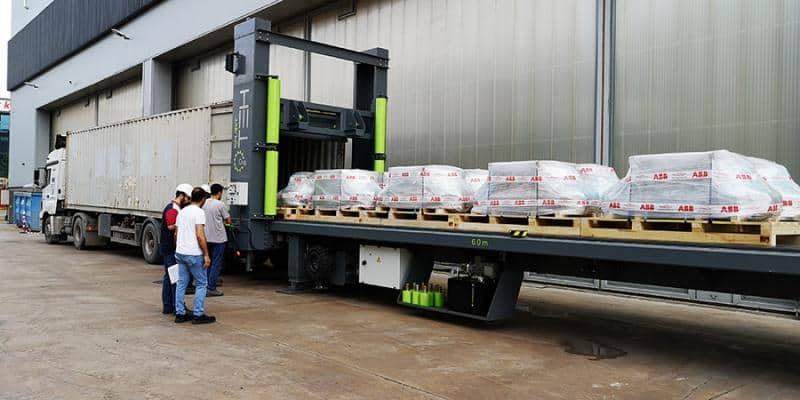
The Thailand Automated Truck/Trailer Loading System Market is witnessing rapid growth, driven by advancements in automation technologies, the increasing need for efficient supply chain solutions, and a growing emphasis on reducing operational costs. As Thailand continues to strengthen its position as a logistics hub in Southeast Asia, the demand for automated systems in the logistics and transportation industries is on the rise. Automated truck/trailer loading systems are increasingly being adopted by various sectors to improve operational efficiency, optimize supply chain management, and ensure a higher level of safety and productivity.
The Thailand ATLS market is projected to grow at a compound annual growth rate (CAGR) of 14.8% between 2024 and 2030, with a valuation of 37.7 million by 2030 driven by technological innovations, the expansion of e-commerce, and the need for businesses to enhance their logistics capabilities. With its strategic location, well-developed infrastructure, and robust manufacturing and industrial base, Thailand is poised to become a key player in the global ATLS market.
Thailand Automated Truck/Trailer Loading System Market is being driven by a range of factors, including the need to address labor shortages, the growing demand for fast and accurate deliveries, and the desire to improve supply chain resilience.
Click Here for Your FREE Sample!
Key Drivers of Market Growth
1. Booming E-Commerce and Retail Sectors
The explosive growth of e-commerce in Thailand and across Southeast Asia is one of the primary drivers of the automated truck/trailer loading system market. E-commerce companies, which rely heavily on efficient and fast logistics to meet customer demand, are increasingly turning to automation to streamline their operations.
2. Increasing Labor Costs and Shortages
Thailand, like many countries in the region, is facing a growing labor shortage, especially in logistics and warehousing. With the labor pool shrinking, businesses are seeking automated solutions to fill the gap and maintain productivity. The high cost of manual labor and the increasing difficulty in recruiting skilled workers have led to a growing demand for automation.
3. Technological Advancements in Automation
Technological innovation plays a crucial role in the growth of the automated truck/trailer loading system market in Thailand. Advances in robotics, Artificial Intelligence (AI), and machine learning have enabled the development of increasingly sophisticated automated systems that are more accurate, flexible, and efficient.
Click Here for Your FREE Sample!
4. Government Support for Automation and Infrastructure Development
The Thai government has recognized the importance of automation and technological advancements in enhancing the country’s competitiveness in global markets. As part of its efforts to boost the local economy and attract foreign investment, Thailand is investing in improving its logistics infrastructure and promoting the adoption of automation technologies across various sectors.
Market Segmentation
The Thailand ATLS market can be segmented based on application, system type, and end-use industry.
1. By Application
- Automated Loading and Unloading: These systems are used to load goods from storage areas into trucks or trailers and unload them at their destinations. The increasing demand for faster and more efficient logistics is driving the growth of automated loading and unloading applications.
- Automated Sorting and Distribution: Automated sorting systems are used to classify goods based on destination, size, or other parameters before they are loaded onto trucks. These systems are commonly found in large distribution centers and warehouses.
2. By System Type
- Robotic Loading Systems: Robotic arms are increasingly being used to automate the loading process, providing high precision and flexibility in handling various types of goods. These systems are particularly beneficial in industries that require accurate and secure loading, such as pharmaceuticals and electronics.
- Automated Guided Vehicles (AGVs): AGVs are autonomous vehicles that transport goods between various locations in a warehouse or distribution center. These vehicles can be used to transport products to the loading docks, where automated systems then load them onto trucks or trailers.
3. By End-Use Industry
- E-Commerce and Retail: The e-commerce industry is one of the largest consumers of ATLS due to the growing demand for fast, accurate, and cost-effective logistics solutions.
- Manufacturing and Automotive: The manufacturing and automotive sectors require efficient and reliable logistics systems to move raw materials and finished products across the supply chain.
- Pharmaceuticals: Pharmaceutical companies require highly accurate and secure loading systems to transport sensitive medical products and ensure compliance with regulatory standards.
Emerging Trends
- Integration with IoT and Cloud Technologies: The integration of Internet of Things (IoT) devices and cloud-based technologies is enabling real-time monitoring and data analysis of ATLS. This allows businesses to track inventory, optimize operations, and reduce downtime.
- AI-Powered Automation: Artificial intelligence is enhancing the capabilities of automated systems by allowing them to learn from past operations and optimize loading processes. AI-powered systems can improve accuracy, reduce errors, and enhance decision-making in real-time.
- Autonomous Vehicles: The development of autonomous trucks and trailers is expected to complement the growth of ATLS, as it enables fully automated end-to-end logistics solutions.
Challenges in the Market
While the Thailand ATLS market is experiencing strong growth, several challenges could impact its expansion:
- High Initial Investment: The cost of installing automated systems can be prohibitive, particularly for small and medium-sized businesses (SMBs). The upfront investment in robotics, conveyor systems, and other equipment may deter some companies from adopting these technologies.
- Skilled Workforce Shortage: Although automation reduces the need for manual labor, businesses still require skilled workers to manage, maintain, and operate these systems. A shortage of qualified personnel may hinder the widespread adoption of ATLS in Thailand.
Conclusion
The Thailand Automated Truck/Trailer Loading System (ATLS) market is at the forefront of transforming the logistics and transportation sectors, offering significant opportunities for businesses to improve operational efficiency, reduce costs, and enhance safety. Driven by factors such as the booming e-commerce sector, labor shortages, and rapid technological advancements, automation is becoming an integral part of Thailand’s logistics infrastructure.
