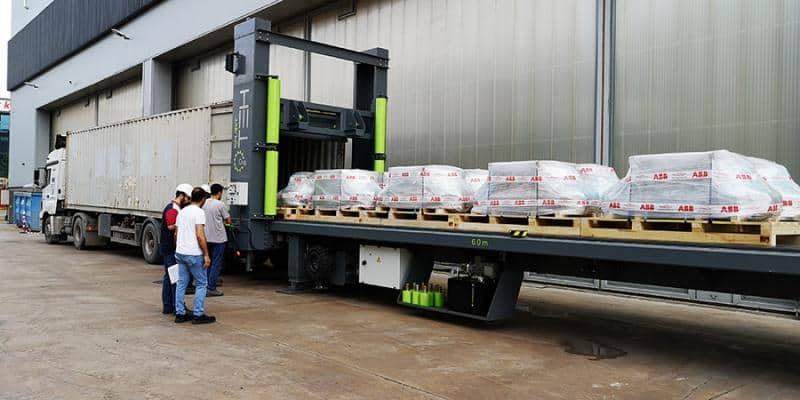
The Middle East Automated Truck/Trailer Loading System Market is positioned for significant expansion over the next decade. With an estimated growth compound annual growth rate (CAGR) of 2.8% from 2024 to 2030, the market is anticipated to exceed USD 4.4 million by 2030. This rapid growth is driven by increasing demand for automation in logistics, the need for operational efficiency in supply chains, and the region’s investments in infrastructure development. Automated truck/trailer loading systems are set to revolutionize industries such as logistics, e-commerce, automotive, and manufacturing in the Middle East.
Middle East Automated Truck/Trailer Loading System Market are specialized systems that automatically load and unload goods from trucks and trailers using technology like conveyors, robotic arms, and various sensors. These systems enhance productivity and minimize the manual labor required in warehouses and distribution centers. By streamlining loading and unloading processes, companies can significantly reduce downtime, improve throughput, and ensure safety standards are met.
Click Here for Your FREE Sample!
Market Drivers:
1. Rising Demand for Efficient Logistics
The logistics and transportation sector in the Middle East is a critical part of the region’s economic landscape. It serves as a vital hub for global trade due to its strategic geographical location, connecting East and West. However, the traditional manual loading and unloading processes are inefficient and time-consuming, contributing to delays and higher operational costs.
2. Growth of E-Commerce and Online Retail
The boom in e-commerce and online retail in the Middle East has further accelerated the need for automated truck/trailer loading systems. The growing popularity of online shopping and the increase in consumer demand for faster deliveries have put pressure on supply chains to operate more efficiently.
3. Infrastructure Investment and Government Support
The Middle East has seen large-scale investments in infrastructure development, especially in the logistics and transport sectors. The UAE, for example, is investing heavily in its logistics infrastructure through projects like the Dubai Logistics City, which will boost capacity and efficiency for supply chain operations.
4. Labor Cost and Safety Concerns
The logistics industry is facing challenges in finding skilled labor, and manual labor is often costly, inefficient, and prone to human error. Automated truck/trailer loading systems address these issues by replacing human labor in tasks that are physically demanding, such as lifting and stacking heavy goods. This not only reduces labor costs but also minimizes workplace accidents, improving safety.
5. Advancements in Technology
The development of advanced technologies such as Artificial Intelligence (AI), the Internet of Things (IoT), and machine learning (ML) has greatly enhanced the capabilities of automated truck/trailer loading systems. These systems now offer improved precision, real-time monitoring, and integration with other automation technologies, allowing businesses to track and control operations from a central hub. With predictive analytics, businesses can optimize their loading operations and anticipate delays, ensuring more efficient workflows.
Click Here for Your FREE Sample!
Technological Advancements in Automated Truck/Trailer Loading Systems
The adoption of automated truck/trailer loading systems in the Middle East is fueled by several advancements in technology. These systems incorporate cutting-edge automation technologies, improving the speed, efficiency, and safety of logistics operations.
1. Robotic Systems and Conveyors:
Robotic arms and automated conveyors are the core components of truck/trailer loading systems. These technologies work in tandem to handle goods automatically, with minimal human intervention. Robots are designed to move, pick, place, and secure loads onto trucks or trailers, while conveyors transport items to the loading or unloading point.
2. Autonomous Vehicles and Drones:
The integration of autonomous vehicles, such as self-driving trucks, into loading systems is transforming the logistics industry. These vehicles can autonomously navigate around the warehouse or port, transport goods, and even park themselves in loading docks. This further reduces the need for human intervention and improves the overall efficiency of the loading process.
3. IoT and Real-Time Monitoring:
IoT technology enables truck/trailer loading systems to be connected to a central network, providing real-time data on loading/unloading processes. Sensors embedded in the systems can monitor and communicate vital metrics such as load weight, packing quality, and vehicle positioning. This data can be analyzed to optimize workflows and reduce operational bottlenecks.
Market Segmentation:
The Middle East Automated Truck/Trailer Loading System Market can be segmented based on application, technology, and region.
1. By Application:
- Logistics and Transportation: Automating the loading and unloading of goods in distribution centers, ports, and logistics hubs.
- E-commerce: For fast and accurate order fulfillment, especially in large-scale fulfillment centers.
- Automotive Manufacturing: Used in automotive factories to load vehicle parts onto trucks for distribution.
- Food & Beverage: Loading and unloading of goods in warehouses and manufacturing plants in the food industry.
2. By Technology:
- Robotics: Includes robotic arms and automated systems for handling, stacking, and securing loads.
- Conveyor Systems: Automated conveyors that transport goods to and from the truck or trailer.
- Autonomous Vehicles: Self-driving trucks used for transporting goods within the facility.
- IoT-Based Systems: Embedded sensors and connectivity for real-time monitoring and optimization.
3. By Region:
- UAE: The UAE is at the forefront of adopting automation in logistics due to its advanced infrastructure and investment in smart technologies.
- Saudi Arabia: As part of Vision 2030, Saudi Arabia is investing heavily in automation technologies to modernize its logistics industry.
- Qatar: Qatar is also embracing automation to enhance efficiency in its rapidly growing logistics and infrastructure sectors.
- Other GCC countries: Countries like Oman, Bahrain, and Kuwait are gradually implementing automated systems to enhance their logistics capabilities.
Competitive Landscape:
The Middle East Automated Truck/Trailer Loading System Market is highly competitive, with several global and regional players competing for market share. Some of the leading companies in this market include:
- BEUMER Group: A leading supplier of automated material handling systems, including truck/trailer loading solutions.
- Dematic: Specializes in automated solutions for logistics, including truck/trailer loading and unloading systems.
- Swisslog: Provides automation solutions for warehouses and distribution centers, including loading and unloading technologies.
- Vanderlande: Offers a range of automation systems for logistics and warehouse operations, including loading/unloading solutions.
Conclusion:
The Middle East Automated Truck/Trailer Loading System Market is on the cusp of significant growth, driven by advancements in technology, growing demand for efficient logistics, and increasing government support for infrastructure development. With automation offering improved productivity, cost efficiency, and safety, industries across the region are increasingly adopting automated loading systems to streamline operations and stay competitive in the global market.
