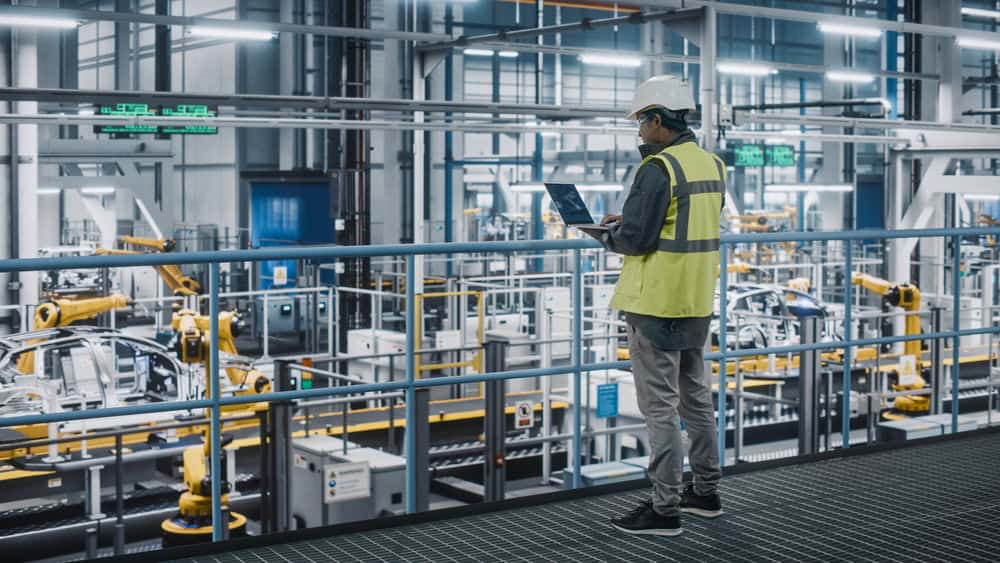
The Europe Industrial Process Automation Market is poised for significant growth is predicted to reach USD 31.22 billion at a CAGR of 4.6% till 2030 as industries increasingly turn to automation technologies to enhance efficiency, reduce costs, and meet sustainability and regulatory requirements. With the ongoing digital transformation, the rise of Industry 4.0, and the growing focus on energy efficiency, the European market for industrial process automation is expanding rapidly. Key sectors such as manufacturing, energy, chemicals, automotive, and food and beverage are leading the way in adopting these advanced technologies to optimize production and operational processes.
Industrial process automation involves the use of automated control systems like PLCs (programmable logic controllers), SCADA (supervisory control and data acquisition), and DCS (distributed control systems) to monitor and control industrial processes. In Europe, the growing demand for operational efficiency, the reduction of human intervention, and the need to meet strict environmental regulations are driving the widespread adoption of these solutions.
Market Overview
Europe Industrial Process Automation Market is seeing increasing investments in digital technologies to remain competitive. As industries in the region embrace smart manufacturing, real-time monitoring, and predictive maintenance, the demand for automation solutions is accelerating. The European Union’s push for energy sustainability and green manufacturing is also contributing to the growth of the IPA market as companies seek to improve efficiency and minimize their environmental footprint.
Unlock a FREE Sample – Try Before You Buy!
Key industries such as energy, automotive, chemicals, food and beverage, and pharmaceuticals are increasingly adopting automation solutions to enhance productivity, optimize resources, and maintain regulatory compliance. Moreover, with the rising focus on reducing carbon emissions and waste, automation has become an essential component of Europe’s sustainable industrial future.
Key Drivers of Market Growth
Adoption of Industry 4.0 Technologies
The industrial process automation market in Europe is being significantly shaped by the adoption of Industry 4.0 technologies, such as artificial intelligence (AI), machine learning (ML), big data analytics, and the Internet of Things (IoT). These technologies are enabling real-time monitoring, predictive analytics, and optimization of industrial processes. As industries move towards digitalization, automation is crucial for managing increasingly complex processes and integrating disparate systems to improve efficiency.
The integration of AI and IoT with automation systems allows industries to gather and analyze data from connected devices and sensors. These insights enable companies to optimize production schedules, predict equipment failures, and improve decision-making, driving higher productivity and reduced costs.
Energy Efficiency and Sustainability Goals
Europe’s commitment to sustainability and energy efficiency is a primary driver of the industrial process automation market. As part of the European Green Deal and the region’s broader environmental objectives, industries are under increasing pressure to reduce carbon emissions, minimize waste, and operate more sustainably. Automation plays a crucial role in helping companies achieve these goals by improving energy consumption, reducing waste, and enhancing overall process efficiency.
Industries such as energy and manufacturing are turning to automation to optimize energy production, enhance the efficiency of renewable energy sources, and improve the management of energy grids. The shift toward smart grids, smart buildings, and renewable energy sources like wind and solar power is creating opportunities for automation technologies to improve system efficiency and reliability.
Regulatory Compliance and Safety Standards
Europe’s rigorous regulatory environment in sectors such as chemicals, pharmaceuticals, food and beverage, and energy is driving the demand for industrial process automation. Automation systems provide real-time monitoring and control to ensure compliance with environmental, safety, and quality regulations. Automated systems help detect irregularities in processes, reduce human error, and ensure that operations are carried out within safe and legal parameters.
Challenges and Opportunities
While the industrial process automation market in Europe holds significant growth potential, it also faces certain challenges. High initial investment costs for automation technologies, as well as the need for specialized skills to integrate and maintain these systems, can be barriers for smaller enterprises. Additionally, the complexity of integrating automation with legacy systems may pose challenges for businesses with older infrastructure.
However, these challenges present opportunities for automation providers to offer more cost-effective, scalable, and flexible solutions that cater to businesses of all sizes. The rise of cloud-based automation platforms and software-as-a-service (SaaS) models is making it easier for companies to adopt and scale automation technologies without requiring significant upfront investments.
Market Outlook
The industrial process automation market in Europe is expected to continue its strong growth trajectory, fueled by technological advancements, the ongoing push for sustainability, and the demand for greater efficiency and productivity across key industries. As businesses increasingly adopt digital technologies and Industry 4.0 solutions, the role of industrial process automation in optimizing operations, ensuring compliance, and enhancing competitiveness will become more critical than ever.
In the coming years, the European industrial process automation market will continue to evolve, with a growing emphasis on AI-driven automation, smart manufacturing, and sustainability. With technological advancements and increasing investments in automation solutions, Europe is poised to maintain its leadership position in the global industrial automation landscape.
