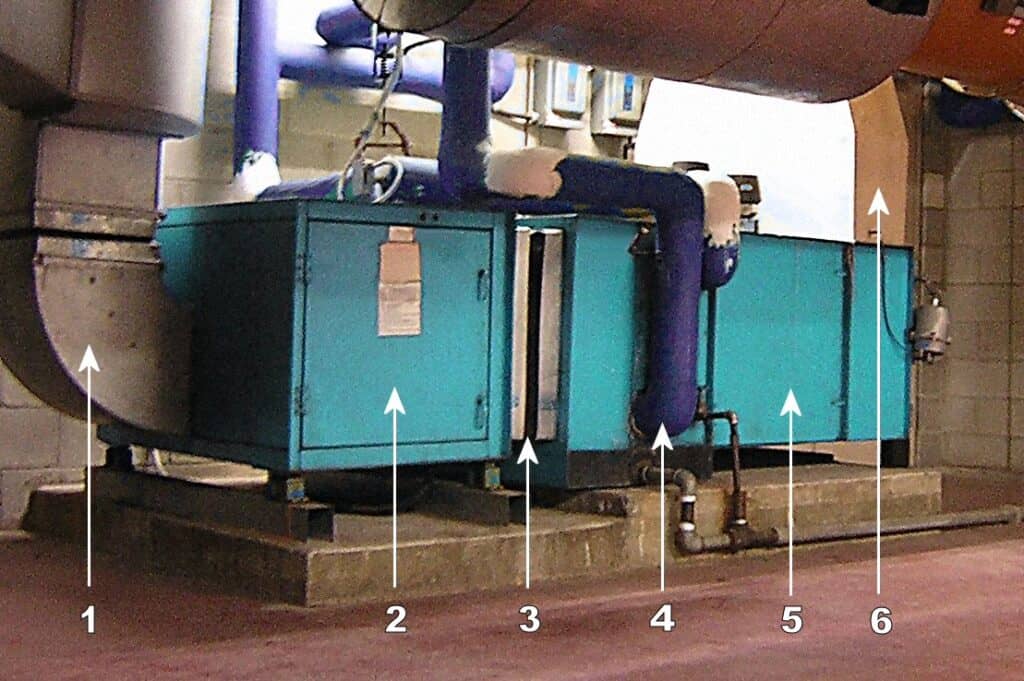
The U.S. Air Handling Unit (AHU) market is expected to witness robust growth over the next five years, driven by increasing demand for energy-efficient HVAC systems, the rising focus on indoor air quality, and the expansion of commercial, residential, and industrial sectors.
The U.S. Air Handling Unit (AHU) Market is predicted to reach USD 4.40 billion, at a CAGR of 4.5% by 2030. Air handling units, which are crucial for circulating and conditioning air within buildings, are becoming indispensable in ensuring optimal comfort, air quality, and energy efficiency.
Download Your Free Sample Today!
Market Overview
Air handling units (AHUs) are essential components of HVAC (heating, ventilation, and air conditioning) systems, responsible for conditioning and circulating air throughout residential, commercial, and industrial buildings. AHUs consist of a variety of components such as fans, filters, heating and cooling coils, and dampers, which work together to control temperature, humidity, and airflow.
Click to Uncover the Full News
Several key factors are driving the growth of the U.S. AHU market:
- Focus on Energy Efficiency: With rising energy costs and stricter government regulations related to energy consumption, there is a growing demand for energy-efficient HVAC solutions. AHUs that incorporate energy-saving technologies such as heat recovery systems, variable-speed fans, and smart controls are gaining popularity in both new constructions and retrofits across the U.S. Commercial and industrial sectors, in particular, are adopting these units to reduce energy consumption and operating costs.
- Indoor Air Quality (IAQ) Awareness: The growing concerns around indoor air quality, have heightened the need for better air filtration and ventilation systems. The U.S. government has introduced stricter regulations for improving IAQ in buildings, further boosting the demand for AHUs with advanced filtration systems and air purification technologies that ensure healthy indoor environments.
- Sustainability and Green Building Initiatives: The trend toward sustainable construction practices and green buildings is gaining momentum across the U.S. As more building projects focus on meeting LEED (Leadership in Energy and Environmental Design) and other green building standards, AHUs equipped with energy-efficient components are becoming critical in achieving these certifications. The increasing emphasis on reducing the carbon footprint of buildings is expected to further drive market demand.
Market Segmentation
The U.S. AHU market can be segmented based on type, application, end-user industry, and region.
- By Type:
- Modular AHUs: Modular AHUs, known for their flexibility and customization options, are increasingly being adopted in the U.S. market. These systems are popular in both new construction and renovation projects, allowing for scalability and easier maintenance.
- Custom AHUs: Custom-built AHUs are designed to meet specific requirements, such as precise temperature control, airflow, and filtration needs. These units are commonly used in large facilities, including hospitals, data centers, and manufacturing plants, where precise air handling is essential.
- Packaged AHUs: Packaged AHUs, which come pre-engineered and fully assembled, are widely used in smaller commercial buildings, offices, and residential complexes. Their ease of installation and cost-effectiveness make them a popular choice for a wide range of applications.
- By Application:
- Commercial: The commercial sector is one of the largest consumers of AHUs in the U.S. With the growing demand for office spaces, retail outlets, hotels, and other commercial establishments, the need for efficient HVAC systems is increasing. AHUs are integral to providing comfort and ensuring optimal indoor air quality in these buildings.
- Residential: As the demand for energy-efficient homes rises, AHUs are being increasingly integrated into residential buildings, particularly in high-rise apartments and energy-efficient homes. These units are designed to optimize comfort while minimizing energy usage, meeting the growing consumer preference for sustainable living.
- Industrial: Industrial facilities, including manufacturing plants, warehouses, and production facilities, require high-performance AHUs to manage temperature, humidity, and air quality. The U.S. industrial sector’s expansion, particularly in manufacturing, is contributing to the growth of the AHU market.
- Healthcare: Hospitals and healthcare facilities require specialized AHUs to ensure clean, controlled air environments. With the growing need for infection control and maintaining a sterile atmosphere, hospitals are increasingly investing in AHUs with advanced filtration and sterilization systems.
- By End-User Industry:
- Commercial Real Estate: The commercial real estate sector, including office buildings, shopping malls, and hotels, is a significant driver of the AHU market. The rising demand for energy-efficient and comfortable work and leisure environments is pushing the adoption of advanced AHUs that offer both cost-effectiveness and sustainability.
- Manufacturing and Industrial: The manufacturing sector in the U.S. is seeing strong demand for AHUs, particularly for facilities that require constant temperature and humidity control, such as food processing plants, chemical factories, and automotive plants. As industrial activities expand, so does the demand for high-performance air handling units.
- Healthcare: The healthcare industry’s need for high-quality air systems that meet hygiene and infection control standards is driving the demand for AHUs in hospitals, clinics, and pharmaceutical manufacturing facilities. These systems are critical in maintaining clean and safe air environments for patients and healthcare workers.
- Education: Schools and universities are also increasingly adopting advanced AHUs to improve IAQ and ensure the comfort of students and staff. The importance of maintaining healthy air quality in educational institutions is contributing to the rising adoption of these units.
- By Region:
- Northeast: The Northeast region, home to major metropolitan areas such as New York City and Boston, is experiencing significant demand for AHUs due to the growth in commercial real estate, office spaces, and healthcare facilities.
- South: The South, including states like Texas and Florida, is witnessing rapid population growth and infrastructure development. This is driving the demand for AHUs in both residential and commercial buildings, as well as in the industrial and healthcare sectors.
- West: The West, particularly California, is seeing strong growth in green building practices and sustainable construction. The demand for energy-efficient AHUs is growing in this region as more buildings are designed to meet environmental standards and reduce energy consumption.
- Midwest: The Midwest, with its manufacturing hubs and large-scale industrial plants, continues to be a key market for AHUs. The industrial sector’s demand for efficient air handling systems to support manufacturing processes is driving the growth of the market in this region.
Key Drivers and Challenges
Drivers:
- Energy Efficiency Regulations: Government initiatives and regulations aimed at reducing energy consumption and carbon emissions are encouraging the adoption of energy-efficient AHUs.
- Indoor Air Quality Concerns: Growing awareness around IAQ, is leading to increased demand for advanced air filtration and ventilation systems.
- Infrastructure Expansion: Ongoing growth in residential, commercial, and industrial construction across the U.S. is fueling the demand for AHUs.
Challenges:
- High Initial Costs: The upfront investment required for advanced AHUs can be a barrier for smaller businesses or residential projects with limited budgets.
- Maintenance Complexity: AHUs, especially custom-built systems, may require specialized maintenance, which can increase operational costs and complexity.
Conclusion
The U.S. AHU market is poised for significant growth, driven by increasing demand for energy-efficient solutions, the emphasis on indoor air quality, and the expansion of various industries. As the need for sustainable and comfortable building environments grows, AHUs will continue to play a key role in shaping the future of HVAC systems across the U.S.
