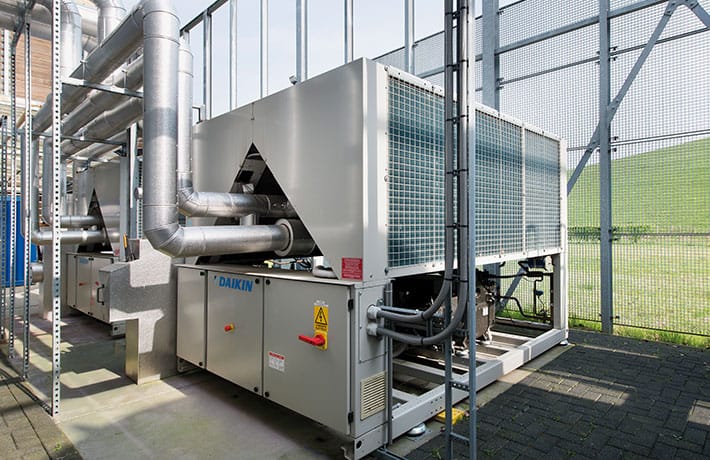
The global chillers market is on track for significant growth in the coming years, driven by rising demand for energy-efficient cooling solutions, advancements in refrigeration technologies, and increasing applications across industries such as manufacturing, commercial, and HVAC (heating, ventilation, and air conditioning). As industries worldwide look to reduce energy consumption, minimize environmental impact, and optimize cooling processes, the chiller market is set to witness expanding opportunities in both developed and emerging economies.
The Chillers Market is predicted to reach USD 10.74 billion with a CAGR of 3.82% by 2030. Chillers, which are used to remove heat from a liquid via a refrigeration cycle, are vital in industrial and commercial applications, from food and beverage production to pharmaceuticals, data centers, and HVAC systems in large buildings. With a growing focus on sustainability, energy efficiency, and the shift toward more environmentally friendly refrigerants, the market is evolving to meet the changing needs of consumers and industries.
Experience It for Yourself – Download a FREE Sample!
Market Overview
This growth is being propelled by several key factors, including increasing industrialization, the rise of sustainable practices, advancements in cooling technology, and the expansion of the commercial and residential HVAC sectors.
Key Drivers of Market Growth
- Energy Efficiency and Sustainability: As global concerns over climate change intensify, energy efficiency has become a top priority for industries and commercial buildings. Chillers that consume less energy and use eco-friendly refrigerants are in high demand. With governments and industries alike working toward sustainability goals, the market is seeing a shift toward greener, more energy-efficient chiller solutions that align with environmental regulations and energy-saving initiatives.
- Technological Advancements: Innovations in chiller technology are playing a significant role in the market’s growth. New developments in compressor technologies, heat exchangers, and refrigerants are helping improve the performance and energy efficiency of chillers. Smart chillers equipped with IoT sensors and digital controls are also gaining popularity, offering real-time monitoring and predictive maintenance to optimize operations and reduce energy consumption.
- Expansion of Industrial and Commercial Applications: The rising industrialization in emerging economies, combined with the growth of data centers, food and beverage processing, and pharmaceutical production, is driving the demand for reliable and efficient cooling systems. Additionally, the increasing number of commercial buildings, especially in urban areas, has fueled the demand for HVAC chillers that provide consistent and energy-efficient cooling.
- Stringent Regulations on Refrigerants: Global and regional regulations, such as the Kigali Amendment to the Montreal Protocol, are driving the adoption of low Global Warming Potential (GWP) refrigerants in chillers. The industry is transitioning from traditional refrigerants like R-22 to more environmentally friendly alternatives, such as R-134a and natural refrigerants, which has sparked innovations in chiller design and performance.
- Rising Demand in Data Centers: The data center industry’s exponential growth is creating a substantial demand for cooling solutions. Data centers generate significant heat, and the need for reliable and efficient cooling systems is critical to prevent overheating and ensure smooth operations. As cloud computing and data storage continue to rise, the demand for specialized chillers designed for these facilities is expected to grow steadily.
Segmentation of the Chillers Market
The chiller market can be segmented by type, end-user industry, and geography. Key segments include:
- Types of Chillers:
- Air-Cooled Chillers: Popular in commercial buildings and small to medium-sized applications, air-cooled chillers are less complex and offer a cost-effective cooling solution.
- Water-Cooled Chillers: Used in large industrial facilities and applications requiring higher cooling capacities, water-cooled chillers are more energy-efficient and suitable for heavy-duty operations.
- Absorption Chillers: These are gaining traction in areas where waste heat is available for cooling, such as in combined heat and power (CHP) systems.
- End-User Industries:
- Industrial: Industries such as food and beverage processing, pharmaceuticals, and chemicals are major consumers of chillers for process cooling, machinery cooling, and refrigeration needs.
- Commercial: The commercial sector, including office buildings, retail spaces, and hotels, utilizes chillers for HVAC systems to provide temperature control and comfort.
- Data Centers: The growing demand for data storage and processing has made data centers a significant end-user segment, requiring specialized cooling systems to maintain optimal operating temperatures.
- Geography:
- North America: The U.S. and Canada are leading markets for chillers, driven by demand from industries, commercial buildings, and data centers.
- Europe: Europe is witnessing significant growth in the chiller market due to regulatory pressures for energy efficiency and the widespread adoption of low-GWP refrigerants.
- Asia-Pacific: Emerging economies in the Asia-Pacific region, particularly China and India, are seeing rapid industrialization and urbanization, leading to a surge in demand for cooling solutions.
- Middle East & Africa: The Middle East, with its hot climate and growing infrastructure projects, is becoming a key market for both commercial and industrial chillers.
Key Players in the Chillers Market
Several companies are driving innovation and shaping the competitive landscape of the chiller market. Leading players include:
- Carrier Global Corporation: A major player in the global HVAC and refrigeration market, Carrier offers a wide range of energy-efficient and sustainable chiller solutions for industrial, commercial, and residential applications.
- Trane Technologies: Known for its high-performance chiller systems, Trane focuses on delivering eco-friendly solutions with a strong emphasis on reducing energy consumption and greenhouse gas emissions.
- Daikin Industries, Ltd.: A global leader in air conditioning and refrigeration, Daikin is at the forefront of developing energy-efficient chillers and advanced refrigerant technologies.
- Johnson Controls International: A key provider of HVAC systems, Johnson Controls offers innovative chiller solutions that focus on optimizing energy use and promoting sustainability in industrial and commercial settings.
Conclusion
Despite strong market growth, the chiller industry faces several challenges, including the high upfront cost of installation, the need for regular maintenance, and fluctuating energy prices. However, with advancements in technology, such as the adoption of smart chillers and low-GWP refrigerants, the market is expected to continue evolving to meet environmental regulations and customer demands for greater energy efficiency.
