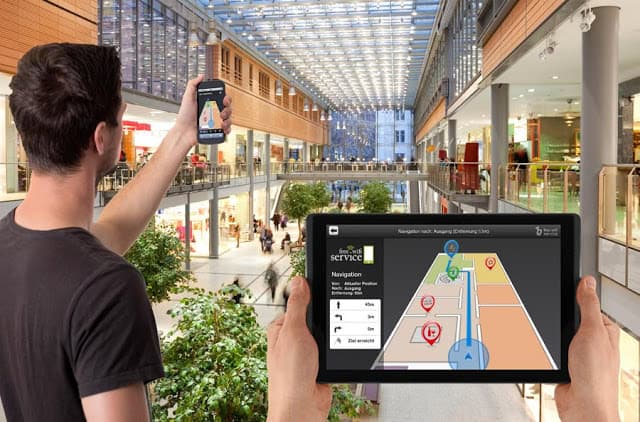
The global indoor location market is experiencing substantial growth is predicted to reach USD 43.20 billion with a CAGR of 21.8% till 2030, driven by the increasing need for real-time navigation, asset tracking, and improved customer experience in various industries such as retail, healthcare, logistics, and entertainment. As more businesses recognize the value of precise location-based services (LBS), technologies such as Bluetooth Low Energy (BLE), Wi-Fi, Ultra-Wideband (UWB), and Radio Frequency Identification (RFID) are gaining prominence. These technologies enable accurate indoor positioning, enhancing everything from supply chain efficiency to personalized marketing campaigns.
The indoor location market is becoming essential for a variety of applications, including indoor navigation, indoor mapping, and real-time asset tracking, as companies continue to seek ways to optimize operations, reduce costs, and improve customer satisfaction. With growing adoption across industries, the market is expected to expand rapidly, offering new opportunities for innovation and improved functionality.
Experience It for Yourself – Download a FREE Sample!
Market Overview
Indoor location technology refers to systems that track and manage the precise location of assets, people, or objects within a building or a defined space. These systems rely on various technologies such as Wi-Fi, Bluetooth, UWB, RFID, and infrared to determine the position of entities indoors with a high degree of accuracy. The use of indoor location services (ILS) allows businesses to leverage real-time data for various purposes, such as improving operations, enhancing security, and providing personalized services to customers.
Key Drivers of Market Growth
Growing Demand for Real-Time Indoor Navigation
The rise of connected environments and smart buildings has accelerated the demand for indoor navigation solutions. As consumers and employees become more accustomed to seamless navigation, particularly in large venues such as airports, shopping malls, and hospitals, businesses are turning to indoor location technology to improve wayfinding capabilities.
Indoor navigation systems powered by technologies like Bluetooth Low Energy (BLE) and UWB are gaining widespread adoption. These systems allow users to easily navigate complex spaces by providing turn-by-turn directions, helping them locate stores, gates, and other points of interest. Enhanced navigation also improves the overall customer experience, reducing frustration and enhancing operational efficiency.
Asset Tracking and Management in Various Industries
Asset tracking is one of the most significant drivers of the indoor location market. Businesses are increasingly using indoor location technologies to track valuable assets, inventory, and equipment. In warehouses, hospitals, and industrial settings, companies are leveraging solutions that offer real-time visibility into the location and status of their assets, improving efficiency and minimizing losses.
The ability to locate assets instantly improves supply chain management, streamlines operations, and enhances security, especially in large facilities where manual tracking can be time-consuming and error-prone. RFID tags and UWB systems are commonly used in asset tracking applications, offering high accuracy and low operational costs.
Retail Sector Enhances Customer Experience
The retail industry is among the largest adopters of indoor location technology, utilizing it to improve customer engagement and streamline operations. With the rise of smart retail, companies are using indoor location services to provide targeted, location-based marketing campaigns and personalized shopping experiences.
Through the use of BLE beacons, retailers can send promotions, offers, and product recommendations directly to customers’ smartphones as they walk through stores. Additionally, real-time tracking can help retailers optimize store layouts and improve inventory management, ensuring that products are always available when customers need them.
Smart Building and Facility Management
Indoor location technology is also integral to the development of smart buildings and facilities. Building managers are using location-based services to monitor occupancy levels, control lighting and HVAC (heating, ventilation, and air conditioning) systems, and improve energy efficiency. By analyzing the movement of people and assets within a building, smart building systems can optimize energy usage, reduce costs, and enhance the overall user experience.
Download Your Free Sample Today!
As buildings become more connected and automated, the need for real-time indoor location data will continue to grow, supporting the ongoing trend of smart city development and sustainable building practices.
Challenges and Opportunities
While the indoor location market is expanding, it faces several challenges. One of the primary hurdles is the complexity of deployment. For instance, installing and maintaining indoor location systems can be costly and require significant infrastructure changes, particularly in older buildings. Additionally, ensuring the accuracy of location data in environments with complex layouts or obstructions remains a challenge.
Moreover, privacy and data security concerns are increasingly important as more businesses adopt location-based services. Organizations must ensure that they comply with data protection regulations and implement strong security measures to safeguard user data.
Market Outlook
The indoor location market is expected to see robust growth in the coming years, with applications spanning various industries, including retail, healthcare, logistics, entertainment, and more. As demand for real-time tracking and navigation increases, the market will continue to evolve with new technologies and enhanced functionalities.
With increasing investments in IoT infrastructure, advancements in sensor technologies, and growing consumer expectations for seamless experiences, the indoor location market is well-positioned for long-term success. Businesses that leverage indoor location solutions to optimize operations, enhance security, and improve customer experiences will gain a competitive edge in an increasingly connected world.
