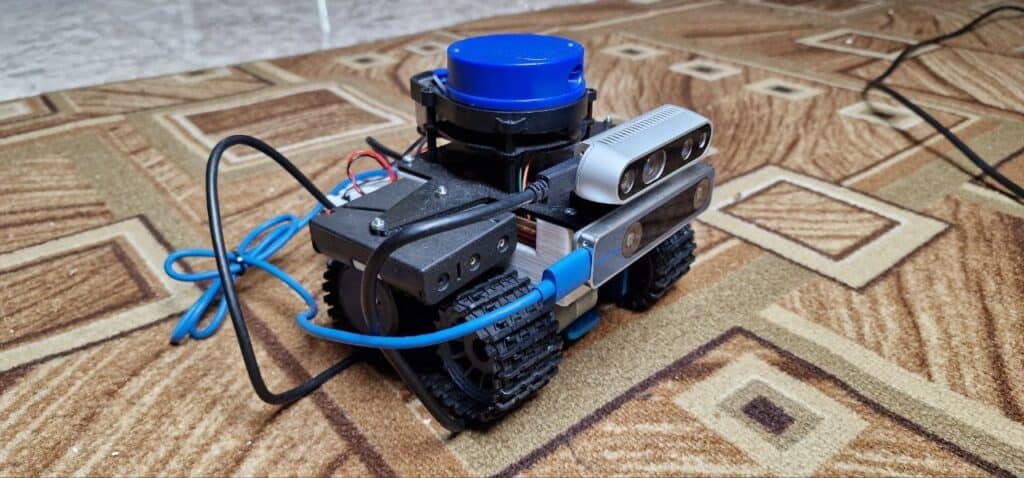
The global Simultaneous Localization and Mapping (SLAM) robots market is on track for significant expansion as the demand for automation and intelligent robotics systems increases across various industries, including logistics, manufacturing, healthcare, and agriculture. The growing adoption of autonomous systems, advancements in robotics technology, and the need for cost-efficient solutions are key factors driving the robust growth of the SLAM robots market. The market is is predicted to reach USD 5.79 billion with a CAGR of 53.4% till 2030 see continued innovation as industries look for ways to optimize processes, increase productivity, and enhance operational efficiency.
SLAM technology allows robots to navigate and understand their surroundings by simultaneously mapping an environment and tracking their position within that environment in real-time. It is one of the key technologies enabling autonomous robots to perform tasks without human intervention. SLAM robots are used in various applications such as warehouse automation, autonomous vehicles, drones, and medical robots. As the technology continues to evolve, its applications are expanding across multiple sectors, fueling demand for SLAM-based robotics solutions.
Market Overview
The SLAM robots market includes autonomous robots integrated with SLAM algorithms that allow them to create accurate, real-time maps of their surroundings and navigate without requiring predefined maps or external guidance systems. SLAM robots leverage various sensors such as LiDAR, cameras, and radar to gather environmental data and create detailed 2D or 3D maps, which enable them to identify obstacles, plan paths, and avoid collisions in dynamic environments.
Don’t Miss Out! Get Your FREE Sample!
The key market drivers include the increasing focus on automation in industries like manufacturing, logistics, and agriculture, where SLAM robots are used to streamline processes such as material handling, order picking, and monitoring crops. Additionally, the growing adoption of autonomous vehicles and drones in transportation and delivery services is expected to propel market growth. SLAM technology plays a crucial role in the development of these systems by enabling them to navigate complex environments with high precision.
Key Drivers of Market Growth
- Increasing Automation Across Industries
The demand for automation in industries such as manufacturing, logistics, agriculture, and healthcare is a primary driver of the SLAM robots market. Companies are increasingly adopting robots to automate repetitive tasks, reduce labor costs, and improve efficiency. SLAM robots, which can autonomously navigate and perform tasks such as inventory management, material transport, and agricultural monitoring, are becoming integral to the automation process.
In particular, in the logistics and warehouse automation sectors, SLAM robots are being deployed for tasks such as autonomous material handling, order picking, and inventory tracking. These robots can navigate large, complex warehouses efficiently, leading to significant cost savings and enhanced operational efficiency.
- Advancements in Robotic Technology and Artificial Intelligence
Technological advancements in robotics, artificial intelligence (AI), and machine learning are playing a key role in driving the growth of the SLAM robots market. As AI algorithms become more sophisticated, robots are becoming increasingly capable of performing complex tasks, learning from their environment, and making decisions in real-time. - Rising Demand for Autonomous Vehicles and Drones
The rise in demand for autonomous vehicles (AVs) and drones in sectors like transportation, delivery, and surveillance is expected to fuel growth in the SLAM robots market. SLAM technology is critical for enabling these autonomous systems to navigate complex environments, such as city streets or aerial spaces, without relying on external infrastructure such as GPS signals.
Download Your Free Sample Today!
Challenges and Opportunities
While the SLAM robots market shows great potential, several challenges remain. One of the key barriers to widespread adoption is the high initial cost of SLAM robot systems, which can be prohibitive for smaller businesses. However, as technology advances and economies of scale improve, the cost of SLAM robots is expected to decrease, making them more affordable for a wider range of organizations.
Additionally, the complexity of integrating SLAM robots into existing workflows and ensuring they can operate in diverse environments with minimal human intervention presents challenges. However, these challenges also present opportunities for manufacturers to innovate and develop more user-friendly, adaptable, and affordable SLAM solutions.
Market Outlook
The global SLAM robots market is expected to experience robust growth over the next several years as automation becomes more widespread and SLAM technology continues to evolve. Key industries such as logistics, manufacturing, agriculture, transportation, and healthcare will continue to be major contributors to the market, driving the demand for SLAM-enabled robotic systems.
As the technology advances, SLAM robots will become increasingly versatile, enabling organizations to automate a wider range of tasks and improve efficiency across multiple sectors. With the growing adoption of autonomous systems and the increasing need for cost-effective and efficient solutions, the SLAM robots market is poised for a dynamic future.
