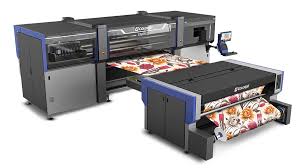
The Digital Fabric Printing Machines Market was valued at USD 2.58 billion in 2025 and is projected to reach a market size of USD 3.09 billion by the end of 2030. Over the forecast period of 2026-2030, the market is projected to grow at a CAGR of 3.7%.
Request Sample
The digital fabric printing machines market has been steadily expanding due to the long-term push toward sustainable and eco-friendly textile production. Traditional textile printing methods consume large amounts of water, energy, and chemicals, making them less favorable in today’s environmentally conscious world. Digital fabric printing machines offer precise printing with minimal waste, which appeals to manufacturers, designers, and consumers who are increasingly prioritizing sustainability.
An important opportunity in the market lies in the expansion of e-commerce and online textile businesses. Online platforms enable designers and small manufacturers to reach a global audience without relying on traditional retail channels. Digital fabric printing machines complement this model perfectly because they allow on-demand production that matches online orders. This reduces excess inventory and storage costs while enabling businesses to respond swiftly to trends. Moreover, the growing interest in sustainable fashion has created an additional incentive for companies to adopt digital printing, as it aligns with consumer expectations for environmentally responsible production. Businesses investing in these machines now can leverage both the sustainability angle and the flexibility to cater to niche markets worldwide.
A notable trend observed in the industry is the integration of advanced software and automation with digital printing machines. Modern machines are increasingly equipped with intelligent controls, AI-based design tools, and real-time monitoring systems. These enhancements allow manufacturers to reduce errors, improve color consistency, and optimize production schedules. Additionally, some machines now support multi-layer and mixed-material printing, enabling designers to create more complex and innovative fabrics. The trend toward automation also addresses labor shortages and operational inefficiencies, which have become more pronounced in recent years. By adopting these technologies, manufacturers can scale operations while maintaining high-quality output, which in turn strengthens the market’s overall growth potential.
Segmentation Analysis:
By Type: Direct-to-Garment Printers (DTG), Sublimation Printers, UV-Based Printers, Hybrid Printers, Single-Pass Printers
The largest in this segment is Sublimation Printers, and the fastest growing during the forecast period is Single-Pass Printers. Sublimation printers are widely used because they can print vibrant designs on fabrics that have polyester content, making them ideal for sportswear and casual apparel. These machines are appreciated for consistent color reproduction and smooth finishing. Single-pass printers, on the other hand, are gaining popularity due to their high-speed production capabilities. They allow manufacturers to print entire fabrics in one pass, reducing production time and labor costs. Direct-to-garment printers are popular among small businesses for short-run custom apparel, but they do not match the volume efficiency of single-pass systems. UV-based printers offer versatility for printing on mixed materials, while hybrid printers combine multiple printing technologies to allow creative experimentation. Overall, the segment is shaped by both performance and application-specific requirements, with large-scale manufacturing favoring sublimation, while rapid adoption is observed in single-pass systems, especially in regions with high demand for quick-turn textile orders and modern design flexibility.
Enquire Before Buying
By Distribution Channel: Direct Sales, Distributors, E-Commerce Platforms, Retail Stores.
The largest in this segment is Distributors, and the fastest growing during the forecast period is E-Commerce Platforms. Distributors remain dominant because they have established networks that connect machine manufacturers with textile businesses, small-scale printers, and regional suppliers. Their infrastructure enables consistent delivery, technical support, and training services. E-commerce platforms are rapidly growing because they allow manufacturers and buyers to connect online, place custom orders, and access global shipping solutions. Direct sales are significant for premium machines that require hands-on demonstrations and post-sales support, while retail stores mostly cater to smaller-scale buyers looking for quick purchases. The rise of e-commerce also benefits international buyers who previously faced barriers in accessing specialized printers. The segment growth reflects the shift in buying behavior from traditional channels to digital marketplaces, with distributors maintaining a strong presence due to trust and established relationships, and e-commerce emerging as a fast-moving channel driven by convenience, competitive pricing, and growing acceptance of online B2B transactions in the textile industry.
Regional Analysis:
The largest in this segment is North America, and the fastest growing during the forecast period is Asia-Pacific. North America leads because of its advanced textile manufacturing infrastructure, high adoption of modern printing technology, and strong focus on customization and sustainability. Manufacturers in this region invest heavily in research and development to improve color precision, automation, and efficiency. Asia-Pacific is experiencing rapid growth due to rising apparel production, increasing textile exports, and the expansion of small and medium-sized printing businesses. The growing e-commerce market in the Asia-Pacific also drives the demand for digital fabric printing machines, especially for the fashion and sportswear sectors. Europe maintains steady adoption due to stringent environmental standards that favor digital printing, while South America and the Middle East & Africa are developing markets where demand is gradually increasing as awareness of efficient printing methods spreads. Technological innovations, government initiatives, and increasing consumer interest in personalized fabrics are shaping regional adoption, with North America dominating the installed base and Asia-Pacific emerging as the fastest-growing market segment over the forecast period.
Latest Industry Developments:
- Innovation‑Led Product Development: Companies in the digital fabric printing machines market are pushing ahead with the launch of advanced printing solutions that offer enhanced precision, speed, and sustainability, reflecting a clear trend in product innovation. This includes machines that support wider color gamuts, more fabric compatibility, and reduced processing steps, which appeal to enterprises seeking to modernize operations rapidly. This focus on evolving product portfolios contributes to greater customer appeal as textile brands look for tools that match shifting demands and environmental priorities. Innovation also extends into machine software, enabling smoother workflows and improved integration with design ecosystems, shaping the competitive landscape.
- Collaborative Ecosystem Expansion: Strategic alliances and partnerships are increasingly prevalent in the digital fabric printing machines sector, highlighting a trend toward ecosystem expansion. By linking technology developers with textile converters, ink specialists, and distribution networks, companies broaden their reach and technological breadth without shouldering all development internally. These collaborations help bring complementary strengths together, such as combining high-speed printing technologies with sustainable ink solutions or enhancing after-sales support across regions. The result is a more versatile market presence and faster adoption among diverse customer segments, as ecosystem partnerships support both innovation and scalability across geographies.
- Sustainability and Efficiency Integration: A prominent trend across the market is embedding sustainability and operational efficiency into core strategies to boost market share. Stakeholders increasingly adopt eco-friendly inks, water-saving technologies, and energy-efficient systems that align with environmental regulations and customer expectations for greener production. At the same time, automation, AI-enhanced color management, and predictive maintenance tools are integrated to improve machine uptime and reduce waste. This dual emphasis on environmental performance and efficiency helps manufacturers and service providers differentiate their offerings, making digital printing more attractive to textile producers who face both cost pressures and sustainability commitments in their operations.
