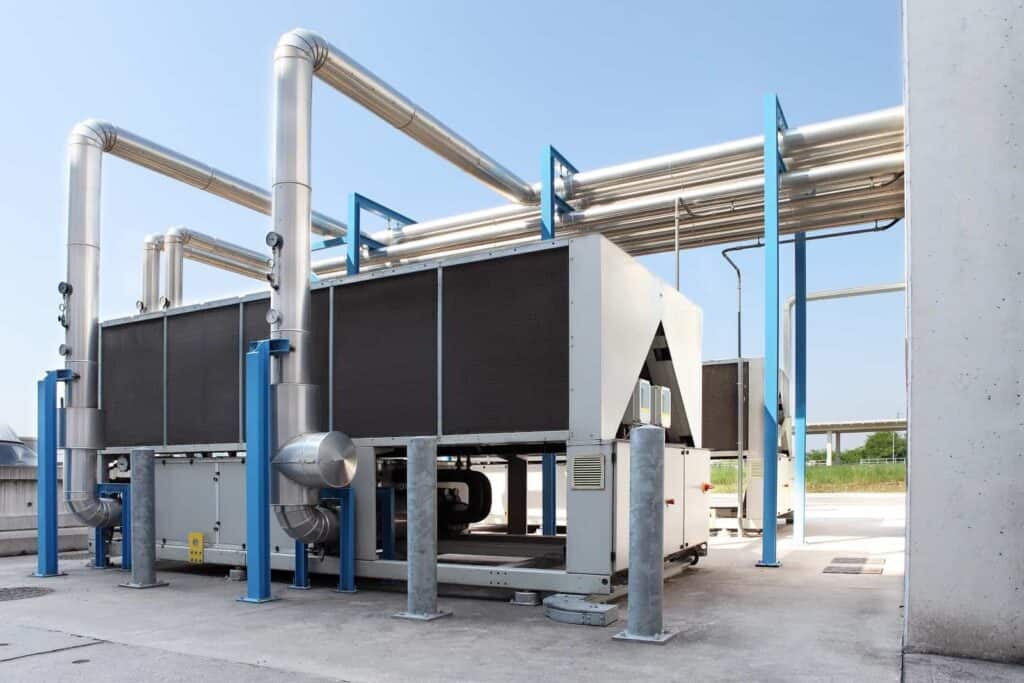
The air handling unit (AHU) market in Finland is experiencing significant growth, fueled by the country’s strong commitment to sustainability, energy efficiency, and innovations in smart building technologies. As Finland continues to make strides in reducing carbon emissions and meeting ambitious climate targets, AHUs have become an essential component in building systems, helping to reduce energy consumption while enhancing indoor air quality (IAQ) and occupant comfort. With an increasing focus on energy-efficient systems, advanced air filtration, and smart integration, the Finland AHU market is poised for substantial expansion in the coming years.
Market Overview
The Finland Air Handling Unit (AHU) Market is predicted to reach USD 58.2 million, at a CAGR of 4.5% by 2030. Air handling units (AHUs) are integral to modern HVAC systems, providing essential functions such as air circulation, temperature regulation, and humidity control in both residential and commercial buildings. As Finland continues its transition toward a more sustainable, energy-efficient built environment, the demand for advanced AHUs is rising. These systems are key to ensuring that buildings meet the country’s energy efficiency standards while maintaining optimal air quality.
Key Market Trends
- Sustainability and Energy Efficiency: Finland is a global leader in environmental sustainability, with ambitious goals to achieve carbon neutrality by 2035. Energy efficiency is a central part of this vision, and AHUs are a crucial element in reducing the energy consumption of buildings. The Finnish government actively supports energy-efficient building practices through incentives and regulations, making energy-efficient AHUs a key component of green building designs. Modern AHUs equipped with features like heat recovery, variable air volume (VAV) systems, and energy-efficient motors help minimize energy use, making them attractive to building developers and owners who aim to meet strict energy performance standards.
Stay Ahead with the Latest News
- Smart and IoT-Integrated AHUs: The rise of smart buildings in Finland is accelerating demand for IoT-enabled AHUs. These smart systems allow for remote monitoring and real-time control, enabling building owners and managers to optimize energy usage and improve operational efficiency. IoT-integrated AHUs can automatically adjust ventilation rates based on occupancy, indoor air quality, and external weather conditions. Predictive maintenance capabilities also help reduce downtime and maintenance costs. As Finland’s construction sector increasingly adopts smart building technologies, the demand for advanced, IoT-enabled AHUs will continue to grow.
- Focus on Indoor Air Quality (IAQ): There is an increasing emphasis on creating healthier indoor environments, with AHUs playing a vital role in maintaining optimal air quality. Air handling units equipped with advanced filtration systems, such as HEPA filters and UV-C lights, are becoming more common in both commercial and residential buildings. These systems help to reduce airborne pollutants, allergens, and pathogens, ensuring cleaner, safer air for occupants. As IAQ continues to be a priority in the building sector, the demand for AHUs that improve ventilation and air purification is expected to increase.
- Green Building Certifications and Regulations: Finland has long been a proponent of sustainable construction and energy-efficient buildings, and green building certifications such as LEED (Leadership in Energy and Environmental Design) and BREEAM (Building Research Establishment Environmental Assessment Method) are becoming increasingly important. Many building projects, both new and retrofitted, aim to achieve these certifications, which often require the integration of energy-efficient systems like AHUs. The growing emphasis on meeting sustainability standards and regulatory requirements is driving demand for AHUs that align with these green building certifications. As Finland continues to push for more sustainable buildings, the AHU market will benefit from increased adoption of energy-efficient solutions.
- Retrofitting and Modernization: Finland’s building stock is aging, with many existing buildings requiring modernization to meet new energy efficiency standards and improve IAQ. The retrofitting of older HVAC systems, including AHUs, is a key trend in the Finnish market. Retrofitting older systems with modern, more efficient units can significantly improve energy performance and air quality while extending the lifespan of the building’s HVAC infrastructure. As a result, there is growing demand for retrofitting solutions that offer cost-effective and efficient upgrades to existing systems.
Market Segmentation
The Finland AHU market can be segmented by product type, application, and region:
- Product Type:
- Modular AHUs: Modular AHUs are designed for larger, more complex building applications, providing flexibility and scalability. These units are ideal for commercial and industrial buildings that require customized ventilation solutions.
- Packaged AHUs: Compact and pre-assembled, packaged AHUs are typically used in smaller buildings, including residential and light commercial spaces. Their ease of installation and cost-effectiveness make them a popular choice for a wide range of applications.
- Application:
- Commercial: Commercial buildings, including offices, retail spaces, and hospitality venues, represent a significant share of the Finland AHU market. As demand for energy-efficient buildings and healthy indoor environments rises, commercial properties are increasingly investing in advanced AHUs to meet sustainability and IAQ standards.
- Industrial: The industrial sector, including manufacturing facilities, warehouses, and laboratories, requires specialized AHUs capable of handling high ventilation loads and maintaining specific environmental conditions. The demand for energy-efficient and robust AHUs in industrial applications is expected to continue growing.
- Residential: The residential segment in Finland is also seeing increasing demand for AHUs, particularly in new construction and retrofitting projects. Homeowners and developers are prioritizing energy-efficient and IAQ-enhancing systems in line with the country’s sustainability goals.
- Regional Distribution:
- Uusimaa Region: As the most populous and economically significant region in Finland, Uusimaa, which includes Helsinki, is the leading market for AHUs. The demand for energy-efficient systems is particularly high in this region, driven by ongoing urbanization and sustainability initiatives.
- Other Regions: Other regions, including Tampere, Turku, and Oulu, are also contributing to the growth of the AHU market, with increasing adoption of green building practices and energy-efficient systems in commercial and residential projects.
Conclusion
Finland AHU market is poised for substantial growth, fueled by the country’s focus on sustainability, energy efficiency, and improving indoor air quality. As the demand for green building solutions, smart technology, and healthier living spaces continues to rise, the role of AHUs in modern buildings will become even more critical. Manufacturers and service providers that can deliver innovative, energy-efficient, and smart AHU solutions will be well-positioned to capitalize on the growing opportunities in this dynamic market.
