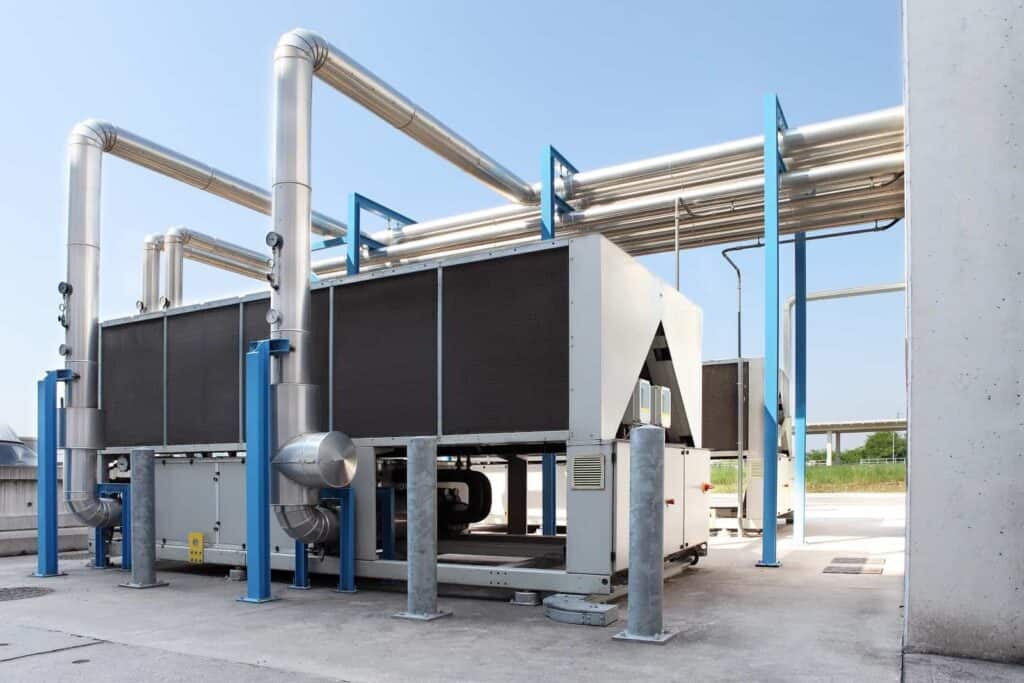
The France air handling unit (AHU) market is experiencing robust growth driven by the increasing demand for energy-efficient solutions, rising awareness about indoor air quality (IAQ), and the continued push for sustainable building practices. With the ongoing transition towards net-zero carbon emissions and stricter regulations governing energy use in buildings, AHUs are emerging as critical components for meeting environmental, health, and comfort standards across various sectors in France.
Market Overview
The France Air Handling Unit (AHU) Market is predicted to reach USD 503.0 million, at a CAGR of 4.5% by 2030. Air handling units (AHUs) are essential HVAC (heating, ventilation, and air conditioning) components designed to regulate and circulate air in buildings. They play a pivotal role in maintaining air quality, controlling temperature, and ensuring proper ventilation in both residential and commercial environments. AHUs also help meet increasingly stringent regulations on energy efficiency and IAQ, making them indispensable in modern construction and renovation projects.
This growth is attributed to the rising demand for energy-efficient systems, government regulations promoting sustainability, and a shift towards healthier indoor environments.
Key Market Trends
- Energy Efficiency and Sustainability: In line with the European Union’s 2030 climate goals and France’s national commitment to achieving net-zero emissions by 2050, there is a growing focus on energy-efficient solutions. AHUs equipped with advanced heat recovery systems, energy-efficient motors, and automated control systems are in high demand. These units not only help reduce energy consumption but also enable businesses and building owners to meet regulatory requirements for energy efficiency, including the French energy performance standards (RT 2012 and RT 2020).
- Smart and IoT-Enabled AHUs: The French market is witnessing an increasing adoption of smart AHUs. These units, integrated with Internet of Things (IoT) technology, offer real-time monitoring, remote control, and predictive maintenance. Smart AHUs optimize energy usage by adjusting airflow and temperature based on occupancy and environmental factors, leading to enhanced performance and cost savings. As the demand for smart buildings rises, IoT-enabled AHUs are becoming a key component of building automation systems across various industries.
- Indoor Air Quality (IAQ) Focus: Features like HEPA filters, UV-C disinfection, and air purification systems are being integrated into AHUs to combat airborne pollutants, allergens, viruses, and bacteria. This trend is especially evident in healthcare, hospitality, and office spaces, where ensuring a healthy indoor environment is critical for occupant well-being.
- Retrofitting and Renovation Projects: As many buildings in France are aging, retrofitting existing HVAC systems with modern, energy-efficient AHUs has become a popular option. Retrofitting offers building owners the opportunity to meet current energy efficiency standards, extend the life of their systems, and reduce operational costs. Additionally, retrofitting helps improve the performance of older buildings without the need for costly full-system replacements, making it an attractive solution in urban areas.
- Government Regulations and Incentives: France’s commitment to sustainability is reflected in its stringent environmental regulations, including the French Energy Transition for Green Growth Act (LTECV) and the upcoming French Building Regulations (RE2020). These regulations encourage the adoption of energy-efficient technologies and sustainable building practices. Furthermore, the French government offers financial incentives, such as subsidies and tax credits, to encourage businesses and homeowners to invest in energy-efficient HVAC systems, including AHUs.
Market Segmentation
The France AHU market can be segmented by product type, end-user industry, and region:
Click to Uncover the Full News
- Product Type:
- Modular AHUs: Modular units offer flexibility and scalability, making them suitable for large commercial and industrial applications where custom specifications are required.
- Packaged AHUs: Packaged units are pre-assembled and compact, making them ideal for smaller commercial buildings and residential applications where space is limited.
- End-User Industry:
- Commercial: Offices, shopping malls, hotels, and healthcare facilities represent a significant portion of the market. As businesses increasingly focus on energy efficiency and IAQ, demand for high-performing AHUs is growing across these sectors.
- Industrial: Industrial applications, including manufacturing plants and warehouses, require large-scale AHUs that can manage heavy ventilation loads and specific environmental control requirements.
- Residential: The demand for AHUs in residential applications is on the rise, particularly in luxury developments and energy-efficient homes. Homeowners are looking for systems that offer both comfort and sustainability.
- Regional Distribution:
- Île-de-France (Paris Region): As the country’s economic and political hub, Paris and its surrounding region are seeing significant demand for both commercial and residential AHUs, driven by stringent regulations and the growing focus on smart, sustainable buildings.
- Southern France: Regions like Provence-Alpes-Côte d’Azur and Occitanie are witnessing increasing adoption of energy-efficient AHUs, particularly in new residential and hospitality developments, as energy savings become a major concern.
- Eastern and Northern France: Industrial hubs in these regions, such as Lyon and Lille, are driving the demand for specialized AHUs tailored for industrial applications and large-scale facilities.
Future Outlook
The France AHU market is poised for continued expansion, fueled by technological advancements, evolving regulatory requirements, and the ongoing shift towards sustainable building practices. The market is expected to see further innovations in heat recovery systems, energy-efficient motors, and AI-powered HVAC solutions, which will increase the efficiency and effectiveness of air handling units. Additionally, the integration of renewable energy sources, such as solar power, with AHU systems is anticipated to become more common as part of the push for greener buildings.
The demand for smart AHUs will also rise as more buildings become interconnected, allowing for better management of energy usage and optimization of HVAC systems. Furthermore, retrofitting existing buildings with energy-efficient AHUs will continue to grow in popularity, offering a cost-effective solution for meeting regulatory standards and reducing environmental impact.
Conclusion
The France air handling unit market is witnessing a dynamic transformation, driven by the need for sustainable, energy-efficient, and smart HVAC solutions. With regulatory pressures, growing awareness of IAQ, and advances in technology, the AHU market is expected to continue its upward trajectory. Manufacturers and suppliers who can innovate in energy efficiency, smart technology, and environmental sustainability will be well-positioned to capitalize on these emerging opportunities.
