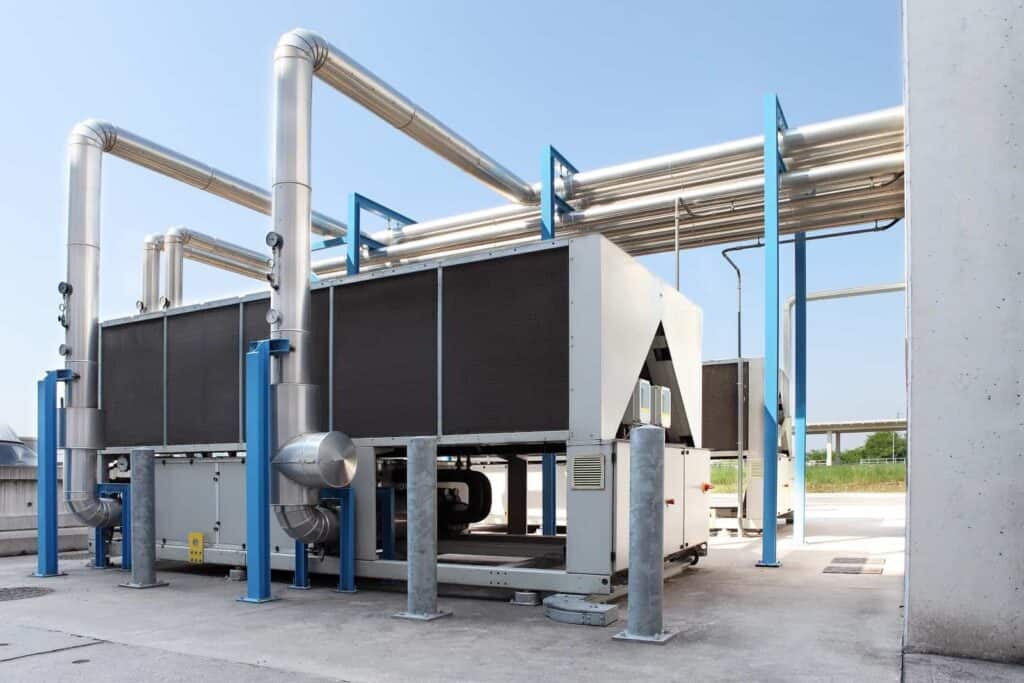
According to Next Move Strategy Consulting, the Australian Air Handling Unit (AHU) market is poised for significant growth, with an expected rise to USD 337.8 million by 2030. This impressive growth represents a compound annual growth rate (CAGR) of 7.7% over the forecast period by 2030.
Air Handling Units (AHUs): Critical to Efficient HVAC Systems
An Air Handling Unit (AHU), a key component in heating, ventilation, and air conditioning (HVAC) systems, plays a central role in regulating airflow, air quality, temperature, and humidity in both commercial and residential buildings. These systems are essential for maintaining optimal indoor environments, ensuring the comfort, health, and safety of building occupants. AHUs work by collecting air from both indoor and outdoor sources, filtering out contaminants, conditioning the air, and circulating it through ducts to create the desired environmental conditions.
Construction Boom Driving AHU Market Growth
The primary factor driving the growth of the Australia Air Handling Units (AHUs) is the burgeoning construction industry. As the Australian economy continues to develop and urbanize, there has been a significant uptick in the construction of new residential, commercial, and industrial buildings. AHUs are a crucial part of these construction projects, ensuring that modern HVAC systems meet contemporary standards of comfort, air quality, and energy efficiency.
Don’t Miss Out! Get Your FREE Sample!
The expansion of infrastructure and ongoing urban development in cities across Australia is further fueling the demand for AHUs. Whether in new builds or in the renovation of existing structures, the need for efficient HVAC solutions, and particularly AHUs, is stronger than ever. This trend is especially pronounced in areas experiencing rapid population growth and heightened demand for commercial space.
Increasing Demand for HVAC Systems Enhances AHU Market Prospects
The growing global population, improving living standards, and an increasing emphasis on indoor air quality are all contributing to the rising demand for HVAC systems, with AHUs playing an essential role. The need for effective climate control solutions is becoming ever more critical in a rapidly urbanizing society. Urbanization, coupled with unpredictable weather patterns, is driving the need for HVAC systems that can provide consistent comfort while ensuring energy efficiency.
Moreover, heightened awareness regarding the importance of air quality, coupled with the rise of concerns over environmental sustainability, has made AHUs a crucial part of any modern HVAC system. In the residential, commercial, and industrial sectors, the demand for clean, controlled indoor environments is leading to a significant uptick in AHU adoption.
Challenges in Market Growth: High Raw Material Costs
Despite the positive outlook, the growth of the AHU market in Australia is not without challenges. One of the major hindrances is the high cost of raw materials required for manufacturing AHUs. The initial cost of purchasing and installing these systems can be significant, particularly for smaller businesses and budget-conscious consumers. While these costs are often justified by long-term energy savings and improved air quality, the initial investment can deter potential buyers.
As a result, there is a growing emphasis on finding cost-effective solutions. AHU manufacturers are exploring alternative designs, materials, and production methods to help bring down the upfront cost. Additionally, financing options and flexible payment plans may become more prevalent, enabling more customers to access these critical systems.
Opportunities Through IoT Integration
Looking forward, the integration of the Internet of Things (IoT) in AHUs presents a transformative opportunity for both manufacturers and end-users. Modern AHUs are evolving to become smarter, with the ability to monitor real-time parameters such as temperature, humidity, and air quality. By integrating IoT sensors, these units can be remotely controlled, with HVAC systems becoming more efficient and responsive.
The benefits of IoT-enabled AHUs are immense, from improved system performance and energy efficiency to predictive maintenance capabilities. With data analytics and machine learning, building managers and technicians can optimize AHU performance and preemptively address any potential failures, reducing downtime and maintenance costs.
The growing trend of smart buildings and energy-efficient systems is expected to accelerate the adoption of IoT-enabled AHUs. This shift will position AHUs as highly adaptable components within an evolving HVAC landscape, creating new opportunities for industry stakeholders to offer more responsive, intelligent solutions.
Segmentation of the Australian AHU Market
The Australian AHU market is segmented across various types, installations, capacities, and applications, allowing for a detailed analysis of its components:
- By Type:
- Packaged
- Modular
- Custom
- By Installation:
- Rooftop
- Indoor
- By Capacity:
- ≤ 5,000 M3/H
- 5,001 – 15,000 M3/H
- 15,001 – 30,000 M3/H
- 30,001 – 50,000 M3/H
- ≥ 50,001 M3/H
- By Application:
- Commercial
- Industrial
- Residential
The growing demand for customized solutions, alongside the increasing adoption of packaged and modular systems, is shaping the dynamics of the market. Modular units, in particular, are gaining traction due to their flexibility and ease of installation, making them ideal for various building types.
Competitive Landscape: Key Players in the Australian AHU Market
The Australian AHU market features a competitive landscape with several global and regional players vying for market share. Leading companies in the market include:
- Daikin Industries, Ltd.
- Carrier Global Corporation
- Trane Technologies
- Midea Group
- Johnson Controls
- Lennox International
- Stulz GmbH
- Rheem Manufacturing Company
- Sinko Industries Ltd.
- Systemair AB
These companies are actively involved in product innovation, strategic partnerships, and market expansion to tap into the growing demand for energy-efficient, smart HVAC solutions. The incorporation of IoT, along with investments in research and development, is expected to give these players a competitive edge in the coming years.
Market Outlook and Forecast
The Australia AHU market is expected to continue its strong growth trajectory, reaching USD 337.8 million by 2030. The continued expansion of the construction industry, coupled with the rising demand for smart HVAC systems, will provide ample opportunities for market participants. Additionally, advancements in IoT technology are set to revolutionize the industry, making AHUs more efficient, cost-effective, and user-friendly.
Despite challenges such as high raw material costs, the long-term outlook for the AHU market remains positive, driven by the increasing need for climate control solutions in residential, commercial, and industrial applications. As the industry evolves, stakeholders will continue to innovate and adapt, ensuring that AHUs remain a vital component of modern HVAC systems in Australia.
