Introduction:
According to Next Move Strategy Consulting, the China Air Handling Unit (AHU) market, a critical segment in the country’s heating, ventilation, and air conditioning (HVAC) sector, is poised for significant expansion over the next several years. The market is forecasted to reach USD 4.15 billion by 2030, representing a compound annual growth rate (CAGR) of 4.8% by 2030. This growth trajectory is driven by a combination of rising construction activities, increasing demand for HVAC systems, and the integration of innovative technologies such as the Internet of Things (IoT) in air handling units.
Market Overview:
Air Handling Units (AHUs) are essential components of HVAC systems, playing a pivotal role in maintaining optimal indoor climates in residential, commercial, and industrial spaces. These systems are responsible for regulating the flow of air, adjusting temperature and humidity, and ensuring the overall quality of indoor air. AHUs collect air from both external and internal sources, removing impurities, and then supply conditioned air throughout buildings via ducts.
The primary functions of AHUs make them indispensable in modern HVAC solutions. As building designs evolve and energy efficiency becomes a top priority, the demand for advanced and reliable AHUs continues to rise.
Market Drivers:
- Rising Construction Activities: The rapid pace of urbanization and development in China has led to a surge in new construction projects, including residential, commercial, and industrial buildings. This expansion directly contributes to the demand for HVAC systems, which are now considered a standard feature in building design. AHUs are integral to these systems, and their widespread adoption in new buildings is a primary driver of market growth.
Additionally, the ongoing trend of renovating and upgrading older buildings to meet contemporary standards of energy efficiency and comfort further fuels the demand for AHUs.
- Increasing Demand for HVAC Systems: As the global population continues to grow and living standards improve, the need for efficient and reliable HVAC systems becomes more pronounced. In urbanized and industrialized areas, the demand for temperature control, air quality management, and overall comfort in buildings has spiked.
Factors such as fluctuating weather patterns, increased awareness of the importance of indoor air quality, and stricter environmental regulations are contributing to the rising adoption of HVAC systems. AHUs, which are crucial for regulating the internal environment of buildings, are at the forefront of this demand surge.
Challenges to Market Growth:
While the China AHU Market presents significant growth opportunities, several challenges could impede its expansion:
Download Your Free Sample Today!
- High Investment Costs: One of the most significant hurdles in the adoption of AHUs is the initial investment required for their purchase and installation. For large-scale applications, the cost of purchasing AHUs, along with necessary ductwork, controls, and labor, can be substantial. This financial burden may deter potential customers, especially in cost-conscious markets or when alternative HVAC solutions are available.
- Regular Maintenance Requirements: AHUs require ongoing maintenance to function optimally, including the replacement of filters, servicing, and preventive measures. The complexity of modern AHU systems also drives up maintenance costs. These long-term operating expenses can be a deterrent for building owners, especially in industries that face tight budgets or prefer alternative climate control solutions.
Emerging Market Opportunities:
The integration of IoT technology into AHUs represents a transformative opportunity for the market. By incorporating advanced sensors and smart connectivity, AHUs can offer a range of benefits including:
- Remote Monitoring and Control: IoT-enabled AHUs allow building managers and technicians to monitor system performance in real time, identifying issues and addressing them remotely. This capability increases operational efficiency and reduces downtime.
- Predictive Maintenance: With IoT integration, AHUs can leverage data analytics and machine learning algorithms to predict potential system failures before they occur. This predictive capability helps avoid costly repairs and ensures smoother operation.
- Enhanced Energy Efficiency: IoT-enabled AHUs can optimize energy use by adjusting system performance based on real-time data. This not only improves energy efficiency but also lowers operating costs, making AHUs more cost-effective in the long run.
As buildings move towards greater automation and energy efficiency, IoT-enabled AHUs are positioned to become an integral part of future HVAC systems, driving innovation and setting new standards for the industry.
Key Market Segments:
The China AHU market can be segmented based on various factors, including type, installation, capacity, and application:
- By Type:
- Packaged AHUs: Prefabricated units designed for quick installation and ease of maintenance.
- Modular AHUs: Customizable units that offer flexibility in design and installation.
- Custom AHUs: Tailored units designed for specific project requirements, offering a high degree of personalization.
- By Installation:
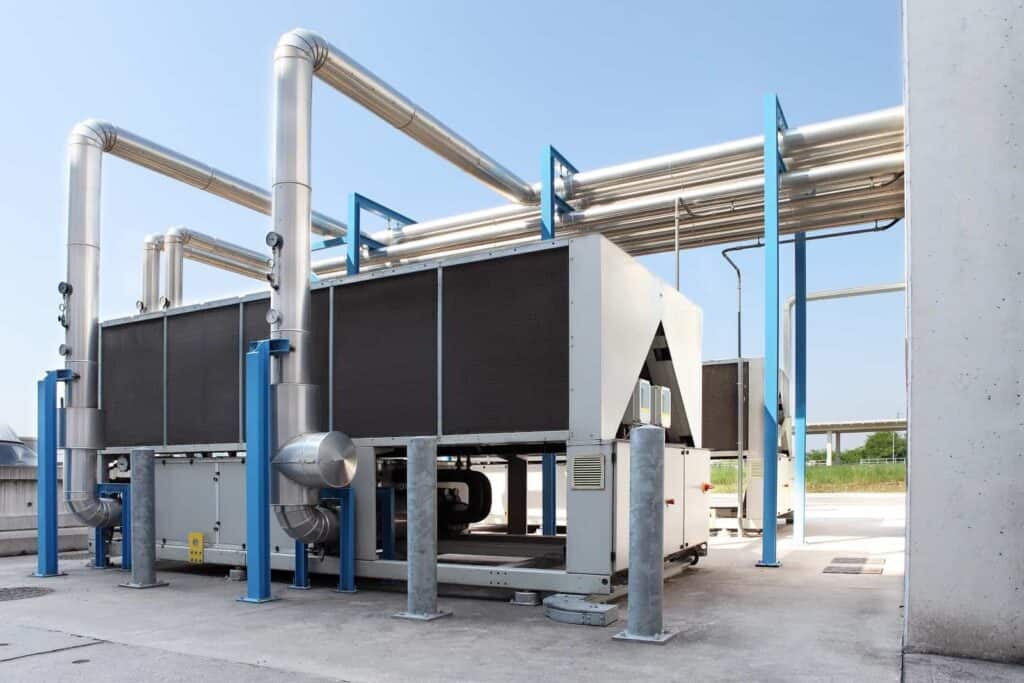
- Rooftop AHUs: Commonly used in commercial and industrial buildings for space-saving and efficient airflow management.
- Indoor AHUs: Installed within building interiors, these units are often used in residential and smaller commercial settings.
- By Capacity:
- ≤ 5,000 M3/H
- 5,001 – 15,000 M3/H
- 15,001 – 30,000 M3/H
- 30,001 – 50,000 M3/H
- ≥ 50,001 M3/H
The capacity of AHUs varies based on building size and ventilation needs. Larger AHUs are typically required for commercial and industrial applications, whereas smaller units are suitable for residential buildings.
- By Application:
- Commercial
- Industrial
- Residential
Each sector has unique requirements for air quality, temperature control, and ventilation, which drives the specific demand for different types of AHUs.
Competitive Landscape:
The China Air Handling Unit market is highly competitive, with several key players contributing to the growth of the sector. Leading companies include:
- Daikin Industries, Ltd.
- Carrier Global Corporation
- Trane Technologies
- Midea Group
- Johnson Controls
- Stulz GmbH
- Sinko Industries Ltd.
- Haier Group Corporation
- Ningbo Yike Air Environmental Technology Co., Ltd.
- Zibo Decent Machinery Co., Ltd.
These companies are actively involved in product innovation, strategic partnerships, and market expansion efforts to strengthen their presence in the AHU market. As the demand for more energy-efficient and IoT-integrated systems increases, competition is expected to intensify, with key players focusing on enhancing product features and improving cost-effectiveness.
Conclusion:
The China Air Handling Unit market is set for continued growth, driven by expanding construction activities, rising demand for HVAC systems, and the integration of cutting-edge technologies like IoT. While challenges such as high investment costs and ongoing maintenance remain, the long-term prospects for the market are strong. With technological advancements and a growing focus on energy efficiency, AHUs are poised to play an increasingly critical role in shaping the future of indoor climate control across China’s residential, commercial, and industrial sectors.
