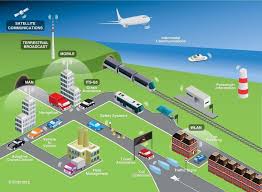
The Global Smart Mobility Market was valued at USD 94.96 billion in 2025 and is projected to reach a market size of USD 241.26 billion by the end of 2030. Over the forecast period of 2026–2030, the market is projected to grow at a CAGR of 20.5%. The market is experiencing rapid expansion due to increasing urbanization, rising demand for efficient transportation systems, and the integration of advanced digital technologies such as artificial intelligence, IoT, and cloud computing into mobility infrastructure. Smart mobility solutions aim to enhance transportation efficiency, reduce congestion, improve safety, and support sustainable urban development.
Request Sample
One of the major long-term drivers of the smart mobility market is the growing global focus on reducing carbon emissions and promoting sustainable transportation. Governments and organizations worldwide are implementing policies to reduce dependence on fossil fuels and encourage the adoption of electric vehicles, shared mobility, and intelligent transportation systems. Smart mobility technologies enable efficient route optimization, vehicle tracking, and traffic management, significantly reducing fuel consumption and environmental impact. These benefits are accelerating the adoption of smart mobility solutions across both developed and emerging economies.
The COVID-19 pandemic influenced transportation patterns globally, accelerating digital transformation and increasing the demand for contactless and efficient mobility solutions. Mobility service providers adopted digital platforms, real-time monitoring systems, and automated mobility services to ensure operational continuity and improve user safety. As economic activities resumed, investments in smart mobility infrastructure increased significantly to enhance transportation resilience and efficiency.
In the short term, rapid expansion of smart city initiatives is driving market growth. Governments across various regions are investing heavily in intelligent transportation systems, electric vehicle infrastructure, and connected mobility platforms. A significant opportunity exists in the integration of autonomous vehicles and mobility-as-a-service (MaaS) platforms, which offer seamless multimodal transportation experiences. A key trend shaping the market is the increasing adoption of real-time mobility data analytics, enabling optimized traffic management, enhanced passenger experience, and improved transportation planning.
Market Segmentation
By Smart Infrastructure: Traffic Management Solutions, Smart Parking Solutions
Traffic management solutions represent the most dominant segment in the smart mobility market. Their leadership is driven by increasing urban congestion and the need for efficient traffic flow management. Advanced traffic management systems use real-time data analytics, sensors, and AI technologies to monitor traffic conditions, optimize signal timing, and reduce congestion. These solutions improve road safety, reduce travel time, and enhance overall transportation efficiency, making them essential components of smart mobility ecosystems.
Smart parking solutions represent the fastest-growing segment during the forecast period. Growth is driven by increasing urban vehicle density and limited parking availability. Smart parking systems use IoT sensors, mobile applications, and data analytics to help drivers locate available parking spaces efficiently. These solutions reduce traffic congestion caused by parking searches, improve urban mobility efficiency, and enhance user convenience.
Enquire Before Buying
By Electric Vehicles: Vehicle Type, Range
Compact and midsize electric vehicles represent the most dominant segment in the smart mobility market. Their leadership is driven by growing consumer demand for affordable and efficient personal transportation solutions. These vehicles are widely used for daily commuting due to their lower cost, improved efficiency, and increasing availability of charging infrastructure.
Long-range electric vehicles represent the fastest-growing segment during the forecast period. Growth is driven by advancements in battery technology, increasing driving range, and growing consumer preference for vehicles capable of supporting long-distance travel without frequent charging.
By Element: Ride Sharing, Car Sharing, Others
Ride sharing represents the most dominant segment in the smart mobility market. Its leadership is driven by increasing demand for cost-effective, convenient, and flexible transportation options. Ride-sharing services reduce the need for personal vehicle ownership, lower transportation costs, and help reduce traffic congestion and emissions.
Car sharing represents the fastest-growing segment during the forecast period. Growth is driven by increasing urbanization, high vehicle ownership costs, and rising demand for flexible transportation solutions without ownership responsibilities.
By Technology: 3G & 4G, Wi-Fi, GPS, RFID, Embedded System
GPS technology represents the most dominant segment in the smart mobility market. Its leadership is driven by its essential role in navigation, vehicle tracking, route optimization, and location-based services. GPS enables real-time vehicle monitoring and efficient transportation planning, making it a critical component of smart mobility solutions.
Embedded systems represent the fastest-growing segment during the forecast period. Growth is driven by increasing integration of intelligent control systems in vehicles and infrastructure, enabling automation, connectivity, and real-time data processing.
Regional Analysis
North America represents the most dominant region in the smart mobility market, accounting for approximately 40% of the global market share. The region’s leadership is driven by advanced technological infrastructure, strong presence of leading mobility solution providers, and extensive investments in smart city development. The adoption of electric vehicles, intelligent transportation systems, and autonomous vehicle technologies is accelerating regional market growth.
Asia-Pacific represents the fastest-growing region during the forecast period, accounting for approximately 25% of the global market share. Rapid urbanization, population growth, and increasing government investments in smart transportation infrastructure are driving market expansion. Countries such as China, Japan, and South Korea are leading in smart mobility innovation and deployment.
Europe represents a significant market driven by strong environmental regulations, sustainability initiatives, and extensive adoption of electric vehicles. Latin America and the Middle East & Africa represent emerging markets supported by infrastructure development and increasing investments in smart city projects.
Latest Industry Developments
- Increasing Investment in Smart City and Intelligent Transportation Infrastructure
Governments worldwide are investing in smart city initiatives, including intelligent traffic systems, connected vehicles, and integrated mobility platforms to improve transportation efficiency and sustainability. - Rapid Expansion of Electric Vehicle Integration into Smart Mobility Ecosystems
The growing adoption of electric vehicles, supported by expanding charging infrastructure and government incentives, is strengthening the integration of EVs into smart mobility networks. - Rising Adoption of Mobility-as-a-Service (MaaS) Platforms
Mobility service providers are increasingly offering integrated MaaS platforms that combine ride sharing, public transportation, and vehicle sharing into unified digital mobility solutions.
