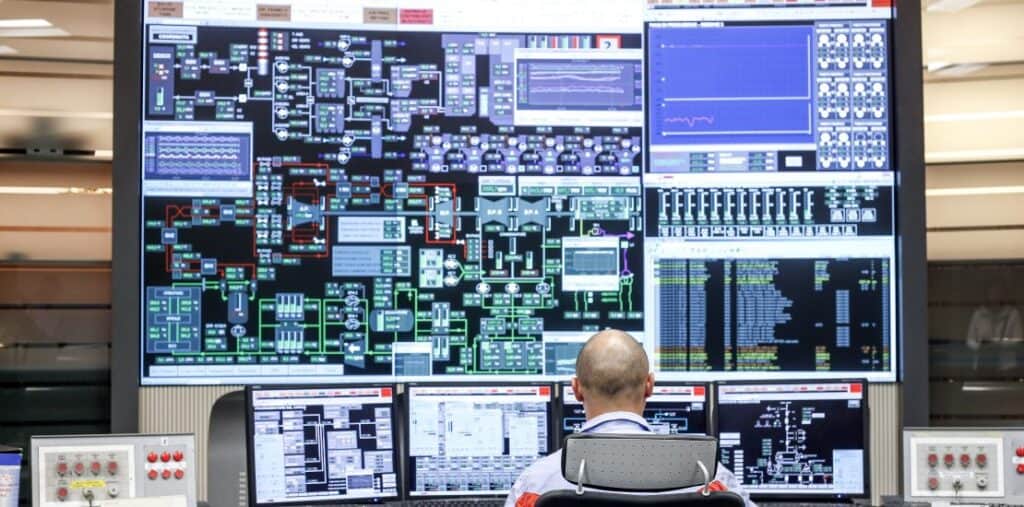
According to Next Move Strategy Consulting, the Middle East Distributed Control System (DCS) Market is forecast to reach USD 1333.5 Million by 2030, reflecting a compound annual growth rate (CAGR) of 5.1% by 2030. This growth is driven by increasing adoption of DCS technology across various industries, particularly in sectors like oil and gas, chemicals, mining, and power generation. As industrial processes become increasingly automated and complex, the demand for robust, reliable, and efficient control systems continues to expand.
What is a Distributed Control System (DCS)?
A Distributed Control System (DCS) is a computer-based control system that is widely used to automate and manage industrial processes. Unlike traditional centralized control systems, DCS features a network of controllers distributed across different points in a plant or facility. These controllers communicate and coordinate various processes to ensure safe, efficient, and accurate operation.
DCS systems are especially valuable in large-scale industries, including oil refineries, chemical plants, pharmaceutical manufacturing, and power stations. They are essential in monitoring and controlling complex processes such as drilling, refining, blending, filtration, and disinfection. By providing real-time monitoring, predictive maintenance capabilities, and fault tolerance, DCS systems enhance operational efficiency, improve safety, and reduce downtime.
The Role of DCS in the Middle East’s Oil and Gas Industry
The oil and gas sector is the dominant driver of DCS demand in the Middle East. Countries like Saudi Arabia, Iraq, Iran, and the United Arab Emirates are leading global players in this industry, with vast oil reserves and extensive processing infrastructure. In fact, Saudi Arabia alone holds 15% of the world’s proven oil reserves and maintains the largest crude oil production capacity globally, producing nearly 12 million barrels per day.
As a critical industry for the region, the oil and gas sector requires highly automated and secure systems to manage complex extraction, refining, and transportation processes. Distributed Control Systems help ensure that these operations are optimized, safe, and efficient, thus contributing significantly to the industry’s growth and sustainability.
Harnessing the Power of Middle East’s Mineral Wealth with DCS Technology
The Middle East is also rich in other mineral resources like copper, gold, silver, and iron ore, which play a crucial role in the region’s economic development. As demand for these minerals rises globally, it becomes increasingly vital for companies in the mining sector to adopt advanced control technologies to enhance efficiency, minimize waste, and improve safety. DCS technology is now instrumental in ensuring optimized mineral extraction and processing, enabling more sustainable and environmentally-friendly practices.
By implementing DCS solutions, companies can improve the quality and consistency of their mineral output, minimize operational risks, and streamline their production processes. As a result, many mining operators in the region are increasingly turning to DCS solutions to optimize performance and stay competitive.
Addressing the Growing Cybersecurity Threats
While the adoption of Distributed Control Systems brings significant benefits, it also introduces new challenges, particularly in terms of cybersecurity. As DCS systems are computer-based and interconnected, they are vulnerable to cyberattacks. Cybercriminals can gain unauthorized access, compromise sensitive data, and disrupt critical operations, posing substantial financial, operational, and reputational risks.
The potential consequences of a cyberattack on DCS systems in industries like power generation, oil and gas, and chemical processing are severe, with significant safety and environmental implications. As such, the Middle East DCS market must invest in robust cybersecurity measures, including advanced encryption, firewalls, and real-time threat detection to safeguard operations and maintain business continuity.
Modular and Flexible DCS Systems: A Game-Changer for Industrial Automation
One of the key trends driving the Middle East Distributed Control System (DCS) Market is the introduction of modular and flexible DCS systems. Traditional DCS systems have been large-scale, centralized installations that require substantial investments in both capital and time. However, modular DCS solutions are designed to be scalable and customizable, allowing organizations to integrate them more easily into their existing systems.
Download Your Free Sample Today!
Modular DCS systems offer enhanced flexibility, enabling businesses to adjust to changing needs and optimize their operations without the need for extensive redesigns or costly upgrades. For example, ABB’s modular-enabled process automation solution, which incorporates module type packages (MTPs) technology, provides a cost-effective and efficient way to implement modular automation solutions. This is especially beneficial for industries such as mining, pharmaceuticals, and biotech, where specific operational requirements must be met.
With the flexibility to scale, modular DCS systems can help businesses improve production efficiency, reduce costs, and enhance product quality, thus creating ample growth opportunities for DCS solutions across various sectors.
Key Market Segments and Growth Prospects
The Middle East DCS market can be categorized into various segments based on component, application, project type, and end-user industry.
By Component:
- Hardware: Controllers, I/O devices, workstations, and networking hardware.
- Software: Control and monitoring software that enables process automation.
- Services: Integration and implementation, managed services, and ongoing support.
By Application:
- Batch Process: Used in industries like pharmaceuticals and food and beverage.
- Continuous Process: Common in industries such as oil and gas, chemicals, and power generation.
By Project Type:
- New Construction: For new plants or systems.
- Replacement: Replacing outdated systems with modern DCS solutions.
- Upgrade and Expansion: Upgrading existing systems for enhanced performance.
By End-User Industry:
- Oil & Gas
- Chemicals & Refining
- Energy & Power
- Pulp & Paper
- Metals & Mining
- Pharmaceutical & Biotech
- Food & Beverages
- Cement & Glass
- Water & Wastewater
Competitive Landscape
The Middle East DCS market is highly competitive, with several global players leading the market. Notable companies operating in this sector include:
- Yokogawa Electric Corporation
- Hitachi Ltd.
- Omron Corporation
- Emerson Electric Co.
- Mitsubishi Electric Corporation
- ABB Ltd.
- Rockwell Automation Inc.
- Honeywell International Inc.
- Valmet OYJ
- Toshiba Corporation
- Schneider Electric SE
- General Electric
- Ingeteam Corporation S.A
- Azbil Corporation
- Siemens AG
These players are focused on offering advanced, modular, and flexible DCS solutions to meet the evolving needs of industries across the region. Strategic partnerships, mergers, and acquisitions are also expected to drive market consolidation and innovation, providing more tailored solutions to end-users.
Conclusion
The Middle East Distributed Control System market is poised for steady growth, with significant opportunities arising from the increasing adoption of DCS technology across key industries like oil and gas, chemicals, and mining. As industrial operations become more automated and complex, the need for efficient, scalable, and secure control systems continues to rise. However, cybersecurity risks must be addressed to ensure the safety and stability of these vital industries.
