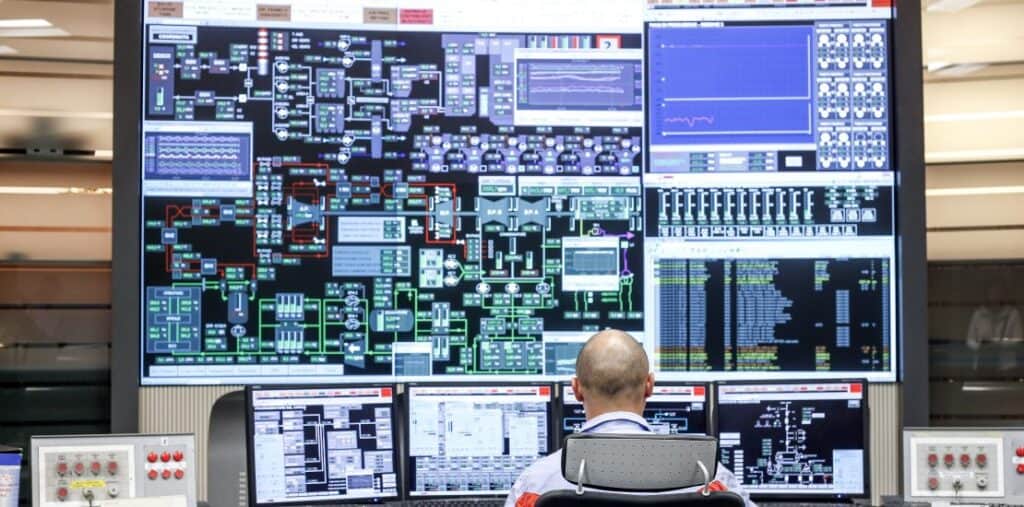
According to Next Move Strategy Consulting, the Singapore Distributed Control System (DCS) market is witnessing a period of rapid expansion. This burgeoning sector is expected to reach USD 139.62 million by 2030, representing a compound annual growth rate (CAGR) of 7.6% by 2030. Distributed Control Systems (DCS) are integral to overseeing and automating complex industrial processes, ensuring enhanced operational efficiency, safety, and reliability across various industries.
What is a Distributed Control System (DCS)?
A Distributed Control System (DCS) is a sophisticated, computer-based control system designed to manage and automate industrial processes. Unlike centralized control systems, DCS distributes control functions across multiple controllers connected via a network, facilitating coordination and communication across different industrial units. This system finds widespread applications in sectors such as chemical, petrochemical, pharmaceutical, food and beverage, and power generation.
Particularly valuable in large-scale industrial operations, DCS technology is critical in settings that require high levels of automation and process precision, including oil refineries, chemical plants, and power stations. The primary role of DCS systems is to regulate operations like drilling, refining, blending, manufacturing, filtration, and disinfection while ensuring efficiency, safety, and minimal downtime.
Key Drivers of Growth in the Singapore DCS Market
The Singapore DCS Market is being driven by several key factors, including its robust pharmaceutical industry, the thriving oil and gas sector, and the shift towards modular and flexible DCS systems.
Get Instant Access to a FREE Sample!
- Thriving Pharmaceutical Sector
Singapore is renowned as a leading biomedical and pharmaceutical hub in Asia. The nation’s adoption of advanced automation technologies, including DCS systems, is contributing significantly to market growth. Notably, Rockwell Automation’s launch of the PlantPAx 5.0 DCS in October 2020 has provided pharmaceutical manufacturers with a scalable, plant-wide solution that supports digital transformation and operational excellence. - Singapore as an Oil Trading Hub
Singapore’s strategic position as one of the largest oil trading hubs in the world presents immense opportunities for DCS technology in the energy sector. DCS systems are crucial in oil and gas operations to ensure process control, safety, and efficiency. Given the importance of the oil and gas industry to Singapore’s economy, the integration of DCS solutions is essential to sustaining the sector’s global competitiveness while improving operational reliability. - Modular and Flexible DCS Systems
The advent of modular and flexible DCS solutions represents a new growth frontier for the industry. Traditional DCS systems have been monolithic and expensive to implement, but new modular systems provide greater flexibility, scalability, and ease of integration with other industrial systems. These systems allow companies to customize their DCS infrastructure to meet specific needs, reducing costs while enhancing operational efficiency. The adoption of modular DCS is particularly beneficial in industries like manufacturing, energy, and process industries.
ABB’s process automation solution, for example, offers a modular-enabled system that combines orchestration layers and module-type packages (MTP) technology, making it a cost-effective solution for industries such as mining, pharmaceuticals, and biotech.
Challenges in the DCS Market
Despite its promising growth, the Singapore DCS market faces challenges, particularly related to cybersecurity risks. The connected nature of DCS systems makes them vulnerable to cyberattacks, which could disrupt critical industrial processes, compromise sensitive data, and lead to significant financial and reputational damage. Cybersecurity risks are especially concerning in industries like power generation, oil and gas, and chemical processing, where system failures can have severe environmental and safety consequences.
As DCS technology becomes more integrated with industrial operations, manufacturers must prioritize robust security measures to protect against evolving cyber threats. Cyber resilience and data protection protocols will play a crucial role in the continued growth of the DCS market in Singapore.
Competitive Landscape
The Singapore DCS market is competitive, with several key players offering advanced automation solutions. Some of the prominent companies in this market include:
- Yokogawa Electric Corporation
- Hitachi Ltd.
- Omron Corporation
- Emerson Electric Co.
- Mitsubishi Electric Corporation
- ABB Ltd.
- Rockwell Automation Inc.
- Honeywell International Inc.
- Valmet OYJ
- Toshiba Corporation
- Schneider Electric SE
- General Electric
- Ingeteam Corporation S.A.
- Azbil Corporation
- Siemens AG
These companies are leveraging cutting-edge technologies and innovations to enhance the capabilities of DCS systems, contributing to the growing demand across various industries in Singapore.
Market Segmentation
The Singapore DCS market is segmented across various components, applications, and industries:
- By Component:
- Hardware: Controller, I/O, Workstation, Networking Hardware
- Software
- Service: Integration and Implementation, Managed Services, Support and Consultation
- By Application:
- Batch
- Continuous Process
- By Project Type:
- New Construction
- Replacement
- Upgrade and Expansion
- By End-User Industry:
- Oil & Gas
- Chemicals & Refining
- Energy & Power
- Pulp & Paper
- Metals & Mining
- Pharmaceutical & Biotech
- Food & Beverages
- Cement & Glass
- Water & Wastewater
- Others
Conclusion
The Singapore DCS market is poised for significant expansion, driven by advancements in technology, the growing need for automation, and the increasing adoption of modular and flexible solutions. Industries such as oil and gas, pharmaceuticals, and manufacturing are set to benefit from the enhanced operational efficiency, process safety, and reliability that DCS systems offer. However, the market must address the emerging cybersecurity challenges to ensure the continued growth and safety of industrial operations.
