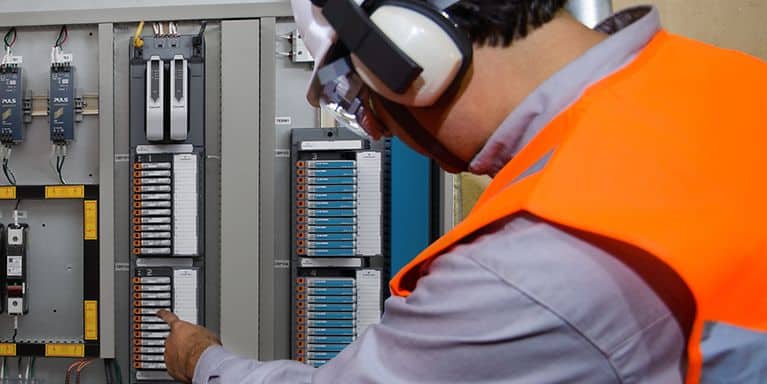
According to Next Move Strategy Consulting, the South Korea Distributed Control System (DCS) market is on track to experience substantial growth, with a projected market value of USD 1000.4 million by 2030. The market representing a robust compound annual growth rate (CAGR) of 7.5% by 2030. Distributed Control Systems (DCS) are computer-based control systems used extensively to automate and oversee industrial processes, offering improved efficiency, precision, and safety across a wide range of industries.
Understanding the Distributed Control System (DCS)
A Distributed Control System (DCS) is a sophisticated control mechanism that employs a network of controllers distributed across industrial facilities. It facilitates real-time process management and automation, ensuring that industrial operations run smoothly, efficiently, and safely. DCS systems are integral to industries such as chemicals, petrochemicals, pharmaceuticals, food and beverages, and power generation, where large-scale, highly automated control systems are necessary to oversee complex processes.
Key functionalities of DCS systems include process monitoring, automation, fault tolerance, and real-time control. The decentralized nature of DCS systems offers significant advantages, including enhanced operational efficiency, safety, and redundancy, as well as reduced downtime due to built-in fault tolerance. These systems also contribute to predictive maintenance, offering actionable insights through data analytics to ensure continuous operational improvement.
Key Growth Drivers of the South Korea DCS Market
The South Korea DCS Market expansion can be attributed to multiple factors, including the rise of Industry 4.0 technologies, the renewable energy revolution, and the increasing demand for automation in industrial processes.
Experience It for Yourself – Download a FREE Sample!
- Embracing Industry 4.0 and Smart Manufacturing
South Korea’s automotive sector, a key pillar of its economy, has been at the forefront of adopting Industry 4.0 technologies, such as the Internet of Things (IoT), Artificial Intelligence (AI), and advanced control systems. These technologies require robust automation and control solutions like DCS to manage data flow and improve production efficiency. South Korea ranks as the fifth-largest car producer globally, producing approximately 3.46 million vehicles annually as of 2022, further underscoring the importance of smart manufacturing systems.
As manufacturers seek to enhance their production lines with intelligent and autonomous systems, the adoption of DCS technology in South Korea is expected to grow substantially, supporting greater manufacturing precision and improved product quality across multiple industries.
- Renewable Energy Revolution in South Korea
Another significant driver of DCS market growth in South Korea is the country’s ambitious renewable energy goals. As part of its commitment to reducing greenhouse gas emissions and improving energy independence, the South Korean government is heavily investing in renewable energy infrastructure. According to the International Trade Administration, renewable energy is expected to account for 34% of the country’s energy capacity by 2030, up from 15% in 2022.
DCS technology is essential in managing and controlling renewable energy systems, from wind farms to solar energy plants, as it ensures efficient operations and system stability. This trend towards sustainable energy solutions is accelerating the demand for DCS systems, which can offer real-time process management and predictive maintenance for renewable energy operations.
- Modular and Flexible DCS Solutions
The introduction of modular and flexible DCS systems is also contributing to the market’s growth. Traditionally, DCS systems were monolithic and centralized, requiring costly and complex installations. However, with the development of modular DCS systems, industrial operations now have the opportunity to adopt scalable solutions that are cost-effective and adaptable to specific operational needs.
Companies such as ABB have been at the forefront of this transformation, offering modular-enabled process automation solutions that combine orchestration layers with module-type packages (MTPs) for more flexible and affordable DCS configurations. These modular systems can be customized to fit diverse industries, including pharmaceuticals, mining, and biotechnology, driving cost reduction, improved production efficiency, and enhanced product quality.
Challenges to Market Growth
While the South Korea DCS market is set for growth, the sector faces challenges, notably from the increasing threat of cyberattacks. As DCS systems become more interconnected and reliant on digital networks, they are vulnerable to malicious attacks. A successful cyberattack on a DCS system could compromise sensitive data, disrupt critical infrastructure, and result in substantial financial losses.
Industries such as oil and gas, power generation, and chemical processing, where DCS systems are vital for public safety and environmental protection, are particularly at risk. In response, industry stakeholders are focusing on enhancing cybersecurity measures to protect DCS systems from potential threats.
Competitive Landscape
The South Korea Distributed Control System (DCS) market features several major players, including global technology and automation leaders. Key companies include:
- Yokogawa Electric Corporation
- Hitachi Ltd.
- Omron Corporation
- Emerson Electric Co.
- Mitsubishi Electric Corporation
- ABB Ltd.
- Rockwell Automation Inc.
- Honeywell International Inc.
- Valmet OYJ
- Toshiba Corporation
- Schneider Electric SE
- General Electric
- Ingeteam Corporation S.A
- Azbil Corporation
- Siemens AG
These players are competing to offer advanced and innovative DCS solutions, incorporating features like modularity, flexibility, and enhanced cybersecurity protocols to meet the diverse needs of industries ranging from energy and power to pharmaceuticals and food production.
Market Segmentation
The South Korea DCS market can be analyzed across various dimensions:
By Component
- Hardware: Controllers, I/O, workstations, networking hardware
- Software: Process control, monitoring, and data analytics software
- Services: Integration and implementation, managed services, support, and consultation
By Application
- Batch Processing
- Continuous Process
By Project Type
- New Construction
- Replacement
- Upgrade and Expansion
By End-User Industry
- Oil & Gas
- Chemicals & Refining
- Energy & Power
- Pulp & Paper
- Metals & Mining
- Pharmaceutical & Biotech
- Food & Beverages
- Cement & Glass
- Water & Wastewater
Conclusion
The South Korea Distributed Control System (DCS) market is witnessing rapid growth, fueled by technological advancements, a shift towards renewable energy, and the ongoing evolution of Industry 4.0. With its significant impact on improving operational efficiency, safety, and predictive maintenance, DCS technology is set to play a key role in South Korea’s industrial automation landscape.
