According to Next Move Strategy Consulting, the Thailand Air Handling Unit (AHU) market is poised for significant growth, projected to reach USD 164.6 million by 2030, representing a robust compound annual growth rate (CAGR) of 7.3% by 2030. The escalating demand for efficient HVAC systems and increasing awareness of energy conservation are key factors driving this positive market trajectory.
Understanding the Role of Air Handling Units (AHUs)
Air Handling Units (AHUs), also known as air handlers, are critical components within heating, ventilation, and air conditioning (HVAC) systems. They play an essential role in maintaining optimal indoor climates by regulating airflow, temperature, humidity, and air quality across various environments, including residential, commercial, and industrial spaces. By collecting air from both outside and inside, AHUs remove dust, particles, and other contaminants, while conditioning the air to meet specific temperature and humidity requirements before distributing it through ducts.
As the core element in HVAC systems, AHUs have become indispensable in managing indoor air quality, ensuring comfort, and maintaining health standards, which, in turn, makes them a significant driver of the market.
Energy Efficiency as a Key Market Driver
One of the most influential factors propelling the growth of the Thailand AHU market is the increasing emphasis on energy efficiency. With growing global concerns over climate change and the rising cost of energy, both businesses and consumers are increasingly prioritizing energy-efficient HVAC solutions. This shift is not only driven by environmental concerns but also by the economic need to reduce operational costs.
AHUs that incorporate advanced energy-efficient technologies, such as variable air volume (VAV) systems and energy recovery solutions, help optimize energy usage while maintaining performance. These systems are designed to meet stringent energy efficiency regulations and align with green building certifications, such as LEED, making them highly attractive to end-users. As consumers and businesses become more eco-conscious, the market is responding with AHUs that offer both high performance and lower energy consumption.
The Growing Demand for HVAC Systems
The growing demand for HVAC systems is another critical factor driving the AHU market. As urbanization accelerates and the global population continues to rise, the need for efficient indoor climate control becomes more pronounced. Moreover, the increasing awareness of indoor air quality has prompted a surge in demand for HVAC systems across commercial, residential, and industrial sectors.
In Thailand, a rapidly developing infrastructure, coupled with a rise in construction activities, has further fueled the demand for HVAC systems. Both new constructions and the retrofit market are contributing to the expansion of the AHU market. These systems play a vital role in ensuring comfortable, safe, and healthy environments, particularly in urban areas with extreme weather conditions.
Challenges in the Market: High Investment Costs and Maintenance Needs
Despite the positive outlook, the Thailand AHU market faces several challenges. One of the key barriers to growth is the high initial investment required for AHU systems, particularly for large-scale applications. The cost of purchasing, installing, and integrating AHUs into HVAC systems can be significant, covering not just the units themselves, but also ductwork, controls, labor, and infrastructure modifications.
Furthermore, ongoing maintenance costs, including filter replacements, servicing, and preventive measures, add to the total cost of ownership. The complexity of modern AHU systems also increases these maintenance requirements. For many building owners, these financial burdens may act as a deterrent, especially when alternative HVAC solutions appear more affordable.
Opportunity in IoT Integration for Enhanced Performance
In response to these challenges, the integration of the Internet of Things (IoT) technology into AHUs is set to revolutionize the industry. IoT-enabled AHUs, equipped with advanced sensors, can monitor real-time parameters such as temperature, humidity, and air quality. These smart systems allow for remote access and control, enabling building managers and technicians to optimize performance, detect issues, and manage energy consumption more efficiently.
This IoT integration is expected to enhance the overall performance of AHUs, making them more adaptive and responsive to user needs. By utilizing data analytics and machine learning, predictive maintenance can be implemented, ensuring that systems operate at peak efficiency and reducing the need for costly repairs. As IoT technology continues to evolve, the integration of these smart capabilities will increase the market potential for AHUs, offering greater flexibility and enhanced user experience.
Competitive Landscape: Key Players in the Thailand AHU Market
The Thailand Air Handling Unit (AHU) Market is highly competitive, with several global players actively vying for market share. Notable companies operating in this space include:
Try it Risk-Free – Download Your FREE Sample!
- Daikin Industries, Ltd.
- Carrier Global Corporation
- Trane Technologies
- Midea Group
- Johnson Controls
- Lennox International
- Stulz GmbH
- Rheem Manufacturing Company
- Sinko Industries Ltd.
- Systemair AB
These companies are continuously innovating and improving their AHU offerings to meet the growing demand for energy-efficient, high-performance solutions. Their efforts to incorporate advanced technologies, such as IoT connectivity, energy recovery systems, and modular designs, are shaping the future of the market.
Market Segmentation
The Thailand AHU market can be segmented based on type, installation location, capacity, and application:
- By Type
- Packaged AHUs: Pre-assembled units suitable for quick installation.
- Modular AHUs: Flexible, scalable solutions that can be customized according to specific needs.
- Custom AHUs: Tailored units designed for unique requirements.
- By Installation
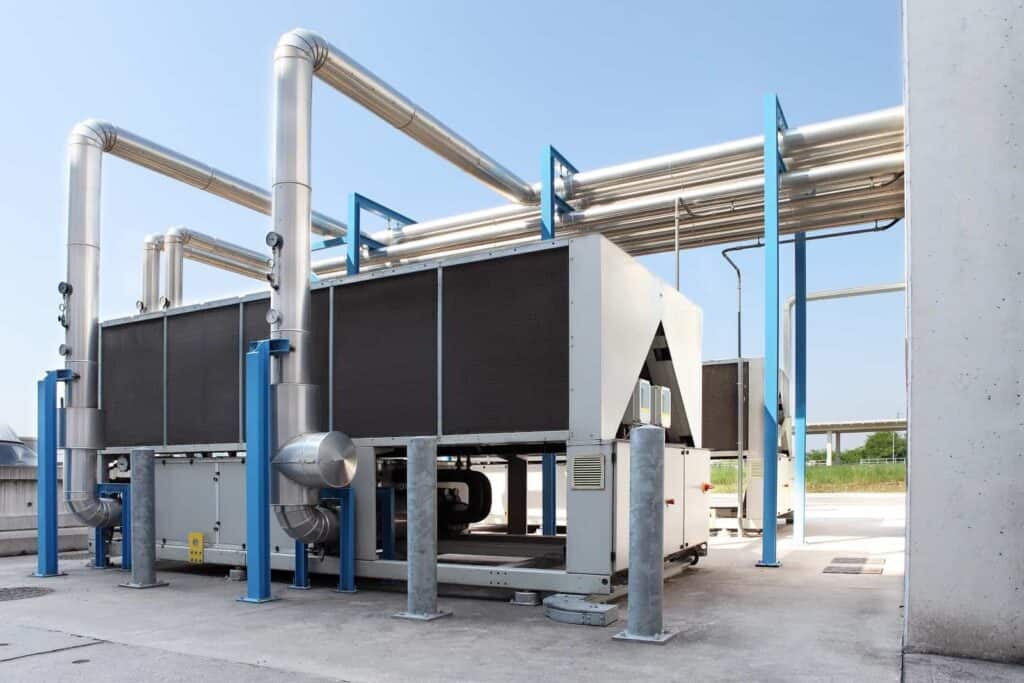
- Rooftop AHUs: Installed on the roof of buildings, ideal for commercial applications.
- Indoor AHUs: Installed inside buildings, commonly used in residential and industrial spaces.
- By Capacity
- ≤ 5,000 M3/H
- 5,001 – 15,000 M3/H
- 15,001 – 30,000 M3/H
- 30,001 – 50,000 M3/H
- ≥ 50,001 M3/H
- By Application
- Commercial: Office buildings, shopping malls, and other commercial establishments.
- Industrial: Factories, manufacturing plants, and warehouses.
- Residential: Homes and residential buildings.
Conclusion:
The Thailand Air Handling Unit (AHU) market is expected to continue its upward trajectory, driven by increasing demand for energy-efficient solutions, advancements in IoT technology, and a growing focus on environmental sustainability. The industry presents lucrative opportunities for companies that can innovate and adapt to changing consumer demands.
In particular, the integration of smart technologies into AHUs, such as IoT connectivity and data analytics, is expected to transform the market landscape, offering users enhanced control, greater energy savings, and improved system performance. As the demand for environmentally conscious and energy-efficient solutions intensifies, the Thailand AHU market is positioned for a prosperous future.
