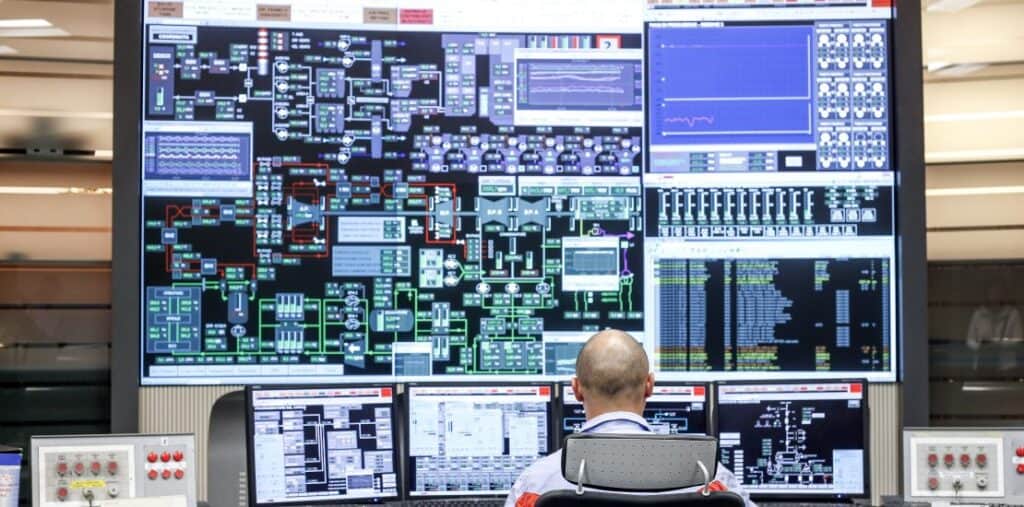
According to Next Move Strategy Consulting, the Thailand Distributed Control System (DCS) market is poised for significant growth, with the market expected to reach USD 1,000.4 million by 2030, representing a compound annual growth rate (CAGR) of 12% by 2030. Valued at USD 448.98 million in 2023, the DCS market is on a trajectory of rapid expansion, driven by increasing demand for automation in industrial processes and advancements in renewable energy infrastructure.
What is Distributed Control System (DCS)?
A Distributed Control System (DCS) is a networked, computer-based control system used to manage and automate industrial processes. Unlike traditional control systems, which rely on a centralized system, DCS spreads control across multiple controllers distributed throughout a facility. This decentralized architecture allows for more efficient, reliable, and scalable management of complex processes across industries such as chemical, petrochemical, pharmaceutical, food and beverage, and power generation. By offering enhanced process control, reduced downtime, increased efficiency, and heightened safety, DCS systems have become essential for industries with large-scale, complex operations.
Advancing Thailand’s Industrial Revolution with DCS
The Thailand DCS market’s growth is fueled by a combination of factors, particularly the country’s ongoing industrialization efforts and the increasing need for automation. As Thailand’s industrial sectors continue to evolve, the demand for sophisticated control systems, such as DCS, has become more pronounced. DCS enables businesses to achieve higher levels of operational efficiency, reduce production costs, and improve quality by automating routine tasks and monitoring systems in real time.
A key driver for the market’s expansion is the integration of Industry 4.0 technologies and the Internet of Things (IoT). These cutting-edge technologies enhance DCS capabilities, enabling manufacturers to optimize operations, monitor processes remotely, and gain insights into predictive maintenance, all of which improve productivity and reduce operational disruptions.
Empowering Thailand’s Renewable Energy Transition
Thailand’s energy landscape is rapidly shifting towards renewable sources such as solar, wind, and hydroelectric power. The intermittent nature of renewable energy sources has created a demand for advanced control systems like DCS to ensure reliable energy generation, distribution, and consumption. DCS technology enables real-time monitoring, coordination, and optimization of power grids, which is crucial for integrating renewable energy into national energy infrastructure.
In line with these efforts, the Federation of Thai Industries (FTI) and Thailand Greenhouse Gas Management Organization launched the FTIX platform in February 2023. This initiative aims to promote renewable energy certificates, carbon credits, and further Thailand’s carbon-neutral goals. As Thailand continues to expand its renewable energy capacity, DCS systems will be vital in optimizing energy production and distribution, further propelling market demand for DCS technology.
Challenges: Cybersecurity Risks in DCS Systems
While DCS systems offer numerous advantages, including improved efficiency and safety, they also face vulnerabilities. With their reliance on networked, computerized systems, DCS platforms are susceptible to cyberattacks. Cybercriminals can exploit system weaknesses, resulting in data breaches, infrastructure disruptions, and even large-scale environmental or safety risks in industries such as oil and gas, chemicals, and power generation.
In recent years, the global surge in cyberattacks targeting critical infrastructure has raised concerns regarding the security of industrial control systems. To mitigate these risks, companies must adopt robust cybersecurity measures and integrate advanced security protocols into their DCS systems.
Modular and Flexible DCS: The Future of Industrial Automation
A new trend in the DCS market is the adoption of modular and flexible systems that allow for greater customization and scalability. Traditionally, DCS systems were large and monolithic, making them expensive and complex to install and maintain. However, modular DCS systems offer more flexibility by allowing industries to tailor solutions based on their specific needs, leading to more cost-effective deployments.
Modular systems also provide a more scalable approach to industrial automation, making it easier to integrate new components or adapt to changes in production requirements. ABB’s modular-enabled process automation solution, which combines an orchestration layer with module type packages (MTPs) technology, is an example of how modular DCS can transform automation processes. This approach is more cost-effective than traditional DCS systems, offering industries such as mining, pharmaceuticals, and biotech enhanced flexibility at a lower cost than conventional programmable logic controllers (PLCs).
Competitive Landscape: Key Players in the Thailand DCS Market
The Thailand DCS Market is highly competitive, with several global players vying for market share. Leading companies in the space include:
Test It First – Download Your FREE Sample!
- Yokogawa Electric Corporation
- Hitachi Ltd.
- Omron Corporation
- Emerson Electric Co.
- Mitsubishi Electric Corporation
- ABB Ltd.
- Rockwell Automation Inc.
- Honeywell International Inc.
- Valmet OYJ
- Toshiba Corporation
- Schneider Electric SE
- General Electric
- Ingeteam Corporation S.A.
- Azbil Corporation
- Siemens AG
These companies are driving innovation in DCS technology, offering cutting-edge solutions that cater to the unique needs of Thailand’s rapidly expanding industrial sectors. From enhancing process automation to ensuring energy efficiency in power grids, these players continue to lead the way in shaping the future of DCS systems in the region.
Market Segmentation and Forecast
The Thailand DCS market can be broken down into several segments:
- By Component:
- Hardware: Controllers, I/O, Workstations, Networking Hardware
- Software
- Services: Integration & Implementation, Managed Services, Support & Consultation
- By Application:
- Batch Processes
- Continuous Processes
- By Project Type:
- New Construction
- Replacement
- Upgrade and Expansion
- By End-User Industry:
- Oil & Gas
- Chemicals & Refining
- Energy & Power
- Pulp & Paper
- Metals & Mining
- Pharmaceutical & Biotech
- Food & Beverages
- Cement & Glass
- Water & Wastewater
- Other Industries
Market Outlook and Conclusion
The Thailand DCS market is on a strong growth trajectory, driven by the increasing adoption of automation across industries, the growing shift towards renewable energy, and the integration of Industry 4.0 technologies. Despite challenges related to cybersecurity risks, the market is expected to continue expanding due to the benefits DCS offers in enhancing operational efficiency, reducing downtime, and improving safety. The introduction of modular and flexible DCS systems is also expected to open new opportunities for growth and innovation in the market.
