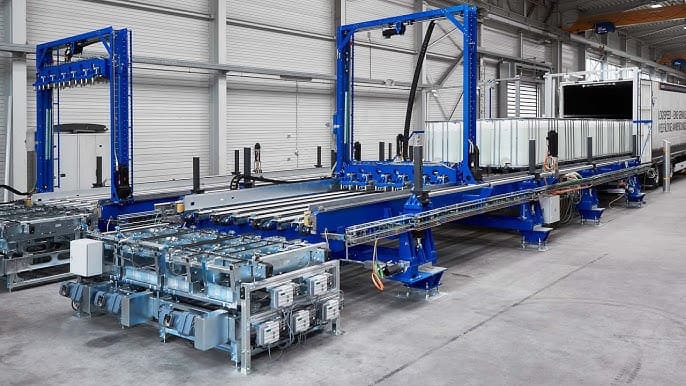
According to Next Move Strategy Consulting, the global Automated Truck/Trailer Loading System (ATLS) Market, is projected to experience significant growth, reaching an estimated USD 1168 million by 2030. This robust expansion reflects a compound annual growth rate (CAGR) of 8.9% from 2023 to 2030. The increasing adoption of automation in logistics and supply chain operations, combined with rising labor costs, is propelling the demand for efficient and scalable solutions such as ATLS, which are designed to optimize the loading and unloading of trucks and trailers.
What is an Automated Truck/Trailer Loading System (ATLS)?
An Automated Truck/Trailer Loading System (ATLS) Market is a highly efficient, technology-driven solution that automates the loading and unloading process of goods within warehouses, distribution centers, and transportation hubs. Comprising a combination of conveyor systems, loading docks, and advanced control systems, ATLS significantly enhances the logistics and supply chain process by streamlining the handling of various cargo types such as pallets, containers, totes, and bulk goods.
Click Here for Your FREE Sample!
Market Drivers: Growing Warehouse Automation and Labor Cost Increases
Warehouse Automation: The rising integration of automation within warehouses is one of the main catalysts for the growth of the ATLS market. Many industries are investing in automated solutions to streamline their logistics and supply chain processes, as the benefits of efficiency and cost reduction become more apparent. This creates a favorable environment for further ATLS adoption as companies look to incorporate these systems into their existing automation infrastructure.
Rising Labor Costs: Another major factor driving the ATLS market is the growing global labor costs. Data from the European Statistics Agency shows a 5.0% increase in hourly labor costs in the Eurozone in early 2023, with similar trends in other parts of the world. As labor costs rise, businesses in sectors such as manufacturing, logistics, and retail are actively seeking cost-effective solutions to remain competitive.
Challenges: High Initial Investment Costs
Despite its clear benefits, the high upfront investment required for implementing ATLS remains a significant barrier to market growth. The initial costs encompass the purchase of technology, infrastructure investments, integration and customization expenses, workforce training, and the potential need for consulting services. Smaller organizations and businesses with limited budgets may find these expenses challenging, which could slow adoption rates, especially in less capital-intensive industries.
Opportunities: Integration of AI, IoT, and Predictive Maintenance
The integration of advanced technologies such as Artificial Intelligence (AI), the Internet of Things (IoT), and predictive maintenance is creating substantial opportunities for the ATLS market. AI technologies can enhance real-time decision-making and improve the precision of loading and unloading operations, optimizing space utilization and reducing handling times. Additionally, IoT enables continuous monitoring and data collection, providing valuable insights into system performance, inventory management, and operational inefficiencies.
Predictive Maintenance: By utilizing predictive maintenance features, ATLS systems can anticipate and prevent mechanical failures before they occur, reducing unplanned downtime and repair costs. This predictive capability ensures smooth and uninterrupted operations, a critical consideration for businesses striving to maintain operational efficiency.
As more businesses adopt AI and IoT-driven solutions, ATLS systems can evolve into highly intelligent and autonomous systems capable of adapting to changing environments and demands, further enhancing their value proposition in the logistics and supply chain industry.
Regional Insights: North America and Asia-Pacific Lead the Market
North America: North America is currently the largest market for ATLS, driven by the region’s strong focus on improving supply chain efficiency and reducing labor costs. The United States, in particular, has seen a surge in demand for ATLS, as companies in industries such as automotive, food and beverage, and retail are increasingly adopting automated solutions to optimize their logistics operations. The well-established food and beverage sector, one of the largest in North America, is a key contributor to the market’s growth.
Asia-Pacific: The Asia-Pacific region is expected to experience strong growth in the ATLS market over the coming years. With countries such as China, India, and Japan heavily investing in warehouse automation, the region offers vast opportunities for market expansion. China, with its rapidly growing number of warehouses and booming e-commerce industry, is a prime example of a market where ATLS is gaining traction.
Governments in countries like Australia and China are also implementing policies to promote automation and robotics, further supporting the adoption of ATLS technologies. In particular, Australia’s National Robotics Strategy, which encourages the responsible adoption of automation technologies, is set to drive further growth in the region’s ATLS market.
Competitive Landscape: Key Players and Industry Trends
The ATLS market is highly competitive, with several established players offering a wide range of solutions to meet the diverse needs of industries. Key companies in the market include:
- FLSmidth & Co. A/S
- BEUMER Group GmbH
- Mecalux, S.A.
- GEBHARDT Fördertechnik GmbH
- Secon Components S.L.
- Joloda Hydraroll Limited
- Actiw OY
- Cargo Floor B.V.
- Ancra Systems B.V.
- Europa Systems
In recent years, these companies have focused on product innovation, strategic partnerships, and regional expansions to strengthen their market position. Similarly, MECALUX showcased its innovative warehouse automation technologies at the IMHX 2022 fair, highlighting its commitment to enhancing operational efficiency in logistics and supply chain management.
Recent Developments:
- In August 2022, BEUMER Group launched the latest generation line sorter and pouch systems, showcasing their advanced automation and adaptability for various logistics applications.
- Mecalux, S.A. also introduced cutting-edge solutions for intralogistics and material handling at major industry events, further establishing its role as a market leader in automated solutions.
Market Segmentation: Key Areas of Focus
The ATLS market is segmented based on several criteria, including:
By Type:
- Ground-Based
- Overhead
By Automation:
- Semi-Automatic
- Fully Automatic
By Load Type:
- Fluid Loads
- Containers
- Totes
- Pallets
- Wheeled Carts/Cages
By Truck/Trailer Type:
- Non-modified
- Modified
By Loading System:
- Chain Conveyor System
- Slat Conveyor System
- Belt Conveyor System
- Skate Conveyor System
- Roller Track System
- Loading Plate System
By Industry Vertical:
- Aviation
- Cement
- Paper
- FMCG
- Post & Parcel
- Automotive
- Textile
- Pharmaceutical
Conclusion:
The Automated Truck/Trailer Loading System (ATLS) market is on the path to substantial growth, driven by increasing warehouse automation, the rising cost of labor, and advancements in AI and IoT technologies. The demand for efficient, scalable, and cost-effective solutions is becoming more pronounced, particularly in regions such as North America and Asia-Pacific. While the market faces challenges related to high initial investment costs, the long-term benefits, including improved efficiency and reduced labor dependency, make ATLS a compelling solution for businesses in a wide range of industries.
