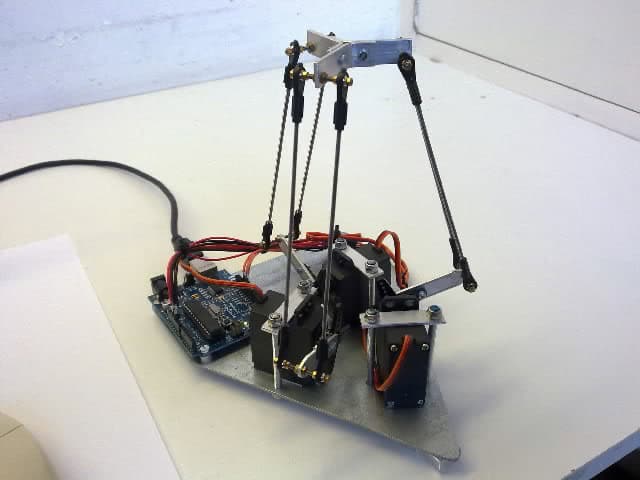
According to Next Move Strategy Consulting, the global Delta Robots Market is forecast to experience robust growth, reaching USD 7.50 billion by 2030, with a compound annual growth rate (CAGR) of 7.9% from 2025 to 2030. Delta robots, also known as parallel robots or spider robots, are renowned for their extraordinary speed, precision, and agility, making them essential tools in industries ranging from electronics and food processing to pharmaceuticals and manufacturing.
Exceptional Speed and Precision Drive Market Growth
Delta Robots Market are characterized by their unique triangular or pyramid-like configuration, consisting of three or more arms connected to a common base. This innovative design enables them to move with exceptional speed and precision, making them ideal for tasks that require rapid and accurate movement, such as pick-and-place operations in various industries. With their ability to operate in three-dimensional space, delta robots offer unparalleled versatility, adapting seamlessly to different industrial environments.
Click Here for Your FREE Sample!
The versatility and efficiency of delta robots have made them invaluable in industries such as electronics assembly, food and beverage processing, and pharmaceutical manufacturing, where speed and accuracy are critical. Their ability to handle delicate, high-precision tasks—such as assembling intricate electronic components or packaging pharmaceutical products—positions delta robots as vital enablers of innovation in manufacturing processes.
Increasing Demand for Automation in the Electronics Industry
The electronic industry is one of the primary drivers of growth in the delta robot market. As electronic devices continue to shrink in size and complexity, the demand for robots capable of handling minuscule components in tight spaces has become more critical than ever. Delta robots excel in this domain, performing complex tasks such as pick-and-place, soldering, and assembling intricate electronic components with unparalleled speed and accuracy.
This growing reliance on automation in electronics manufacturing is directly contributing to the increasing demand for delta robots, which are seen as essential tools for handling delicate, small-scale operations that require precision.
Rising Adoption of Automation in Manufacturing and Process Industries
The increasing automation in sectors such as processed food, pharmaceutical manufacturing, and cosmetics is another driving force behind the market’s expansion. Automation is not only helping industries meet evolving consumer demands but also improving production efficiency, reducing human error, and ensuring strict quality control standards. Delta robots, with their exceptional speed and accuracy, play a pivotal role in streamlining processes such as packaging, labeling, and sorting.
In pharmaceutical manufacturing, delta robots are instrumental in automating complex tasks like vial filling, capping, and labeling, which are critical for meeting market demand and reducing the time-to-market for vital medications. As the demand for efficiency and speed in production processes continues to grow, delta robots are poised to play an increasingly prominent role in industries that require high precision and rapid turnaround times.
Challenges: High Initial Costs and Return on Investment
Despite their numerous advantages, the high cost of delta robots remains a significant challenge for their widespread adoption, particularly for small and medium-sized enterprises (SMEs). Delta robots are precision-engineered machines, and their advanced features come at a premium price, which can deter many companies from making the initial investment. Additionally, the extended return on investment (ROI) period due to high upfront costs can present a barrier for businesses seeking immediate cost savings and productivity improvements.
This financial hurdle is more likely to affect smaller companies, limiting market access to larger corporations with greater financial resources. However, as technology advances and manufacturing processes become more efficient, the overall cost of delta robots is expected to decrease, making them more accessible to a broader range of businesses in the future.
Technological Innovations: AI and Computer Vision Open New Doors for Precision
The integration of advanced technologies like Artificial Intelligence (AI) and computer vision is creating significant opportunities for the delta robots market. These technologies are enhancing the precision and capabilities of delta robots, enabling them to perform even more complex tasks with greater accuracy and reliability.
AI-powered delta robots, for instance, can optimize their movements and decision-making processes in real-time, improving productivity and reducing the chances of error. Meanwhile, computer vision allows robots to “see” and interpret their environment, further enhancing their ability to handle intricate tasks such as quality control, inspection, and sorting.
As industries demand more flexible, precise, and adaptive solutions, the integration of these advanced technologies into delta robots will provide manufacturers with the ability to streamline operations, reduce downtime, and boost overall efficiency, resulting in significant cost savings.
Asia-Pacific: Dominant Market Leader
The Asia-Pacific region holds the largest market share for delta robots, driven by the rapid expansion of the manufacturing industry and substantial government support for Industry 4.0 initiatives. China, as the world’s largest manufacturer, is a dominant player in the global delta robots market, accounting for a significant share of global manufacturing output.
The presence of leading market players such as Fanuc Corporation, KUKA AG, and Yaskawa Electric Corporation in the region is further driving growth in the delta robots market. These companies are continually developing and distributing delta robots, spurring innovation and competition in the marketplace.
North America: Steady Growth and Government Support
In North America, the delta robots market is expected to experience steady growth, supported by government initiatives aimed at advancing automation and robotics in various industries.
Competitive Landscape
The global delta robots market is highly competitive, with several key players actively involved in product development and market expansion. Prominent companies in the market include ABB Ltd., FANUC Corporation, Yaskawa Electric Corporation, Omron Corporation, KUKA AG, FESTO, Kawasaki Heavy Industries, Weiss GmbH, IGUS GmbH, and Cama Group.
Key Market Segments
The delta robots market is segmented based on various factors:
- Axis Type:
- Double Axis
- Three Axis
- Four Axis
- Five Axis
- Six Axis
- Payload Capacity:
- Up to 3 Kilograms
- 3.1 to 8 Kilograms
- 8.1 to 15 Kilograms
- More than 15 Kilograms
- Version Environment:
- Standard
- Hygiene
- Application:
- Assembly
- Pick & Place
- Material Handling
- Palletizing/Packaging
- Industry Vertical:
- Electronics
- Food & Beverages
- Pharmaceuticals
- Others
Market Outlook
The Delta Robots Market is expected to continue its strong growth, driven by technological advancements, increased automation across multiple industries, and growing demand for precision in manufacturing.
Conclusion
The global Delta Robots Market is poised for significant growth, driven by the increasing demand for automation across various industries, particularly in electronics, manufacturing, and pharmaceuticals. The inherent benefits of delta robots—such as their speed, precision, and agility—make them indispensable in tasks ranging from pick-and-place to packaging and assembly, ensuring high efficiency and enhanced productivity.
