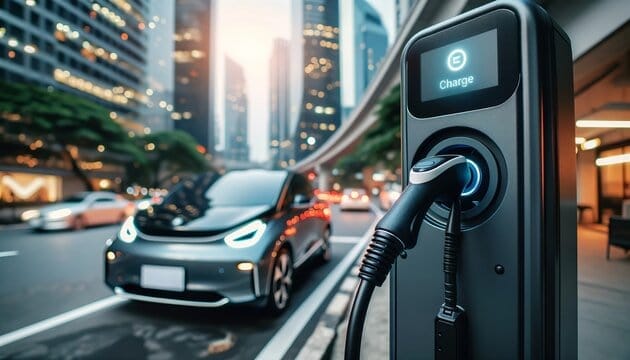
According to Next Move Strategy Consulting, the Denmark Electric Vehicle (EV) Charging Market is poised for remarkable growth, with a forecasted market value of USD 557.64 million by 2030. This growth is driven by a compound annual growth rate (CAGR) of 35.1% from 2023 to 2030, as the country accelerates its shift toward electric vehicles (EVs) and clean energy solutions. The demand for EV charging infrastructure is increasing, propelled by the government’s commitment to sustainability and the rising number of EVs on the road.
Denmark’s Green Transition and Government Support Driving EV Charging Market Growth
Denmark Electric Vehicle (EV) Charging Market has been a forerunner in promoting clean energy and reducing carbon emissions. The government’s goal of achieving 760,000 electric and hybrid vehicles on its roads by 2030 is a central pillar of this green transition, creating a strong demand for EV charging stations across the country. This ambitious target aligns with Denmark’s broader commitment to sustainability, with the aim of significantly reducing transportation-related carbon emissions.
Click Here for Your FREE Sample!
In line with this, the Danish government has introduced various initiatives to support the expansion of EV infrastructure. These efforts have played a pivotal role in fostering EV adoption and ensuring that Denmark’s charging network meets the growing demand.
Strategic Initiatives by Industry Leaders Boost Demand for EV Charging Solutions
The Denmark EV charging market is witnessing the active involvement of several key industry players, who are contributing to the sector’s growth through strategic partnerships, expansions, and product innovations. Companies such as ABB, Clever, Norlys, Reka Cables Ltd., and EVBox are at the forefront of this transformation, working to enhance the nation’s EV charging infrastructure.
One notable example is ABB, which, in collaboration with energy group EWII, supplied 1,350 chargers to support the expansion of Copenhagen Airport’s EV charging site. This initiative is aimed at making the airport the largest EV charging hub in Denmark, benefiting more than 80,000 daily travelers by providing them with easy access to various ABB charging solutions, including the recently launched Terra 360, the world’s fastest car charger. Such partnerships not only accelerate the adoption of electric vehicles but also strengthen Denmark’s position as a leader in sustainable transportation solutions.
The Challenge of High Initial Costs for Fast Chargers
Despite the encouraging market outlook, the high initial setup costs for fast chargers, especially Level 3 and ultra-fast chargers, remain a significant barrier to market expansion. These chargers, while offering much faster charging times (as little as 30 minutes), come with a hefty price tag, which can discourage both consumers and businesses from adopting them. In contrast, Level 1 and Level 2 chargers, which can take anywhere from 6 to 16 hours to fully charge an EV, are less expensive to install, but they lack the speed and convenience of Level 3 chargers.
As the adoption of EVs continues to grow, the need for more fast chargers capable of accommodating long-distance travel will rise. However, the initial setup costs of these stations, combined with the lack of sufficient incentives, could slow the pace of expansion in the short term. Governments and industry players must find ways to address these challenges, possibly through subsidies, tax incentives, or innovations in charging technology that reduce the cost of installation.
Vehicle-to-Grid (V2G) Technology: A Game-Changer for Denmark’s EV Charging Infrastructure
Another significant development in the Denmark EV charging market is the increasing adoption of vehicle-to-grid (V2G) technology. V2G technology allows electric vehicles to not only charge from the grid but also release stored energy back into the grid when needed. This two-way energy flow enhances the functionality of EVs, turning them into valuable assets that can support grid stability and provide additional power during peak demand periods.
Denmark is at the forefront of V2G adoption, with several projects already in progress. For instance, Enel Energia S.p.A. has set up two V2G EV charging stations at the Italian Institute of Technology in Genoa as part of the MOV-E project. This collaboration with Nissan is a significant step forward in utilizing EVs as both transportation and energy storage solutions. As V2G technology continues to evolve, it is expected to become a key component of Denmark’s energy strategy, opening new opportunities for the development of more advanced charging stations and infrastructure.
Competitive Landscape
The Denmark Electric Vehicle (EV) Charging market is competitive, with multiple key players contributing to its growth. Leading companies such as Tesla Inc., ChargePoint Holdings Inc., ABB Ltd., Shell Plc, Fortum, Clever EV Charging, WallBox Inc., EVBox, Schneider Electric, and Siemens are actively working to develop and deploy innovative charging solutions.
These companies are focused on expanding their networks, improving charging speed, and enhancing the user experience. For example, Tesla has played a significant role in driving EV adoption through its extensive network of Supercharger stations, while ChargePoint and EVBox are expanding their networks to meet the rising demand for accessible and reliable charging stations.
The increasing number of partnerships and collaborations between these key players, combined with the government’s commitment to expanding EV infrastructure, ensures a promising future for Denmark’s EV charging market.
Market Segmentation
The Denmark EV Charging Market is segmented into various categories, including charger type, charging speed, connector type, installation type, and end-user applications. These segments are crucial for understanding the diverse needs of the market and identifying areas of growth.
- Charger Type: AC Chargers, DC Chargers.
- Charging Speed: Level 1, Level 2, Level 3.
- Connector Type: J1772 (Type 1), Mennekes (Type 2), CCS (Combined Charging System), CHAdeMO, Others.
- Charging Modes: Mode 1, Mode 2, Mode 3, Mode 4.
- Installation Type: Fixed, Portable.
- End User: Commercial (Public EV Charging Stations, Fleet Charging Stations, Workplace Charging Stations), Residential.
Conclusion
The Denmark Electric Vehicle Charging Market is poised for tremendous growth, driven by a strong commitment to sustainability, government support, and technological advancements. With a projected market value of USD 557.64 million by 2030, the market is set to experience rapid expansion, fueled by the rising adoption of electric vehicles and the development of an extensive charging infrastructure.
