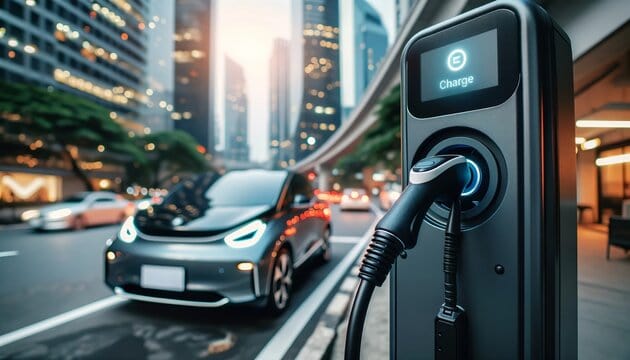
According to Next Move Strategy Consulting, the Germany Electric Vehicle (EV) Charging Market, is set to experience tremendous growth, with projections indicating it will reach USD 9.12 billion by 2030. This represents a robust compound annual growth rate (CAGR) of 28.6% from 2023 to 2030. This market expansion is driven by an increasing number of electric vehicles on the road, the country’s commitment to sustainability, and significant investments in charging infrastructure by both the public and private sectors.
The Role of EV Charging Infrastructure in Germany’s Green Future
Germany Electric Vehicle (EV) Charging Market are essential for recharging electric vehicles, enabling the transition from traditional fossil fuel-powered cars to more sustainable options. These chargers vary in speed and capacity, classified into Level 1, Level 2, and Level 3 categories. Level 1 chargers are typically slower and suited for home use, while Level 2 chargers offer faster charging for residential and commercial spaces. Level 3 chargers, also known as ultra-fast chargers, deliver the highest power and are crucial for long-distance travel, reducing charging time significantly.
Click Here for Your FREE Sample!
Government Support Fuels the Transition to Electric Vehicles
The German government has been at the forefront of driving the transition to electric mobility through a combination of incentives, subsidies, and regulatory measures. This comprehensive approach includes tax reductions, subsidies on electric vehicle purchases, and reduced registration fees for EV owners. These initiatives not only make electric vehicles more financially appealing but also encourage individuals and businesses to make the switch.
The combination of government initiatives and public awareness has created a fertile environment for the rapid growth of the EV charging market. With increasing demand for EVs, the expansion of the EV charging network is essential to supporting this transformation.
Key Innovators Driving the Market
The growth of the EV charging market in Germany is being significantly influenced by key players in the industry, such as ABB, Shell, and Tesla, among others. These companies are continually innovating to make the charging process more efficient and accessible to the public.
The Terra 360 chargers are capable of providing ultra-fast charging for electric vehicles, with plans to install more than 200 units across the country within the next year. This initiative is designed to meet the needs of more than 1.7 million EV drivers in Germany, offering significantly improved charging speed and accessibility.
Challenges in the EV Charging Market: High Setup Costs for Fast Chargers
Despite the promising growth prospects for the German EV charging market, significant challenges remain. One of the primary barriers to growth is the high initial setup costs associated with Level 3 and ultra-fast chargers. While Level 1 and Level 2 chargers are more affordable and typically used for residential charging, the demand for ultra-fast chargers capable of recharging vehicles in under 30 minutes is increasing. These chargers are essential for long-distance travel and for users who require quick and convenient charging, similar to the refueling time of traditional gasoline vehicles.
However, the installation of fast chargers presents a significant financial burden due to their higher costs. These expensive initial investments can deter potential investors and slow the pace of infrastructure development. To mitigate this, additional incentives and subsidies from the government or private sector would be crucial in ensuring the widespread deployment of fast-charging networks across the country.
Surge in Vehicle-to-Grid (V2G) Charging Technology
Another exciting development in the German EV charging market is the increasing adoption of Vehicle-to-Grid (V2G) charging stations. V2G technology allows electric vehicles to store and discharge electricity back to the grid, creating a two-way energy exchange that enhances the functionality of both the vehicle and the electrical grid. This bidirectional flow of energy not only helps to balance supply and demand in the grid but also allows EV owners to potentially profit by selling stored energy back to the grid during peak times.
In partnership with Nissan, Enel Energia S.p.A. installed two V2G charging stations at the Italian Institute of Technology’s headquarters in Genoa as part of the MOV-E project. The project aims to demonstrate the potential of V2G technology in transforming the way electric vehicles contribute to the energy ecosystem. The success of such initiatives is expected to drive greater adoption of V2G technology across Germany, offering new opportunities for both manufacturers and consumers.
Although V2G charging stations come with higher upfront costs compared to traditional charging solutions, their long-term benefits make them an attractive option for the future. The anticipated growth in V2G infrastructure presents manufacturers with opportunities to develop advanced connectors and charging technologies to support the integration of electric vehicles with the power grid.
Germany’s EV Charging Market: Key Segments and Opportunities
The Germany Electric Vehicle Charging Market can be segmented based on various factors, providing a detailed view of the market dynamics. Key segments include:
- Charging Type: Off-Board Top-Down Pantograph, On-Board Bottom-Up Pantograph, and Charging Via Connector.
- Charging Voltage Level: Level 1 (<3.7 KW), Level 2 (3.7-22 KW), and Level 3 (Above 22 KW).
- Charger Type: Slow Chargers, Fast Chargers, and Super Chargers.
- IOT Connectivity: Non-Connected Charging Stations and Smart Connected Charging Stations.
- Vehicle Charging: AC (Normal Charging), DC (Super Charging), and Inductive Charging.
- Application: Commercial, Residential, Public EV Charging Stations, On-Road Charging, Destination Chargers, Fleet Charging, etc.
- Installation Type: Portable Charging, Fixed Charging, Wall-Mount, Pedestal-Mount, and Ceiling-Mount.
Each of these segments is poised to experience significant growth as the demand for EV infrastructure expands across Germany. Commercial installations, especially public EV charging stations and fleet charging solutions, are expected to be the largest contributors to market growth. Residential charging stations, while currently less penetrated, are also expected to see strong growth due to the increasing affordability and convenience they offer.
Competitive Landscape: Leading Players in the Germany EV Charging Market
The Germany Electric Vehicle (EV) Charging Market features a competitive landscape with several major players actively participating in the development and deployment of charging infrastructure. Key players in the market include:
- ABB Ltd.
- ChargePoint, Inc.
- Tesla Inc.
- Shell Recharge Solutions
- Star Charge
- TELD
- Siemens
- BYD
- EVgo
- Hyundai Motor Company
These companies are leading the way in providing innovative solutions to meet the growing demand for efficient, reliable, and fast EV charging infrastructure. Their investments in research and development, along with strategic partnerships and collaborations, are expected to play a key role in shaping the future of the EV charging market in Germany.
Conclusion: A Bright Future for Germany’s EV Charging Market
Germany’s electric vehicle charging market is positioned for remarkable growth, driven by supportive government policies, technological innovations, and increasing corporate investments in charging infrastructure. As the demand for electric vehicles continues to rise, so too will the need for a robust and accessible EV charging network. While challenges such as high setup costs for fast chargers remain, the long-term outlook for the industry is positive, with opportunities for growth across various segments, including V2G charging, commercial installations, and residential solutions.
