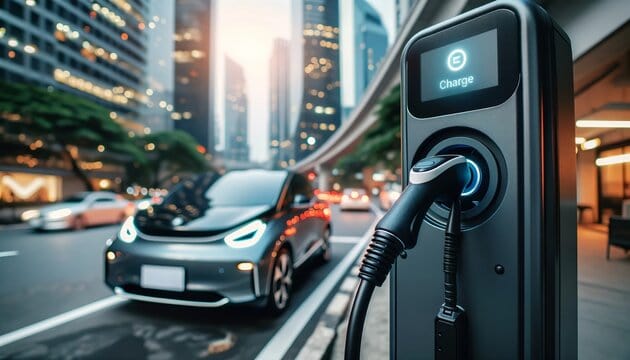
According to Next Move Strategy Consulting, the Japan Electric Vehicle (EV) Charging Market, is expected to experience substantial growth, reaching an estimated USD 3824.2 million by 2030. This growth represents a remarkable compound annual growth rate (CAGR) of 36.0% from 2023 to 2030. The rapid expansion of EV adoption and charging infrastructure, alongside government incentives and innovations in charging technology, is propelling Japan to the forefront of the global electric vehicle revolution.
Government Support and Infrastructure Expansion
Japan Electric Vehicle (EV) Charging Market commitment to environmental sustainability is reflected in its ambitious policies and initiatives aimed at accelerating the adoption of electric vehicles (EVs) and developing a comprehensive charging network across the country.
Click Here for Your FREE Sample!
The Japanese government has made significant strides in promoting the installation of EV charging facilities along public roads, highways, and service areas. Japan’s Ministry of Land, Infrastructure, Transport, and Tourism has outlined plans to install more charging stations along the country’s roadways to facilitate the use of electric vehicles and reduce carbon emissions.
Additionally, the Ministry is exploring further measures to enhance the ease of installing EV chargers along roads and public spaces, ensuring greater accessibility and convenience for EV owners. This focus on charging infrastructure is expected to accelerate EV adoption and further expand the market.
Prominent Industry Collaborations and Technological Advancements
Japan’s EV charging market is experiencing an influx of innovative solutions from prominent players in the sector. These companies are collaborating to improve the charging experience and contribute to the rapid adoption of electric vehicles.
A notable collaboration in the sector was announced in January 2022, when Here Technologies and Digital Charging Solutions GmbH (DCS) entered into a strategic partnership aimed at creating a seamless EV charging experience. The collaboration focuses on optimizing the process of accessing charging stations, managing payments, and improving the overall charging experience. With more than 280,000 charging points across Europe and Japan, this partnership is set to enhance the convenience and availability of charging facilities for EV owners in Japan.
Challenges: High Setup Costs for Fast Chargers
While the future of Japan’s EV charging market looks promising, there are still challenges that could slow the sector’s growth. One of the main obstacles to the widespread expansion of EV charging stations is the high initial setup costs, especially for Level 3 and ultra-fast chargers. These fast-charging stations, which can charge electric vehicles in under 30 minutes, represent a significant investment for businesses and municipalities.
Level 1 and Level 2 chargers are more affordable but take much longer to charge EVs, with full charging times ranging from 6 to 16 hours. However, consumers accustomed to the quick refueling times of conventional vehicles may be hesitant to adopt EVs due to the time required for charging. As such, the demand for fast chargers is on the rise, but the high upfront costs remain a significant challenge for many potential investors and businesses looking to expand their charging infrastructure.
Despite this, it is expected that ongoing advancements in technology and the growing adoption of EVs will help reduce the costs of fast chargers, making them more accessible in the future.
Vehicle-to-Grid (V2G) Technology: A Game-Changer for Japan’s EV Charging Market
One of the most exciting technological advancements in the EV charging space is Vehicle-to-Grid (V2G) technology. V2G technology enables two-way electrical energy exchange between electric vehicles (EVs) and the power grid, allowing EVs to store excess electricity and return it to the grid. This innovation presents an opportunity for EV owners to contribute to the grid’s stability while increasing the value of their vehicles.
The introduction of V2G technology in Japan is expected to play a key role in the future of electric vehicle charging. By enabling EVs to become active participants in the energy ecosystem, V2G technology offers a significant advantage over traditional charging methods. Not only does it improve the overall efficiency of the grid, but it also provides additional incentives for EV owners.
In one notable example of this technology in action, Enel Energia S.p.A. installed two V2G EV charging stations at the Italian Institute of Technology in Genoa, as part of the MOV-E project, sponsored by Nissan. This collaboration highlights the potential for V2G technology to revolutionize the EV industry, and Japan, with its focus on sustainable energy and smart technology, is well-positioned to take advantage of this emerging trend.
Competitive Landscape
The Japan Electric Vehicle (EV) Charging Market is highly competitive, with numerous companies actively contributing to the development of charging infrastructure and the introduction of innovative charging technologies. Key players in the market include:
- Tesla Inc.
- TAKAOKA TOKO CO., LTD
- ABB Ltd.
- Shell Plc
- Delta Electronics
- Shanghai Mida EV Power Co., Ltd.
- WallBox Inc.
- Plugo Inc.
- Schneider Electric
- Siemens
- Hitachi Systems, Ltd.
- TOYOTA Connected Corporation
- JFE TECHNOS CO., LTD
- MITSUI & CO., LTD
- CHAdeMO Association
These companies are engaged in various strategies, including collaborations, product launches, and investments in EV charging infrastructure to meet the growing demand for electric vehicle charging solutions. With Japan’s government-backed initiatives and increasing consumer adoption of EVs, the competition is expected to intensify, resulting in further innovations in the market.
Market Segmentation
The Japan Electric Vehicle (EV) Charging Market is segmented into several key categories:
- By Type of Charger:
- AC Chargers
- DC Chargers
- By Charging Speed:
- Level 1 (Slow)
- Level 2 (Moderate)
- Level 3 (Fast)
- By Connector Type:
- J1772 (Type 1)
- Mennekes (Type 2)
- CCS (Combined Charging System)
- CHAdeMO
- Others
- By Charging Mode:
- Mode 1
- Mode 2
- Mode 3
- Mode 4
- By Installation Type:
- Fixed
- Portable
- By End User:
- Commercial: Public EV Charging Stations, Highway Charging Stations, Fleet Charging Stations, Workplace Charging Stations
- Residential
Conclusion: Japan Electric Vehicle (EV) Charging Market
The Japan Electric Vehicle (EV) Charging Market is poised for significant growth, driven by strong government support, technological advancements, and an accelerating shift towards sustainable transportation. With Japan’s commitment to reducing carbon emissions and enhancing environmental sustainability, the demand for electric vehicles is rapidly increasing, which in turn is fueling the need for a robust and widespread EV charging infrastructure.
