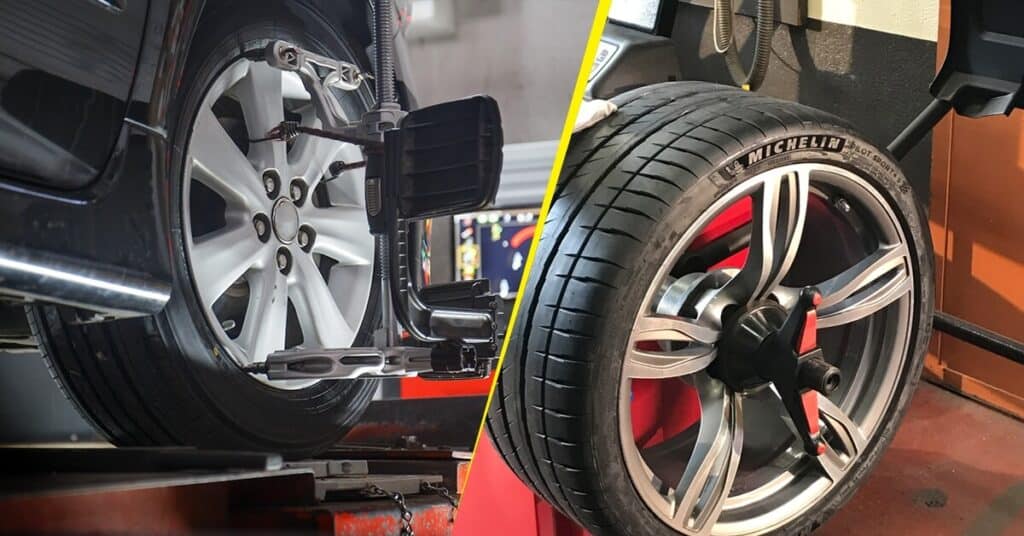
According to Next Move Strategy Consulting, the global Wheel Alignment Market, is projected to grow at a CAGR of 3.8% from 2022 to 2030, reaching USD 3.01 billion by 2030, according to a comprehensive market analysis. The increasing demand for vehicle maintenance, repair, and overhaul operations, coupled with the rising production and affordability of vehicles, is driving the growth of this market. Wheel alignment machines, which adjust vehicle suspension to ensure optimal tire contact with the road, are becoming indispensable tools for automotive service providers and manufacturers alike.
Market Overview
Wheel alignment machines are critical for maintaining vehicle performance, safety, and longevity. These machines inspect and adjust the toe, camber, and caster angles of wheels, ensuring they are aligned correctly with each other and the vehicle body. Proper wheel alignment not only enhances straight-line stability and cornering performance but also reduces tire wear, saving consumers significant costs over time. With advancements in technology, modern wheel alignment systems now offer features such as portability, wireless connectivity, and smart repair capabilities, catering to the growing demand for efficient and accurate maintenance solutions.
Market Dynamics and Trends
The global Wheel Alignment Market is being propelled by several key factors:
Download Your Free Sample Today!
- Rising Vehicle Ownership: Increasing production and affordability of vehicles, particularly in emerging economies, are boosting the demand for wheel alignment services.
- Focus on Maintenance and Repair: Consumers are increasingly prioritizing vehicle maintenance, repair, and overhaul activities, driving the need for advanced wheel alignment systems.
- Technological Advancements: The introduction of CCD wheel aligners and automated alignment systems is revolutionizing the market, offering higher precision and efficiency.
- Challenges: The market faces restraints such as the lack of skilled labor and the high capital investment required for manufacturing advanced wheel alignment machines. However, these challenges are being offset by the emergence of innovative solutions and the growing adoption of smart technologies.
Market Segmentation
The wheel alignment market is segmented based on component, vehicle type, and geography:
- By Component:
- System: Includes toe-in/toe-out alignment, camber alignment, caster alignment, and four-wheel alignment systems.
- Services: Covers OEM, franchise, dealership-authorized, and other service providers.
- By Vehicle Type:
- Passenger Vehicles: Hatchbacks, sedans, and SUVs/MUVs.
- Commercial Vehicles: Light commercial vehicles (LCVs) and heavy commercial vehicles (HCVs).
- By Geography:
- North America: U.S., Canada, Mexico.
- Europe: UK, Germany, France, Italy, Spain, and the rest of Europe.
- Asia-Pacific: China, India, Japan, South Korea, Australia, and the rest of Asia-Pacific.
- Rest of the World: UAE, Saudi Arabia, South Africa, Brazil, and other countries.
Geographical Analysis
- Asia-Pacific: Dominates the global wheel alignment market, driven by rapid economic growth, rising per capita income, and increasing vehicle ownership in countries like India, China, Thailand, and South Korea. The presence of key players such as Manatec Electronics further strengthens the region’s market position.
- Europe: Expected to witness steady growth due to the high share of commercial vehicles requiring regular maintenance. The region is home to leading suppliers like ACTIA Group and Hofmann TeSys, which offer advanced wheel alignment solutions.
- North America: The market is supported by a robust automotive industry and the presence of major manufacturers and service providers.
Competitive Landscape
The global wheel alignment market is highly competitive, with key players such as 3M Company, BMW AG, Bridgestone Corporation, Continental AG, John Bean, Ford Motor Company, The Goodyear Tire & Rubber Company, Hankook Tire & Technology, Générale des Establishments Michelin SCA, and Volkswagen AG leading the way. These companies are investing heavily in R&D, product innovation, and strategic collaborations to enhance their offerings and expand their market reach.
Recent Developments:
- In April 2022, Autel launched the IA900WA, an integrated ADAS calibration and four-wheel alignment system, offering advanced features at an affordable price.
- In October 2020, Hunter Engineering Company introduced a touch-less wheel alignment inspection system in India, marking the industry’s first drive-through contactless diagnostic solution.
Key Benefits of the Report
- Quantitative Analysis: Provides current market valuations and forecasts through 2030, helping stakeholders identify growth opportunities.
- Trend Analysis: Highlights current and future trends, showcasing lucrative investment pockets in the market.
- Competitive Insights: Offers a detailed analysis of market players, their market share, and strategic initiatives.
- SWOT and Porter’s Five Forces Analysis: Delivers a comprehensive understanding of market dynamics and competitive forces.
- Value Chain Analysis: Clarifies the roles of stakeholders in the market ecosystem.
Conclusion
The global wheel alignment market is on a steady growth trajectory, driven by the increasing demand for vehicle maintenance and repair services, technological advancements, and the rising affordability of vehicles. While challenges such as the lack of skilled labor and high capital requirements persist, the market is poised for significant growth, particularly in the Asia-Pacific region. Key players are leveraging innovation and strategic collaborations to stay ahead in this competitive landscape. As the automotive industry continues to evolve, the wheel alignment market will play a pivotal role in ensuring vehicle safety, performance, and longevity.
