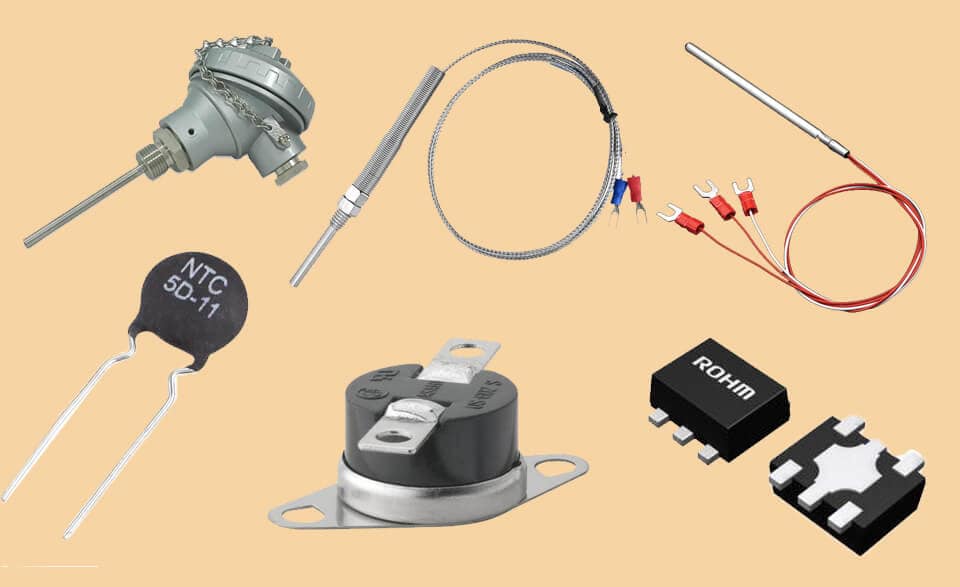
The global Temperature Sensor Market is experiencing strong growth, fueled by rising demand across diverse sectors such as automotive, healthcare, industrial automation, and consumer electronics. Temperature sensors, which play a critical role in monitoring and controlling temperature in various applications, are integral to a wide range of industries. The global market for temperature sensors is projected to reach 8.55 billion by 2034, growing at a compound annual growth rate (CAGR) of 4.8% from 2024 to 2034.
Market Overview
Temperature Sensors Market are devices used to measure and monitor temperature in various applications. These sensors are essential in ensuring safety, performance, and reliability across a wide range of industries. Temperature sensors can be divided into various types, including thermocouples, resistance temperature detectors (RTDs), thermistors, and semiconductor-based sensors, each offering distinct advantages based on the application.
Click Here for Your FREE Sample!
Key Drivers of Market Growth
1. Rising Demand for Industrial Automation
One of the key drivers of the temperature sensor market is the increasing adoption of industrial automation systems. Temperature sensors are integral to the monitoring and control of processes in industries such as oil & gas, automotive, food & beverage, and chemical manufacturing. In automated systems, these sensors are essential for maintaining optimal operating conditions, improving efficiency, and reducing downtime.
The rise of smart factories and Industry 4.0 technologies has led to an increased demand for temperature sensors capable of providing real-time data and feedback. The integration of temperature sensors with automation systems helps in predictive maintenance, energy optimization, and process control, all of which are critical to improving operational efficiency.
Click Here for Your FREE Sample!
2. Growing Demand for Smart Devices and IoT Solutions
The proliferation of smart devices, wearable technology, and IoT (Internet of Things) solutions has also played a significant role in driving the temperature sensor market. These sensors are increasingly being used in smart thermostats, smart home systems, fitness trackers, and connected appliances. IoT-enabled temperature sensors enable remote monitoring and control, providing real-time data and improving convenience for consumers.
3. Technological Advancements and Integration with Wireless Solutions
Advancements in temperature sensor technology are a major contributor to market growth. The integration of wireless technology with temperature sensors has enabled remote monitoring and data collection in real-time, which is particularly valuable in industrial and healthcare applications.
4. Stringent Government Regulations and Safety Standards
Government regulations related to safety and quality control are another significant factor driving the temperature sensor market. In sectors such as food and beverage, pharmaceuticals, and healthcare, temperature monitoring is critical for ensuring product quality, safety, and compliance with regulations. For example, in the food industry, temperature sensors are used to monitor the storage and transportation conditions of perishable items.
5. Expanding Healthcare Applications
The healthcare industry’s growing demand for temperature sensors is another driving force. Temperature sensors are used in various medical devices, such as thermometers, incubators, and patient monitoring systems, to track body temperature and ensure proper treatment. With the rise of wearable health monitors and telemedicine, the need for reliable temperature sensors is increasing.
Market Segmentation
The temperature sensor market can be segmented by type, application, end-user industry, and region. Below are the key segments:
By Type
- Thermocouples: Thermocouples are widely used in industrial applications due to their wide temperature range, robustness, and fast response time. They are commonly used in high-temperature applications in industries such as oil & gas, metals, and chemicals.
- Resistance Temperature Detectors (RTDs): RTDs provide high accuracy and stability, making them suitable for applications that require precise temperature measurements, such as laboratory and scientific research.
- Thermistors: Thermistors are temperature-sensitive resistors, commonly used in consumer electronics, automotive, and HVAC systems. Their fast response time and affordability make them ideal for many applications.
- Semiconductor-based Sensors: These sensors are often used in consumer electronics and automotive applications. They offer good precision, small size, and ease of integration into electronic systems.
By Application
- Industrial Automation: Temperature sensors are widely used in industrial automation systems for process control, monitoring, and predictive maintenance. Applications include chemical manufacturing, power generation, and oil & gas.
- Healthcare: In healthcare, temperature sensors are used in patient monitoring systems, medical thermometers, incubators, and more. The demand for wearable temperature sensors in health monitoring devices is increasing.
- Consumer Electronics: Temperature sensors are used in smartphones, laptops, and wearables to prevent overheating and ensure optimal performance.
By End-User Industry
- Automotive: The automotive industry is a significant user of temperature sensors, particularly for engine and cabin temperature monitoring, air conditioning systems, and battery management in electric vehicles.
- Healthcare: The healthcare sector is experiencing growing demand for temperature sensors in medical equipment, patient monitoring, and wearable devices.
- Industrial: Industrial sectors, including oil & gas, power, and manufacturing, are major consumers of temperature sensors for process control, equipment monitoring, and predictive maintenance.
By Region
- North America: North America holds a substantial share of the temperature sensor market, driven by the presence of major industrial manufacturers, the growing adoption of IoT technologies, and rising demand from the healthcare and automotive sectors.
- Europe: Europe is a key market for temperature sensors, particularly in industries such as automotive, healthcare, and food processing. Stringent regulatory requirements and safety standards also contribute to market growth in the region.
- Asia-Pacific: The Asia-Pacific region is expected to witness the highest growth in the temperature sensor market, driven by rapid industrialization, growing automotive and healthcare sectors, and increasing demand for smart devices.
- Latin America: The Latin American market is expanding due to increased industrialization and the adoption of automation technologies in countries such as Brazil and Mexico.
- Middle East and Africa: The Middle East and Africa are also experiencing growth in the temperature sensor market, particularly in the oil & gas sector, where temperature monitoring is essential for safe operations.
Competitive Landscape
The temperature sensor market is highly competitive, with several key players dominating the market. Some of the prominent companies operating in the market include:
- Honeywell International Inc.: A global leader in sensor technologies, Honeywell offers a wide range of temperature sensors used in industrial, automotive, healthcare, and consumer electronics applications.
- Siemens AG: Siemens is a leading player in the temperature sensor market, providing advanced sensors for process automation, HVAC systems, and industrial control applications.
- Texas Instruments Inc.: Texas Instruments offers a wide variety of semiconductor-based temperature sensors that are widely used in consumer electronics and automotive applications.
- Emerson Electric Co.: Emerson is a major player in the temperature sensor market, with a broad portfolio of products for industrial automation, process control, and healthcare applications.
- STMicroelectronics: STMicroelectronics is a leading manufacturer of temperature sensors, providing solutions for automotive, industrial, and consumer applications.
Conclusion
The temperature sensor market is poised for significant growth, driven by advancements in technology, the rise of industrial automation, and the increasing demand for smart, connected devices. As industries continue to embrace digitalization and sustainability, temperature sensors will remain a key component in optimizing processes, ensuring safety, and improving overall performance across multiple sectors.
